
Chewy Chocolate Chip Cookies
Thick, chewy chocolate chip cookies with crispy edges, soft centers, and pools of melted chocolate in every bite. Melted butter, an extra egg yolk, and a cornstarch secret keep them dense and bendy for days.
Tasted & written by Rachel
Prep
15 min
Cook
13 min
Total
28 min
Serves
16
The Key
Pull the cookies when the centers still look underdone. They'll be puffy, pale, and slightly shiny in the middle — and that's exactly right. The carryover heat on the hot baking sheet finishes them. Two extra minutes in the oven is the difference between chewy and crunchy.
I'll admit this one took me eleven tries. Eleven. Because everyone has a chocolate chip cookie recipe and most of them are fine, and fine is the enemy of worth-making.
The version that finally stuck uses melted butter instead of creamed, an extra egg yolk for density, and a small spoonful of cornstarch that keeps the centers soft two days after baking. David's running club demolished a triple batch last Saturday. Mia helped scoop every single one and only ate about four dough balls when I wasn't looking. Noah wouldn't touch them — he wanted cheese — but that's Noah's loss and frankly more cookies for the rest of us.
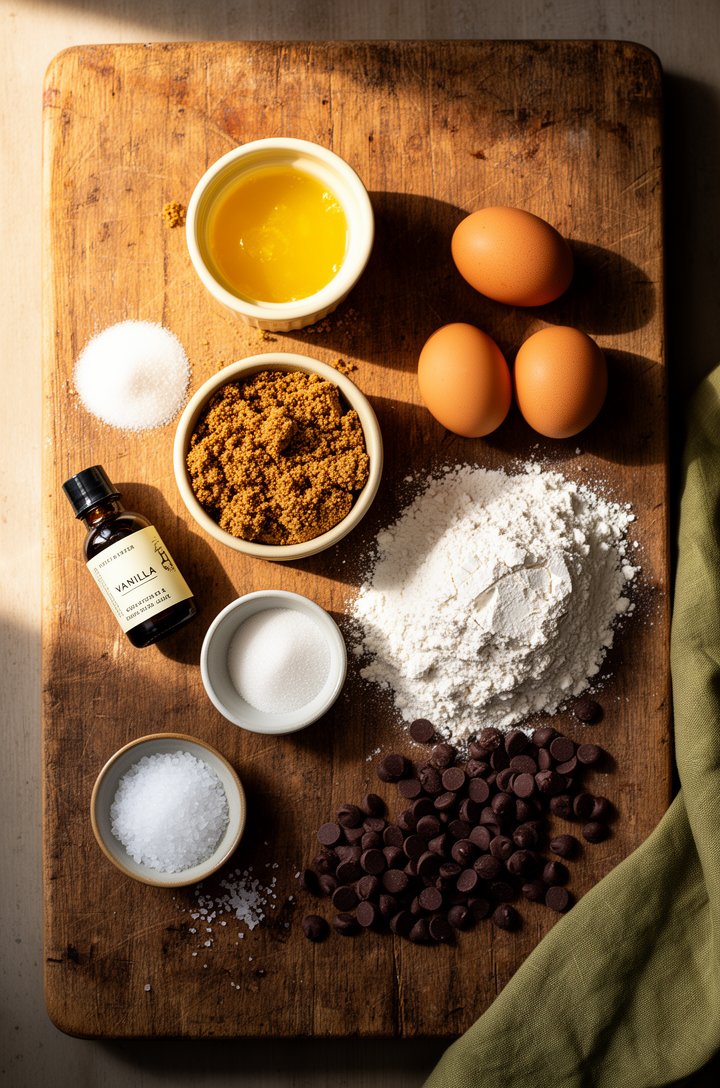
The cornstarch is the part nobody talks about. It softens the gluten just enough to keep the centers tender without making them cakey. I stole the idea from Sally's Baking Addiction, tested it against my old recipe side by side, and threw my old recipe away.
Melted butter is the other non-negotiable. Creaming butter and sugar whips air into the dough, which gives you a puffier, lighter cookie. That's great for sugar cookies. For chocolate chip cookies, I want dense and chewy — and melted butter delivers that by keeping air out of the equation.
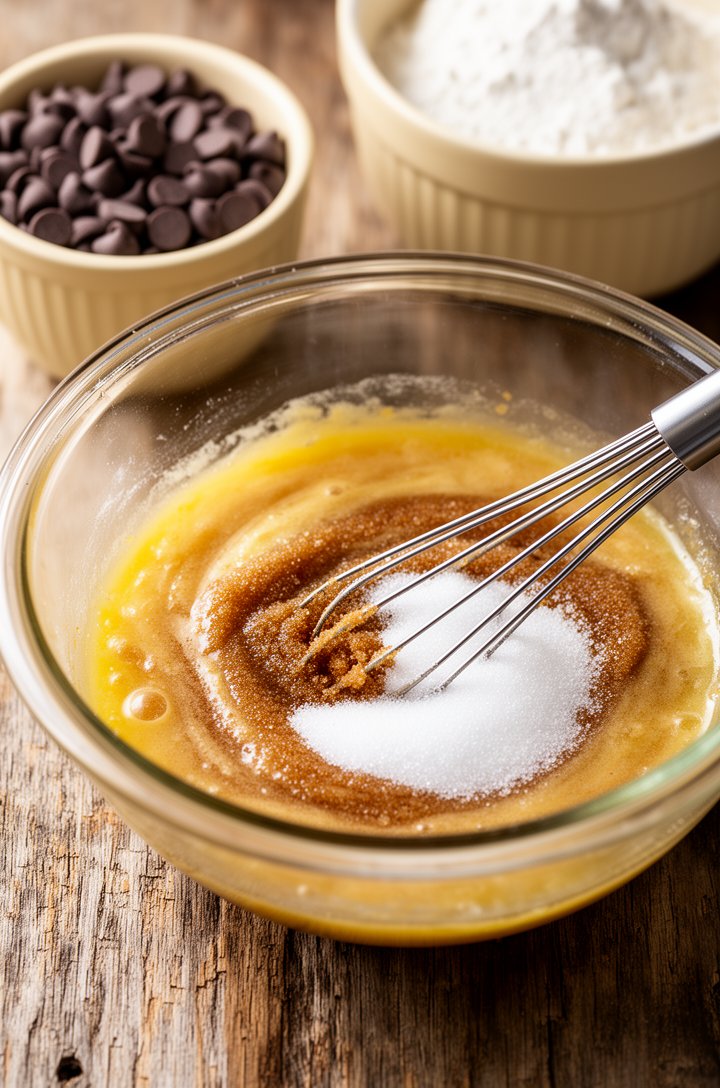
The overnight chill is where patience pays. I've baked these at two hours and at twelve hours, side by side on the same sheet. The overnight cookies were thicker, chewier, and had this butterscotch depth in the dough that the two-hour batch didn't have. Chemistry needs time. Give it time.

Pull them from the oven when your instinct says they need two more minutes. The centers should look puffy, slightly pale, almost underdone. They'll flatten and set on the hot baking sheet. If they look done in the oven, they're overdone on the plate.
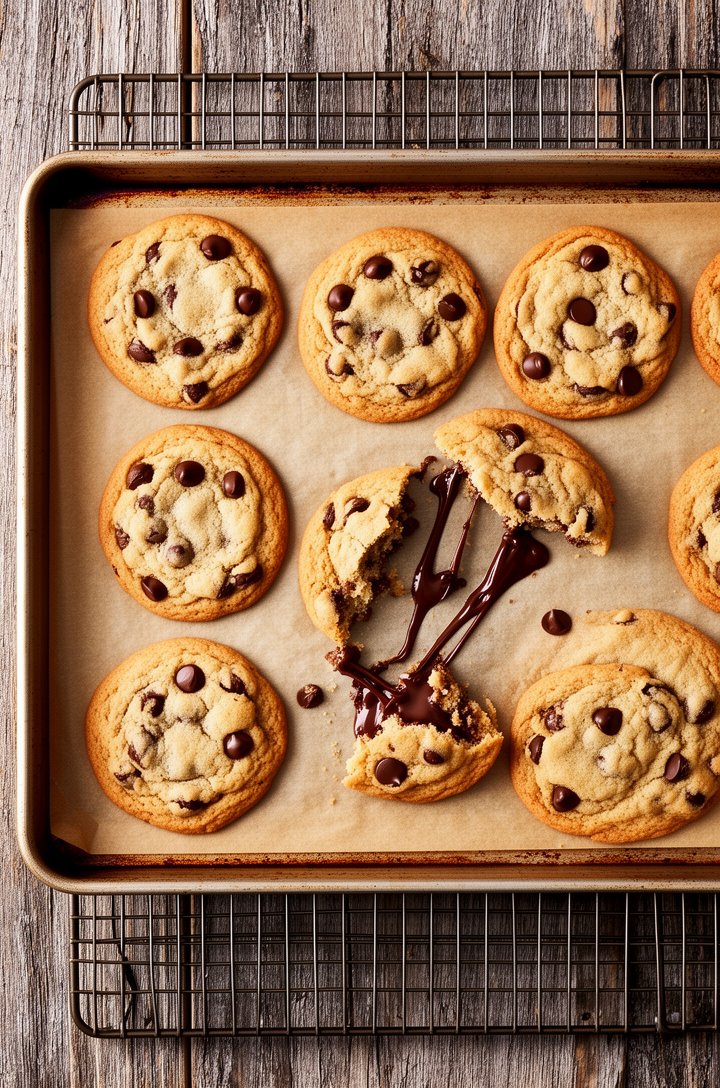
Eleven tries. This is the one.
Mise en place
Ingredients
- 2 1/4 cups all-purpose flour (spooned and leveled)
- 1 tsp Baking Soda
- 1.5 tsp Cornstarch
- 0.5 tsp Salt
- 3/4 cup (12 Tbsp) unsalted butter, melted and cooled 5 minutesmelted and cooled 5 minutes
- 3/4 cup packed light brown sugar
- 1/2 cup granulated sugar
- 1 large egg, at room temperatureat room temperature
- 1 egg yolk, at room temperatureat room temperature
- 2 teaspoons pure vanilla extract
- 1 1/4 cups semi-sweet chocolate chips or chunks
Topping
- Flaky sea salt for toppingOptional
The Method
Instructions
- 01
Whisk the flour, baking soda, cornstarch, and salt together in a medium bowl. Set aside.
Done when:No visible streaks of cornstarch — the mixture looks uniformly pale and fine.
- 02
Melt the butter in the microwave in 30-second bursts, stirring between each. Let it cool for about 5 minutes — warm is fine, hot is not.
Done when:Butter is fully liquid but you can comfortably hold the bowl without flinching.
- 03
Whisk the melted butter, brown sugar, and granulated sugar together until smooth and no lumps remain. Add the egg, egg yolk, and vanilla and whisk until the mixture looks slightly thicker and lighter in color.
Done when:Mixture is smooth, glossy, and ribbon-like — about 30 seconds of vigorous whisking after adding the egg.
- 04
Pour the dry ingredients into the wet and fold with a spatula until just combined. Add the chocolate chips and fold until evenly distributed. The dough will be soft and sticky.
Done when:No dry flour pockets visible and chocolate chips are scattered throughout. Stop the moment it comes together — overworking makes tough cookies.
- 05
Cover the dough tightly with plastic wrap and refrigerate for at least 2 hours, or overnight for best results.
Done when:Dough is firm enough to scoop cleanly without sticking to your fingers. Overnight dough will be quite stiff — let it sit at room temperature for 15 minutes before scooping.
- 06
Preheat oven to 325°F (163°C). Line baking sheets with parchment paper.
Done when:Oven is fully preheated — give it the full preheat cycle, not just the beep.
- 07
Scoop about 3 tablespoons (60g) of dough per cookie and roll into tall balls. Place 3 inches apart on the prepared baking sheets. Press a few extra chocolate chips into the tops if you want that bakery look. Sprinkle with flaky sea salt.
Done when:Dough balls are tall and round, not flattened. About 8 cookies per standard baking sheet with plenty of room to spread.
- 08
Bake for 12-14 minutes. Pull them when the edges are set and barely golden but the centers still look slightly underdone and puffy.
Done when:Edges are lightly golden brown and set. Centers look soft, puffy, and slightly raw — they'll firm up as they cool. If the centers look done in the oven, you've overbaked.
- 09
Let the cookies cool on the baking sheet for 10 minutes, then transfer to a wire rack.
Done when:Cookies have settled and flattened slightly. They should feel set enough to lift with a spatula without bending in half.
Where it goes wrong
Common mistakes
- ✕Using softened butter instead of melted — you'll get a puffier, cakier cookie instead of the chewy-dense texture we're after
- ✕Skipping the chill — warm dough spreads too fast and you'll get thin, crispy discs instead of thick cookies with soft centers
- ✕Overbaking by even two minutes — pull them when the centers still look slightly underdone. They set as they cool.
- ✕Measuring flour by scooping straight from the bag — packs in too much and makes the cookies dry and cakey. Spoon it into the cup and level off.
Context
Compared to the usual
This is the chewy-center school of chocolate chip cookies — the Levain Bakery lineage, not the Toll House lineage. The original Nestlé recipe from 1938 uses creamed butter and no cornstarch, which gives you a thinner, crispier cookie with more snap. That cookie has its place (nostalgia, mostly). This one trades nostalgia for texture: thick, bendy, with a toffee-like chew that the creamed-butter version can't match. If you want the crispy-flat diner cookie, cream your butter and skip the cornstarch. But you'll be missing out.
Glossary
Techniques used
- Spooned and leveled
- The proper way to measure flour: spoon it loosely into the measuring cup, then sweep a knife across the top. Scooping directly from the bag packs in 20-30% more flour.
- Carryover cooking
- Residual heat from the baking sheet continues cooking the cookies after they leave the oven. This is why you pull them 'early' — the sheet does the last two minutes of work.
- Ribbon stage
- When whisked sugar and eggs fall back into the bowl in a thick, continuous ribbon. Indicates proper emulsification — the base for a chewy, not crumbly, cookie.
Riffs
Variations
Brown butter version
Brown the melted butter until it smells nutty and the milk solids turn amber. Cool completely before mixing. Adds a deep toffee-caramel flavor that makes people ask what your secret is.
Double chocolate
Replace 1/4 cup of flour with Dutch-process cocoa powder. Use white chocolate chips or a mix of white and dark. The dough looks like brownie batter and bakes into something dangerously fudgy.
Espresso sea salt
Add 1 teaspoon of espresso powder to the dry ingredients. The coffee doesn't make them taste like coffee — it deepens the chocolate flavor. Finish with extra flaky salt.
Q & A
Frequently asked
Can I use salted butter?
Yes — skip the added salt and reduce the sea salt topping. The cookies will be slightly saltier overall, which honestly isn't a bad thing.
Do I really need to chill for 2 hours?
You need at least 2 hours. Overnight is better. I've tested both side by side — the overnight cookies were thicker, chewier, and had deeper butterscotch flavor. Worth the wait.
Can I use milk chocolate chips?
Absolutely. They'll be sweeter and meltier. I'd cut the granulated sugar by 2 tablespoons to compensate.
Why cornstarch?
It softens the flour's gluten network, keeping the center tender even as the edges crisp. It's the difference between a cookie that stays soft for days and one that turns into a hockey puck overnight.
Storage
Airtight container at room temperature for up to 7 days. The cornstarch keeps them soft far longer than a standard recipe. If they do start to firm up, 10 seconds in the microwave brings them back.
Reheating
8-10 seconds in the microwave to restore the gooey center. Or 5 minutes in a 300°F oven if you want to re-crisp the edges.
Freezing
Freeze baked cookies in a single layer, then stack in a freezer bag with parchment between layers. Good for 2 months. Thaw at room temperature for 30 minutes or microwave for 15 seconds.
Make ahead
Scoop dough balls onto a parchment-lined sheet pan and freeze solid, about 2 hours. Transfer to a freezer bag. Bake directly from frozen at 325°F for 14-16 minutes. The dough keeps frozen for up to 3 months.
Serve with
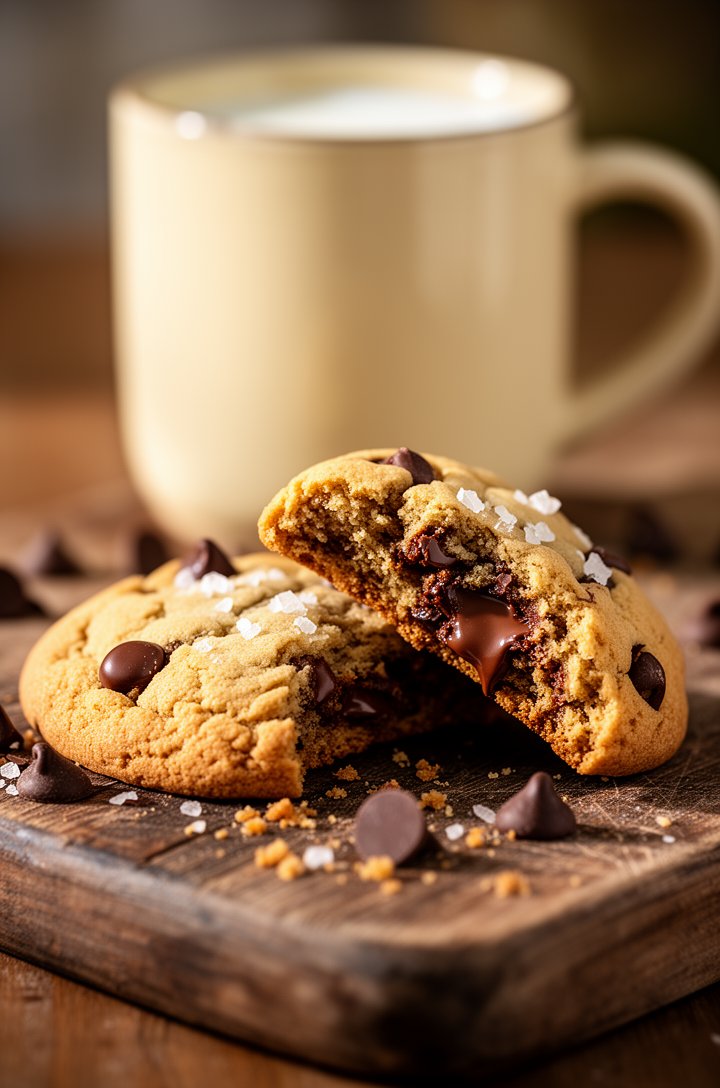
Warm from the oven with a cold glass of whole milk is the correct answer. For company, a scoop of vanilla bean ice cream pressed between two cookies. Priya brings them to every playdate stacked in a mason jar and I've never once seen leftovers.