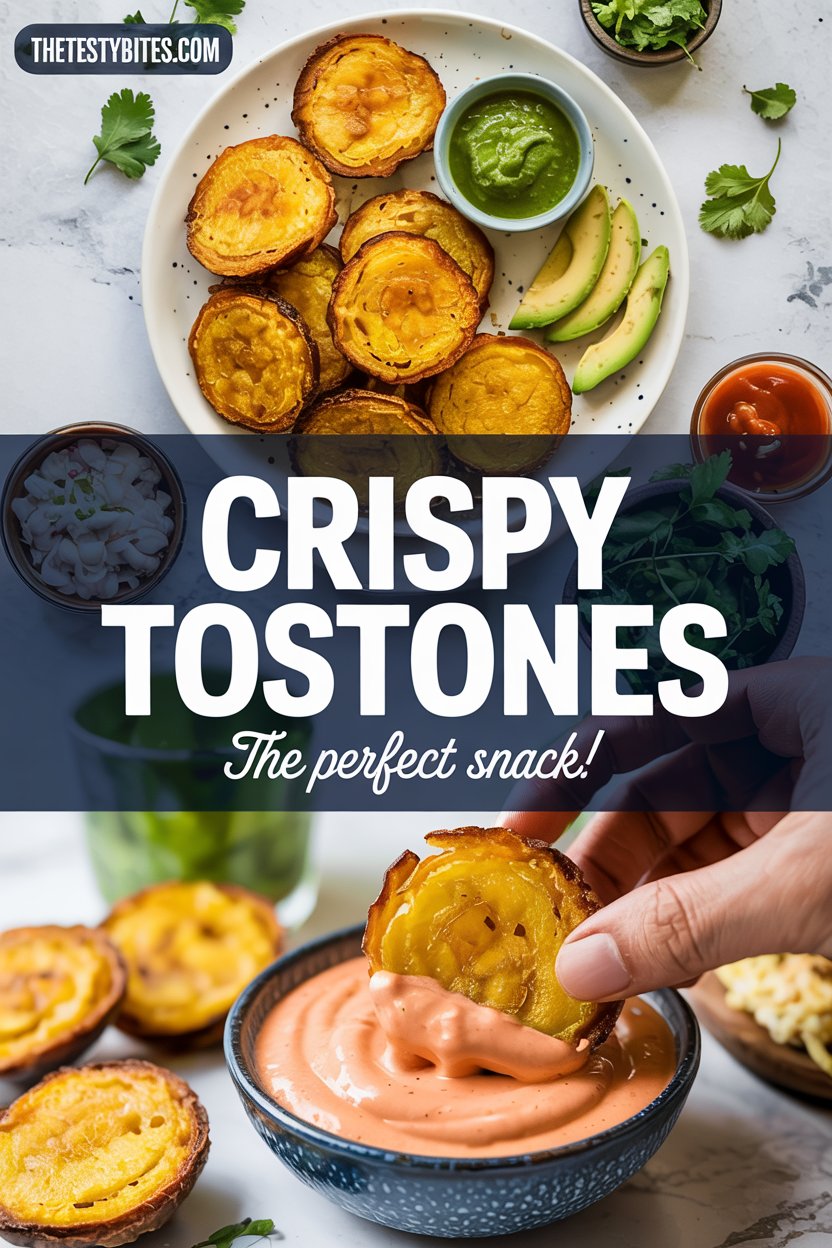
Crispy Tostones (Fried Green Plantains)
Twice-fried green plantains smashed flat and salted until they shatter when you bite in. Dunked in garlicky lime water between fries for a crunch that puts potato chips to shame.
Tasted & written by Rachel
Prep
20 min
Cook
15 min
Total
35 min
Serves
8
The Key
The garlic-lime water soak between fries is everything. Ten seconds is all it takes. The salt and acid season the plantain from the inside, and the residual moisture flashes to steam during the second fry. That steam is what makes the difference between a dense fried disc and something that shatters like a chip when you bite into it.
David brought these home from a Dominican spot in Charlotte last summer and I watched him eat fourteen of them standing at the counter. Fourteen. I counted. So I learned to make them, mostly out of self-defense — takeout tostones four nights a week was getting expensive.
The secret nobody tells you is the soak. Between the first and second fry, you dunk the smashed plantains in salted garlic-lime water for ten seconds. It seasons them all the way through and — this is the part that matters — it creates steam pockets in the second fry that make them shatter like a chip instead of chewing like a soggy fry.
Every recipe that skips this step produces tostones that are fine. These are not fine. These are the ones David ate fourteen of.
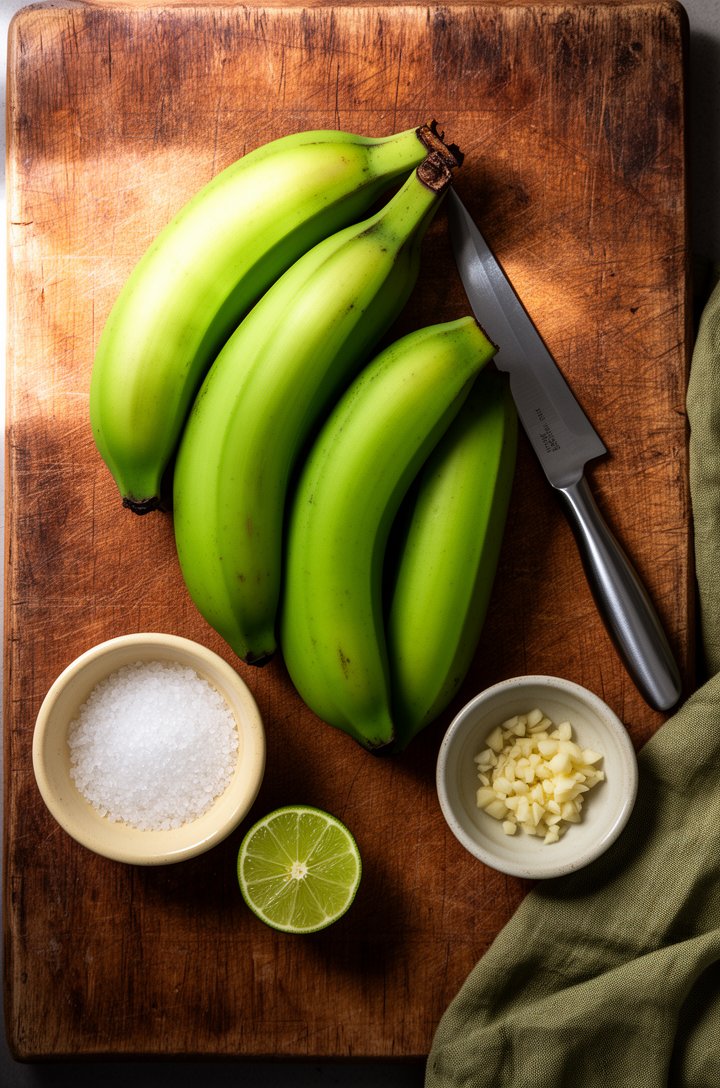
Green plantains are the non-negotiable here. If yours have any yellow, you're making maduros — which is a different and also excellent thing, but not this thing. Green means starchy, firm, and zero sweetness. That's what fries into something crispy instead of something caramelized.
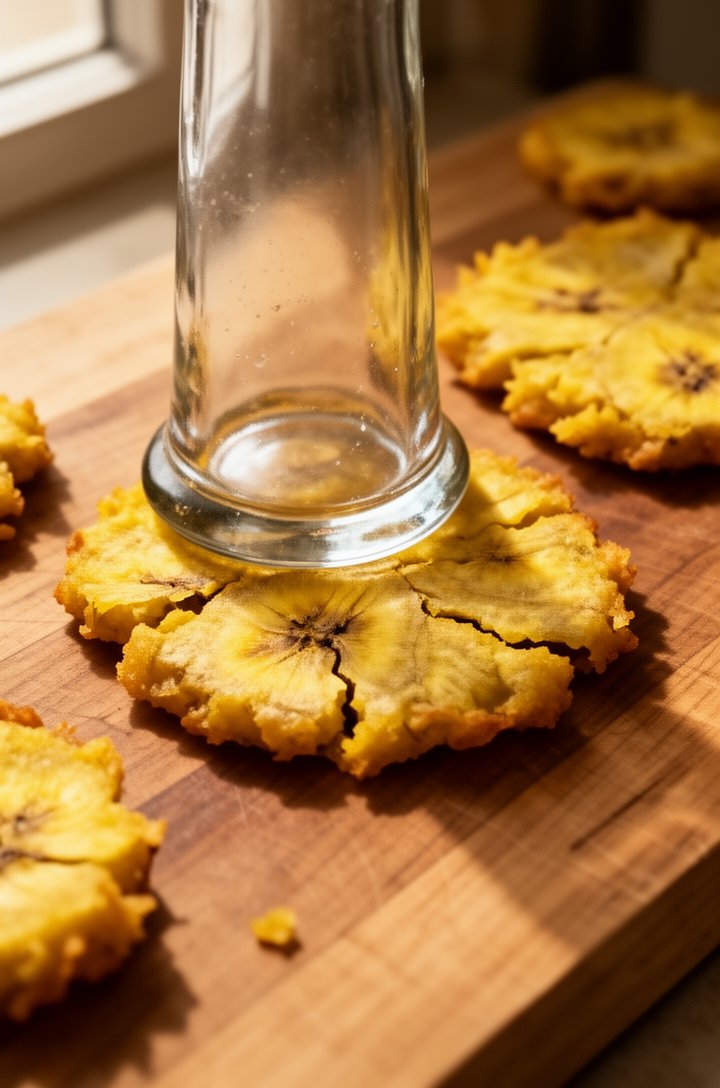
The smashing is satisfying in a way I didn't expect. Firm pressure, one press — not a hammering. You want about a quarter-inch thick with rough, craggy edges. Those edges are where the crunch lives.
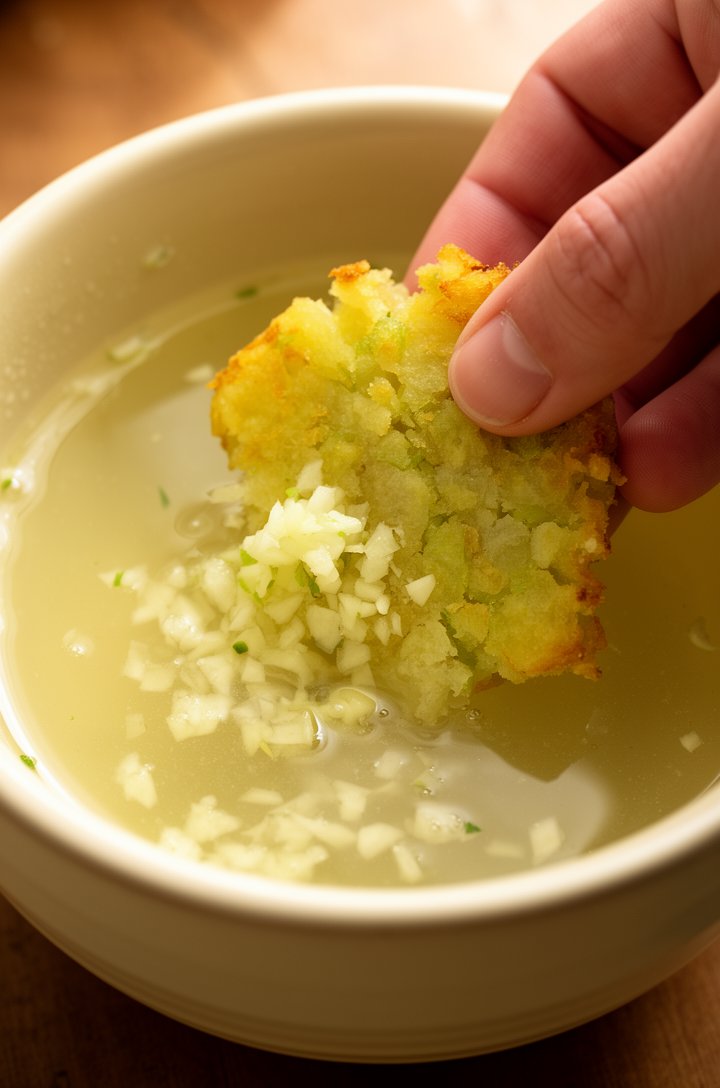
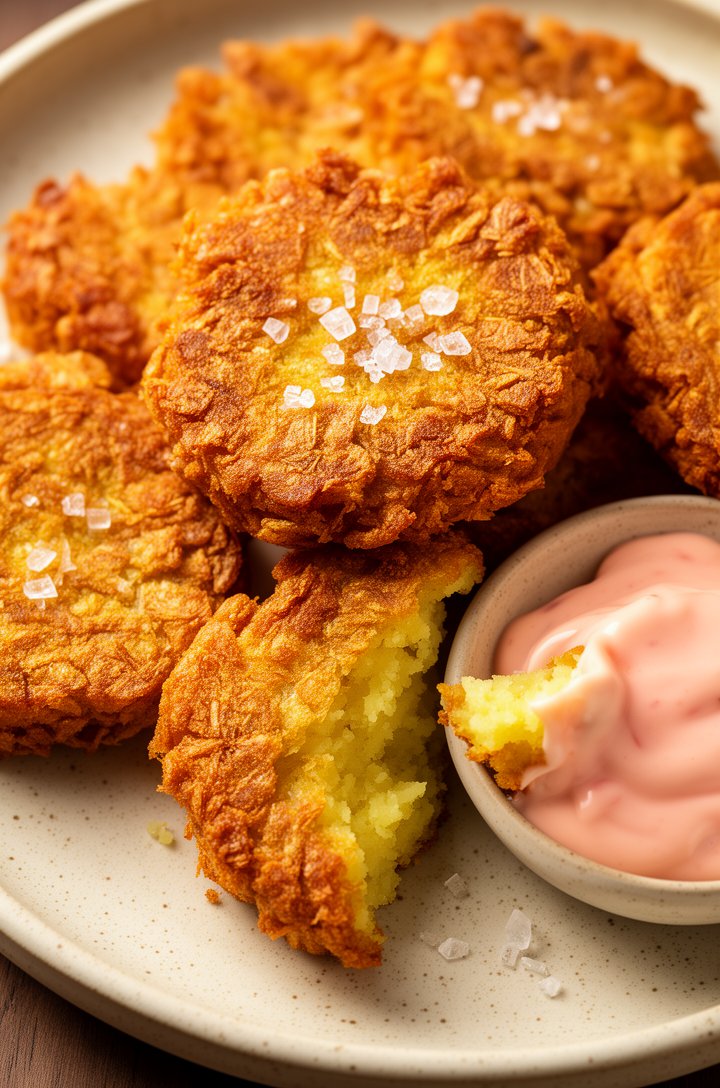
Then they go back in. Hotter oil this time — medium-high — and for barely a minute per side. You're not cooking them anymore. You're building a shell. When they come out deep gold and crackling, hit them with flaky salt immediately while the surface is still slick with oil. That's when the salt sticks.
Mise en place
Ingredients
- 4 green plantains (firm, with no yellow spots)peeled and cut into 1-inch rounds
- 1 cup vegetable or canola oil, or as needed
- 2 cup Water
- 4 cloves garlic, mincedminced
- 1 tablespoon kosher salt, plus more for finishing
- Juice of 1 limejuiced
Mayo-Ketchup Sauce
- 1/2 cup mayonnaiseOptional
- 1/2 cup ketchupOptional
- 1 clove garlic, finely gratedfinely gratedOptional
Finishing
- Flaky sea salt, for finishing
The Method
Instructions
- 01
Cut the ends off each plantain and score the skin lengthwise with a knife, cutting only through the peel. Pry the skin off with your fingers — it won't slide like a banana. Discard the skins.
Done when:Plantains are fully peeled with no clinging strips of green skin. The flesh is pale yellow-white and firm.
- 02
Cut the peeled plantains into 1-inch thick rounds.
Done when:Rounds are roughly uniform in thickness — close to 1 inch. Thinner pieces will burn in the second fry.
- 03
Combine the water, minced garlic, kosher salt, and lime juice in a large bowl. Stir until the salt dissolves. Set aside.
Done when:Salt is fully dissolved and you can smell the garlic and lime when you lean over the bowl.
- 04
Fill a large heavy-bottomed skillet about a third of the way with oil. Heat over medium heat for 2-3 minutes.
Done when:Oil shimmers slightly and a small piece of plantain dropped in produces gentle, lazy bubbles — not violent sputtering.
- 05
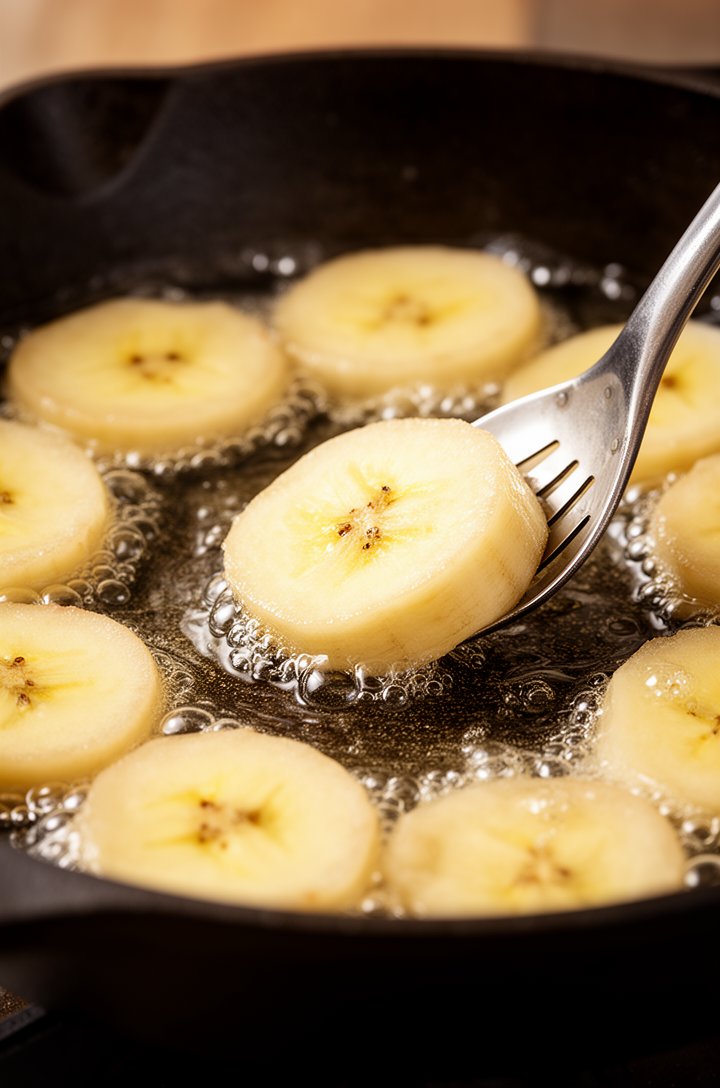
Add the plantain rounds to the oil in a single layer, working in batches. Fry over medium heat, turning once, until softened and pale golden on both sides — about 3-4 minutes per side.
Done when:Plantains are light gold — not deep brown — and a fork slides through with slight resistance. They should still feel somewhat soft, not crispy.
- 06
Transfer the fried rounds to a paper towel-lined plate. Let them cool for 1-2 minutes until you can handle them.
Done when:Warm enough to handle without burning your fingers.
- 07
Smash each round with the flat bottom of a glass, a plate, or a can. Press down firmly but not violently — you want them about 1/4-inch thick without crumbling apart.
Done when:Each piece is flattened into a rough disc about 1/4-inch thick with craggy, uneven edges. Some cracking is fine — total crumbling means you pressed too hard.
- 08
Dip each smashed tostone into the garlic-lime water. Let it sit for about 10 seconds, then remove and gently pat dry with a paper towel.
Done when:The tostone has absorbed some of the garlic-lime water but is patted dry enough that it won't splatter violently in hot oil.
- 09
Heat the oil over medium-high heat. Add the smashed tostones back in batches and fry until deeply golden and crispy — about 1-2 minutes per side.
Done when:Edges are deep golden brown and the surface looks dry and craggy. They should sound hollow when you tap them with the slotted spoon.
- 10
Transfer to a paper towel-lined plate and immediately hit them with flaky sea salt while the oil is still glistening.
Done when:Salt crystals stick to the surface and begin to glisten. Serve within 5 minutes — tostones wait for nobody.
Where it goes wrong
Common mistakes
- ✕Using ripe (yellow) plantains — you need green ones. Ripe plantains are sweet and soft, which is maduros. Different dish entirely.
- ✕Skipping the soak between fries — you'll get tostones that are dense and chewy instead of crispy and light.
- ✕Oil too hot on the first fry — you want gentle bubbling at medium heat. Hot oil browns the outside before the inside cooks through, and they'll crack when you smash them.
- ✕Smashing too thin — thinner than 1/4 inch and they shatter into pieces. You want a flat disc, not plantain shrapnel.
Context
Compared to the usual
In Puerto Rico, tostones are the salty side you eat with everything — rice and beans, pernil, mofongo's crunchy cousin. In the Dominican Republic, they're often pressed thinner and served with a garlic mojo. Cuba goes even thinner and calls them 'mariquitas' when they're chip-thin. This recipe leans Puerto Rican — thick enough to have a soft center, with the garlic-lime soak from the Dominican tradition because it's just better that way. If you want the Cuban approach, slice the plantain lengthwise instead of into rounds and skip the smashing entirely.
Glossary
Techniques used
- Tostones
- Twice-fried smashed green plantain discs, popular across the Caribbean and Latin America. The name comes from the Spanish 'tostar' (to toast). Also called 'patacones' in Colombia and Ecuador.
- Green plantain
- An unripe plantain with firm, starchy flesh and no sweetness. Completely different from a banana — you cannot substitute one for the other. Look for dark green skin with zero yellow patches.
- Tostonera
- A hinged wooden press made specifically for flattening tostones. A flat-bottomed glass works just as well if you don't own one.
- Mayo-ketchup
- A Puerto Rican condiment staple — literally mayo mixed with ketchup and garlic. Sounds wrong. Tastes exactly right. Called 'mayoketchup' as one word on the island.
Riffs
Variations
Tostones con queso
Smash the tostones, add a small pinch of shredded mozzarella on top, then second-fry. The cheese melts into the cracks and gets crispy. Mia asks for these by name.
Garlic mojo tostones
Replace the garlic-lime soak with a proper Dominican mojo — crush 6 cloves garlic with olive oil, cilantro, and salt in a mortar and pestle. Drizzle over the finished tostones instead of the dip.
Tostone cups (canoas)
After the first fry, press the plantain into a muffin tin instead of flat. Second-fry the cups, then fill with seasoned ground beef, pico de gallo, or ceviche.
Q & A
Frequently asked
Can I use an air fryer?
You can air-fry the second round at 400°F for 5-6 minutes, but you still need the first fry in oil to cook the starch through. Fully air-fried tostones are dry and lack the richness.
What oil is best?
Anything neutral with a high smoke point — vegetable, canola, or sunflower. Avoid olive oil (smoke point too low) and coconut oil (flavor competes).
My plantains are crumbling when I smash them. What happened?
Either they weren't cooked long enough in the first fry (they need to be soft inside) or you're pressing too hard. Firm, even pressure. Not a violent smash.
Can I peel the plantains ahead of time?
Yes — peel and cut, then store submerged in salted water in the fridge for up to 4 hours. Drain and pat very dry before frying.
Are tostones the same as maduros?
No. Tostones use green (unripe) plantains and are savory and crispy. Maduros use ripe (yellow-black) plantains and are sweet and caramelized. Same fruit, completely different dishes.
Storage
Honestly, don't. Tostones are a make-and-eat food. If you must, store cooled tostones in a single layer in an airtight container for up to 1 day in the fridge.
Reheating
Spread in a single layer on a sheet pan and bake at 425°F for 8-10 minutes until crispy again. The oven recrisps them better than re-frying, which makes them greasy. Microwave is not an option.
Freezing
Freeze after the first fry and smashing (before the soak). Lay flat on a parchment-lined sheet pan, freeze solid, then transfer to a freezer bag. Good for 2 months. Soak and second-fry from frozen — add 1 extra minute per side.
Make ahead
Complete the first fry and smashing up to 2 hours ahead. Leave the smashed tostones on a wire rack at room temperature. Do the soak and second fry just before serving — this takes under 5 minutes.
Serve with
Classic: a pile on a plate with mayo-ketchup and a cold beer. As a side: next to rice and beans, lechon, or grilled chicken. As an appetizer: tostone cups filled with guacamole or shrimp ceviche. David's preference: plain, standing at the counter, directly from the paper towel.