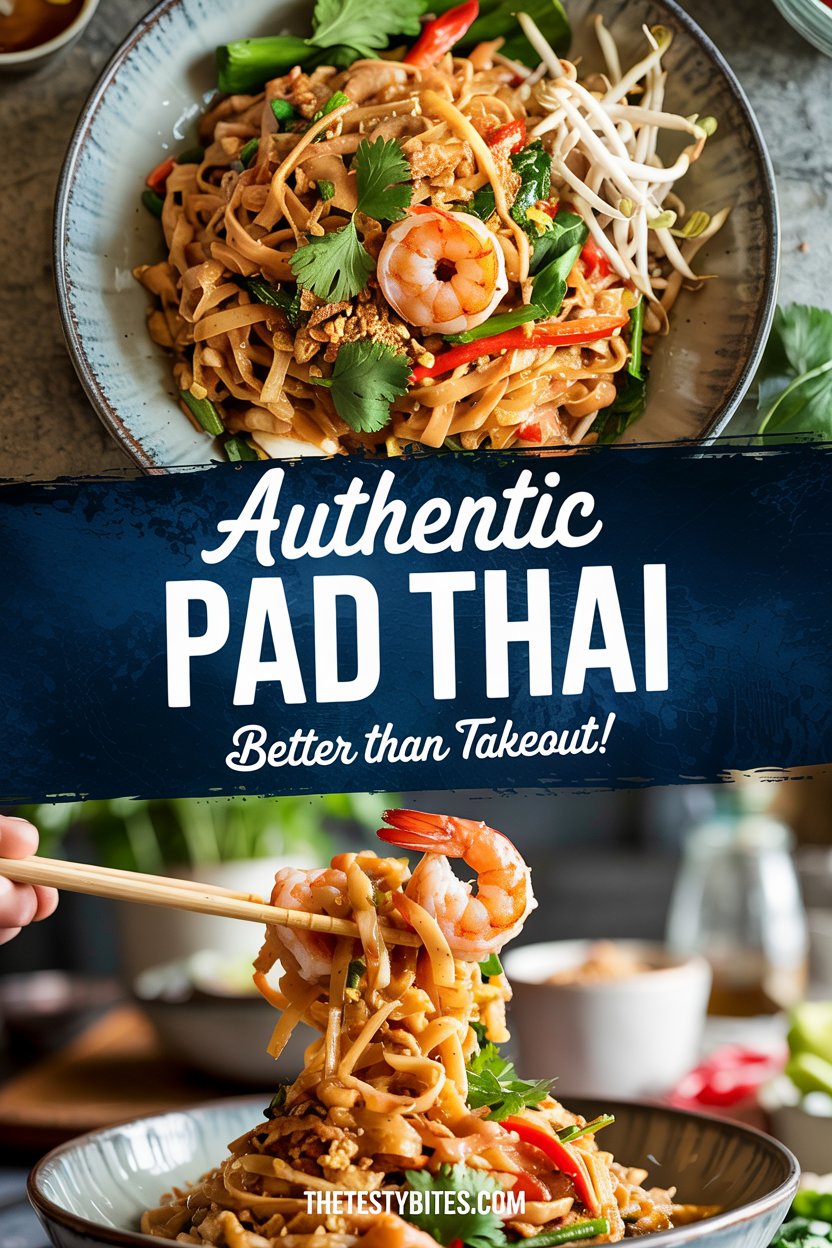
Easy Pad Thai with Shrimp
Sticky-sweet tamarind noodles, seared shrimp, scrambled egg ribbons, and a crunch of roasted peanuts. Better than takeout on a Wednesday — and I mean that literally, not as a food-blog cliché.
Tasted & written by Rachel
Prep
15 min
Cook
15 min
Total
30 min
Serves
4
The Key
Get the wok screaming hot before anything goes in. Pad thai needs aggressive heat for 3-4 minutes total, not gentle warmth for 10. The noodles should sizzle on contact and pick up faint char marks. If your kitchen doesn't smell slightly smoky, your heat is too low.
Better than the restaurant version? No. Better than takeout on a Wednesday when Noah's smearing banana on the highchair and you need dinner in 30 minutes? Yes. By a lot.
I made this six times before I stopped tweaking the sauce ratio. Three tablespoons of fish sauce sounds like a dare, but it's the backbone — without it, you just have sweet sticky noodles. David ate the leftovers cold out of the container at 11 PM after his Thursday run and said it was better that way. He's wrong, but I respect the commitment.
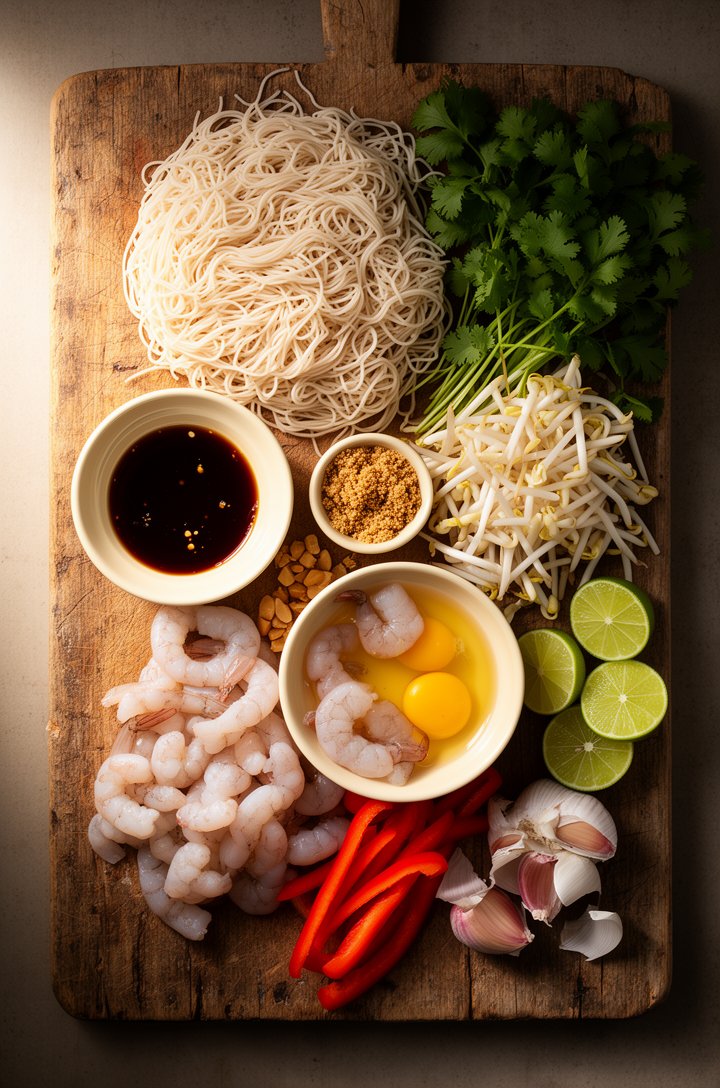
The trick that nobody tells you: get the wok stupid hot before anything goes in. I'm talking smoking. The noodles need to sizzle the second they land, or you're just steaming them into a sad clump. My first three attempts were exactly that — a sad clump. Priya walked in during attempt number four and said it smelled like a real Thai kitchen. That's when I knew the heat was finally right.
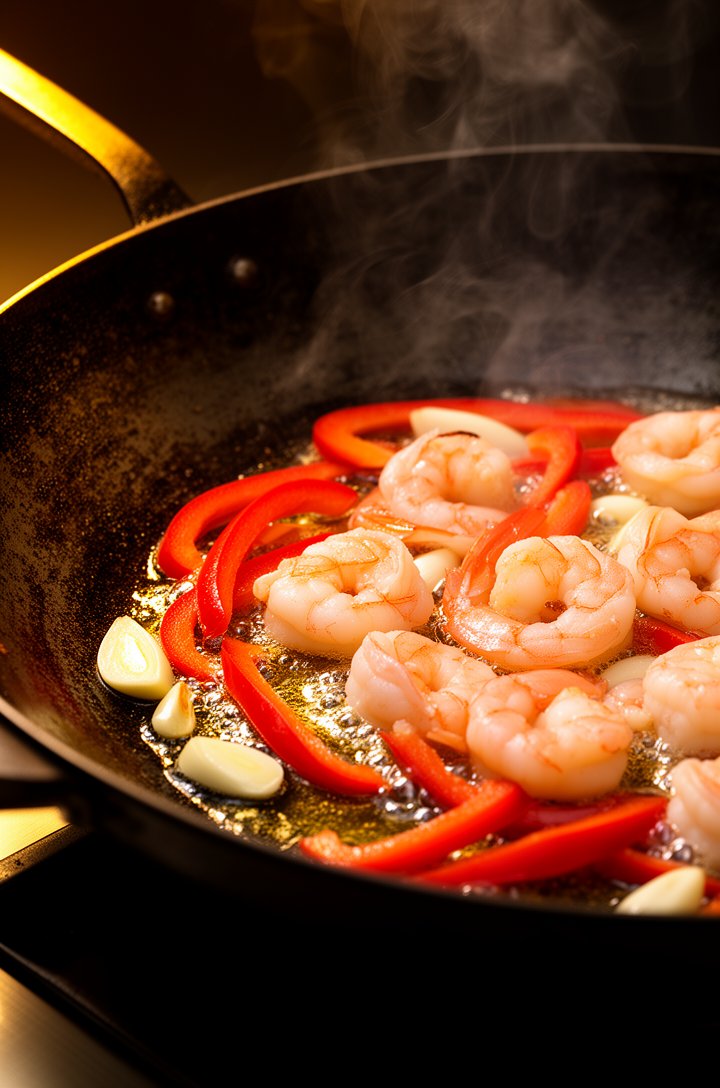
The sauce is where this recipe earns its keep. Fish sauce, brown sugar, rice vinegar, soy sauce, and sriracha — five ingredients that somehow become more than the sum of their parts. It tastes aggressive on its own. Too sweet, too salty, too much. Then it hits the bland noodles and everything clicks into place.
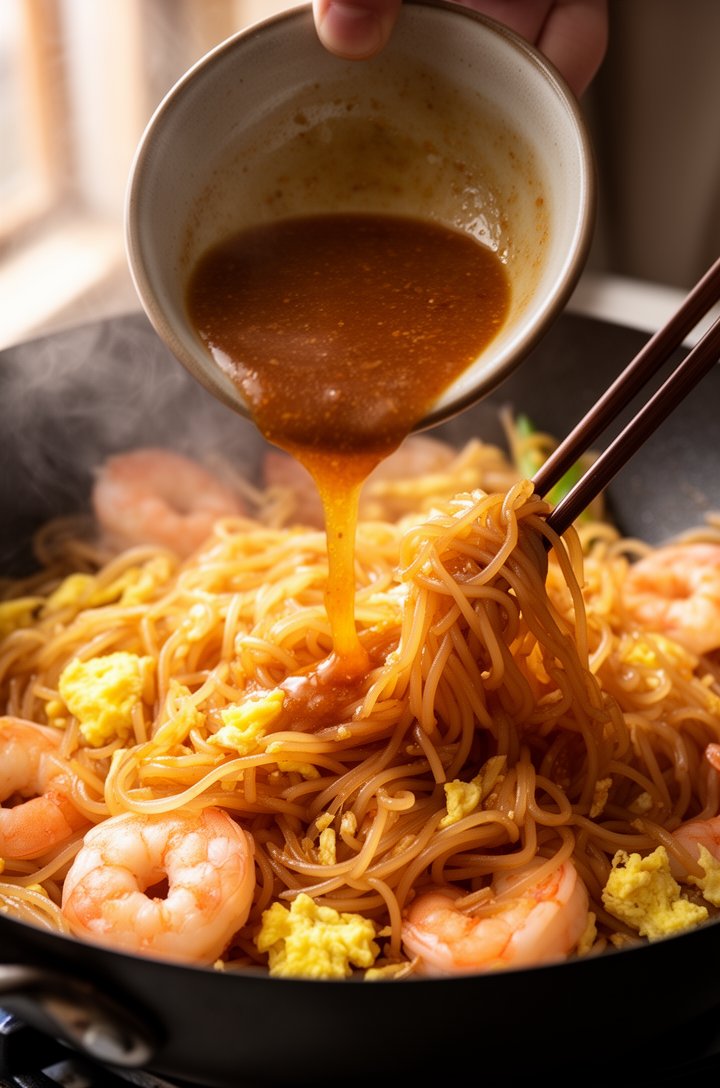
Mia likes to help with the lime squeezing — she calls it "the magic part." She's not wrong. Without the lime hit at the end, the whole dish falls flat. It's the difference between good pad thai and pad thai you actually crave.
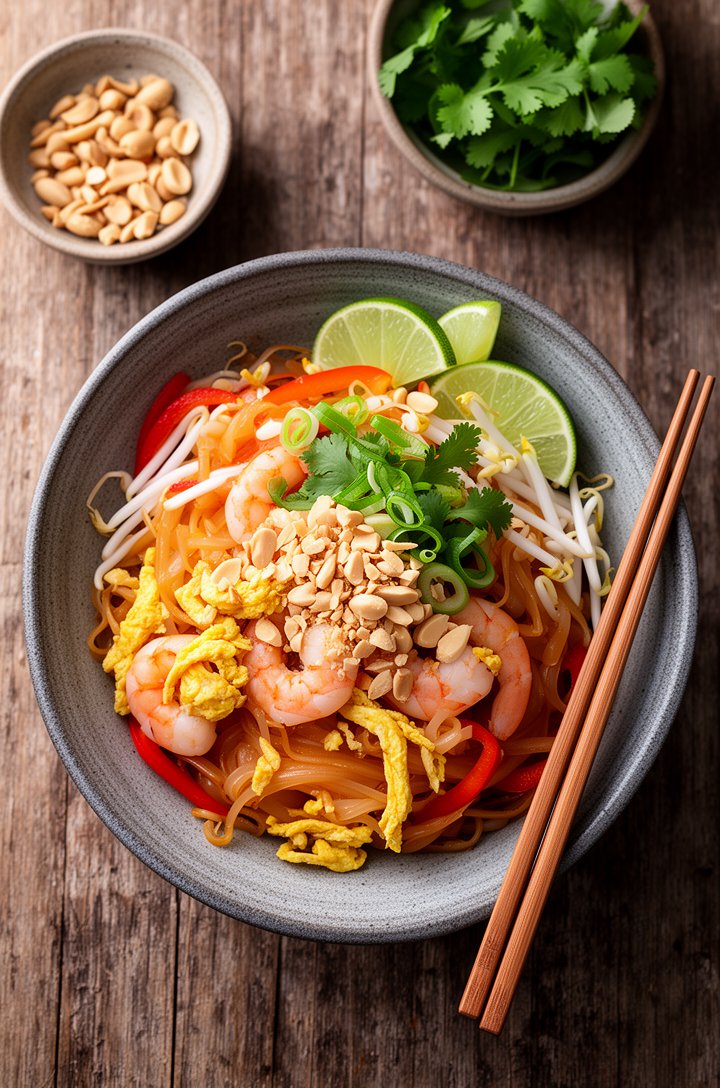
Mise en place
Ingredients
Noodles
- 8 oz flat rice noodles (pad thai width)soaked per package directions
Stir-Fry
- 3 tbsp Vegetable Oil
- 3 clove Garlicminced
- 8 oz medium shrimp (about 20)peeled and deveined
- 2 whole Eggslightly beaten
- 1 whole Red Bell Pepperthinly sliced
- 1 cup Bean Sprouts
Sauce
- 3 tbsp Fish Sauce
- 5 tbsp light brown sugar (packed)
- 2 tbsp Rice Vinegar
- 1 tbsp low-sodium soy sauce
- 1 tbsp sriracha (or more to taste)
- 2 tbsp Peanut ButterOptional
Garnish
- 3 whole Scallions (Green Onions)chopped
- 1/2 cup dry roasted peanuts, roughly choppedroughly chopped
- 0.5 cup Cilantro (fresh)chopped
- 2 limes, cut into wedgescut into wedges
The Method
Instructions
- 01
Cook rice noodles according to package directions until just tender — err on the side of underdone. Drain and rinse under cold water immediately to stop cooking.
Done when:Noodles are pliable and bendy but still have a slight chew in the center. They should not be mushy or falling apart.
- 02
Whisk together fish sauce, brown sugar, rice vinegar, soy sauce, sriracha, and peanut butter (if using) in a small bowl until the sugar dissolves.
Done when:No sugar granules visible at the bottom of the bowl. Sauce should taste aggressively sweet-salty-sour — it mellows once it hits the noodles.
- 03
Heat 1 1/2 tablespoons oil in a wok or large nonstick skillet over high heat. Add shrimp, garlic, and bell pepper. Toss constantly for 1-2 minutes.
Done when:Shrimp are pink and curled into C-shapes (not tight O-shapes — that's overcooked). Garlic is fragrant but not browned.
- 04
Push everything to one side of the wok. Add remaining oil to the empty side and pour in beaten eggs. Scramble with a spatula, breaking into small ribbons.
Done when:Eggs are just set with some golden edges — slightly wet is fine, they'll keep cooking from the residual heat.
- 05
Add drained noodles and sauce to the wok. Toss everything together using tongs, lifting and folding so the sauce coats every strand.
Done when:No pooling liquid at the bottom of the wok. Noodles are uniformly glossy and amber-colored, not pale.
- 06
Add bean sprouts and half the peanuts. Toss for 30 seconds — you want the sprouts barely warmed, not wilted.
Done when:Sprouts are heated through but still have their signature snap when you bite one.
- 07
Divide among bowls and top with remaining peanuts, green onions, cilantro, and lime wedges. Squeeze lime over the top before eating — this is not optional.
Done when:Each bowl has a generous scatter of peanuts and herbs, with a lime wedge perched on the rim.
Where it goes wrong
Common mistakes
- ✕Overcooking the noodles before they hit the wok — they cook more in the pan, so pull them early
- ✕Crowding a small pan — the noodles steam instead of frying, and you get a gummy mess
- ✕Skipping the lime — it sounds minor, but the acid ties everything together. Without it, the dish tastes flat
- ✕Using thick soy sauce instead of light — it darkens the color and makes the whole thing taste like Chinese stir-fry
Context
Compared to the usual
Authentic Bangkok pad thai uses tamarind paste, palm sugar, dried shrimp, and preserved radish — ingredients that most American grocery stores don't carry. This version swaps in rice vinegar, brown sugar, and sriracha. It's not trying to be street-food authentic. It's trying to be the best pad thai you can make on a Tuesday with what's already in your pantry. For the purist version, Pailin Chongchitnant's Hot Thai Kitchen recipe is the gold standard — palm sugar caramelized until dark, real tamarind, the whole production. Worth it on a weekend.
Glossary
Techniques used
- Wok hei
- Literally 'breath of the wok' — the smoky, slightly charred flavor that comes from cooking over extreme heat. Home burners can't fully replicate restaurant wok hei, but a screaming-hot pan gets you 70% there.
- Tamarind paste
- A sour, fruity paste made from tamarind pods. The traditional souring agent in pad thai. Not the same as tamarind concentrate — the paste is milder. Rice vinegar is a solid stand-in.
- Fish sauce
- Fermented anchovy liquid that smells alarming and tastes essential. Adds umami depth that salt alone can't achieve. Three tablespoons sounds like a lot. It's not.
- Flat rice noodles
- Also labeled 'pad thai noodles' or 'rice sticks.' About 1/4 inch wide, translucent when dry. Not the same as rice vermicelli, which is too thin for this dish.
Riffs
Variations
Chicken Pad Thai
Swap shrimp for 8 oz thinly sliced boneless chicken thighs. Cook 3-4 minutes instead of 1-2. Everything else stays the same.
Tofu Pad Thai (Vegetarian)
Use 8 oz pressed extra-firm tofu, cubed. Sear in the oil until golden on two sides before adding garlic and pepper. Sub vegetarian fish sauce or extra soy sauce.
Spicy Pad Thai
Double the sriracha to 2 tablespoons and add 1/2 teaspoon chili flakes to the sauce. Garnish with sliced fresh Thai chilies if you're feeling bold.
Q & A
Frequently asked
Can I use chicken instead of shrimp?
Yes. Slice boneless thighs thin and cook them a minute longer than the shrimp — they need about 3-4 minutes over high heat. Thighs stay juicier than breast.
Is this gluten-free?
Almost. The rice noodles are naturally gluten-free. Swap the soy sauce for tamari and check your fish sauce label — most are fine, but some brands sneak in wheat.
Can I make it vegetarian?
Skip the shrimp, add pressed extra-firm tofu cubed into 1-inch pieces. Swap fish sauce for a vegetarian fish sauce or use soy sauce plus a squeeze of lime.
Why does mine taste nothing like restaurant pad thai?
Probably heat. Restaurant woks run at 100,000+ BTUs. Your home burner does maybe 15,000. Get the biggest, flattest pan you own, preheat it for 2 full minutes, and cook in smaller batches if needed.
Storage
Airtight container in the fridge for 2-3 days. The noodles absorb sauce overnight, so they'll taste more concentrated reheated. David considers this a feature.
Reheating
Hot skillet with a splash of water and a drizzle of oil. Toss for 2-3 minutes over high heat. The microwave makes the noodles gummy — avoid it.
Freezing
Not recommended. Rice noodles don't freeze well — they turn mushy and lose their chew completely.
Make ahead
Prep sauce and slice all vegetables up to a day ahead. Soak noodles and toss with a teaspoon of oil up to 4 hours before cooking. The actual stir-fry is 5 minutes — don't try to do that ahead.
Serve with
Serve in deep bowls with extra lime wedges and a small dish of crushed peanuts on the side. A cold Thai beer or a glass of off-dry Riesling pairs well. For a spread, add a simple cucumber salad with rice vinegar dressing alongside.