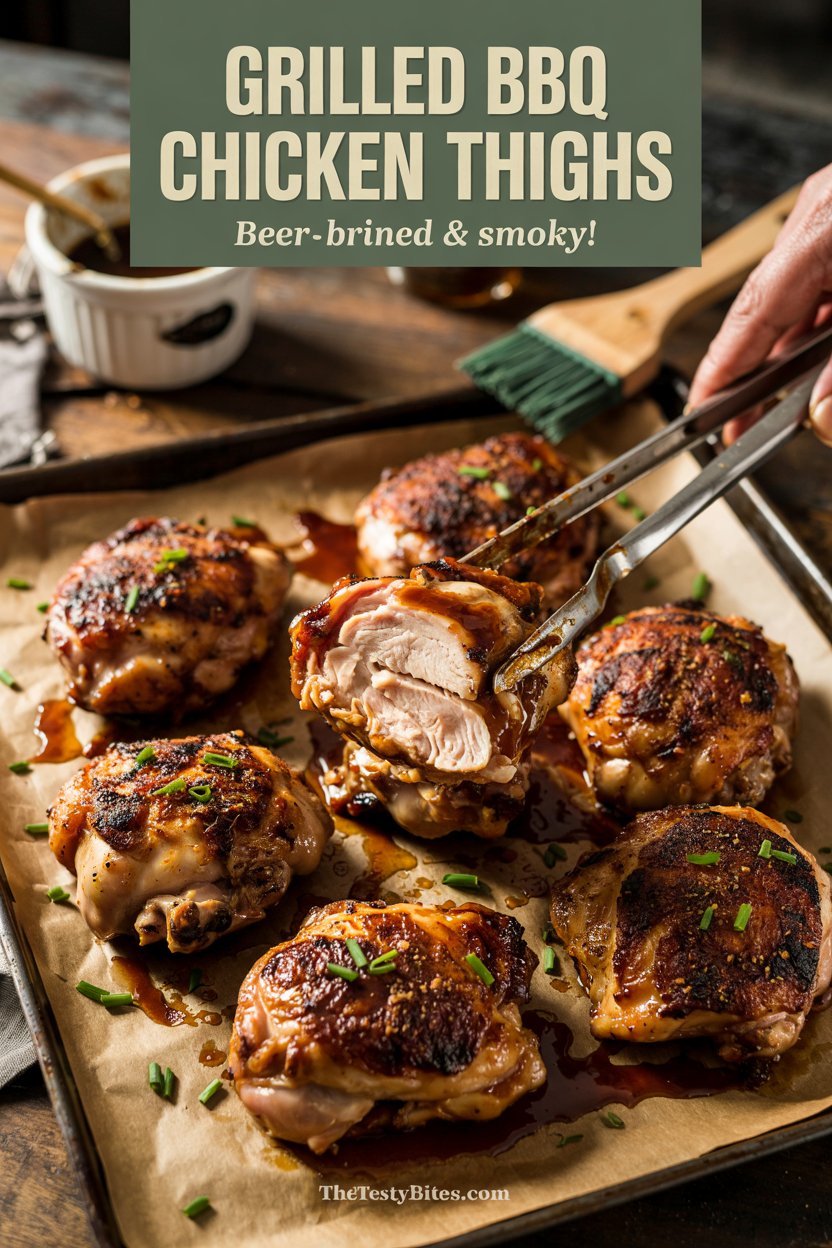
Grilled BBQ Chicken with Beer Brine and Smoky Dry Rub
Beer-brined chicken thighs rubbed with a smoky spice blend, grilled over indirect heat, and basted with sticky BBQ sauce at the finish. The brine keeps the meat absurdly juicy while the two-zone fire builds char without burning the sauce.
Tasted & written by Rachel
Prep
10 min
Cook
25 min
Total
35 min
Serves
6
The Key
Cook the chicken 80% of the way on the indirect side of the grill before it ever sees direct heat or sauce. The two-zone method means the meat is already at 155°F when you start saucing, so you're only on direct heat for 6-8 minutes — just enough to caramelize the glaze without incinerating it.
Jake called from Austin last weekend to tell me — unprompted — that he'd finally nailed his grilled BBQ chicken. I said nothing. I just sent him this recipe. He hasn't called back yet, which means he's either mad or making it a second time.
The trick most people skip is the brine. Thirty minutes in beer and salt, and the chicken holds onto moisture like it has something to prove. The dry rub does the flavor work. The sauce is just the finish — sticky and caramelized, not a mask for dry meat. Two-zone grilling means the chicken cooks through on the cool side before it ever sees direct flame, so you get char without the panic.

The dry rub is the backbone here. Brown sugar, smoked paprika, cumin, chili powder, garlic and onion powder, mustard powder — it sounds like a lot of jars, but you mix it once and it keeps for months. I tripled the batch last time and I've been putting it on everything. David's running club has started requesting "the chicken with the rub" by name, which is the closest thing to a Michelin star I'll ever get.
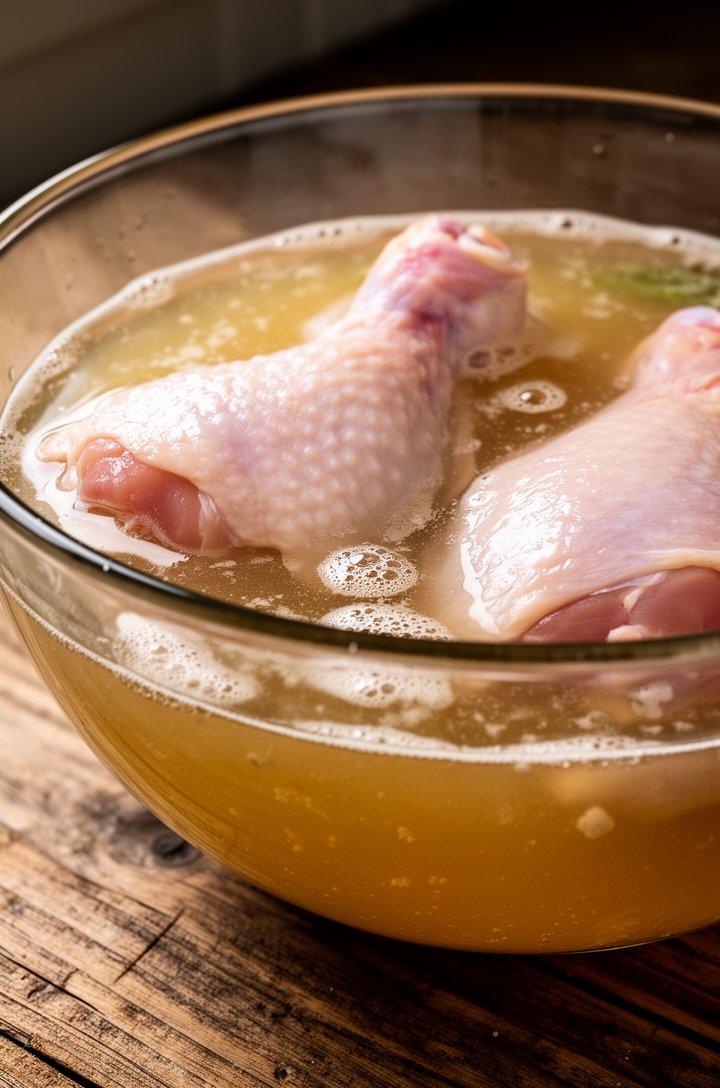
The beer brine isn't about flavor from the beer itself — it's about the salt doing its work in liquid. Thirty minutes is all it needs. The carbonation helps the salt penetrate, and when you pat the chicken dry and hit it with that rub, the surface is primed to form a crust instead of steaming.
Two-zone grilling is the whole game. Every piece of grilled BBQ chicken I burned before I learned this technique was because I put sauced chicken directly over high heat and hoped for the best. The sugar in BBQ sauce carbonizes in about 90 seconds over direct flame. So now the chicken goes on the cool side first, lid down, until it's nearly cooked through. Only then does it move over the fire for a quick sear and a few rounds of sauce.
The saucing happens fast — two minutes per side, flip, sauce, repeat. Three rounds builds a lacquered glaze that's sticky and caramelized but not burnt. Mia stood at the window and watched the whole process last Saturday. Noah ate a banana.
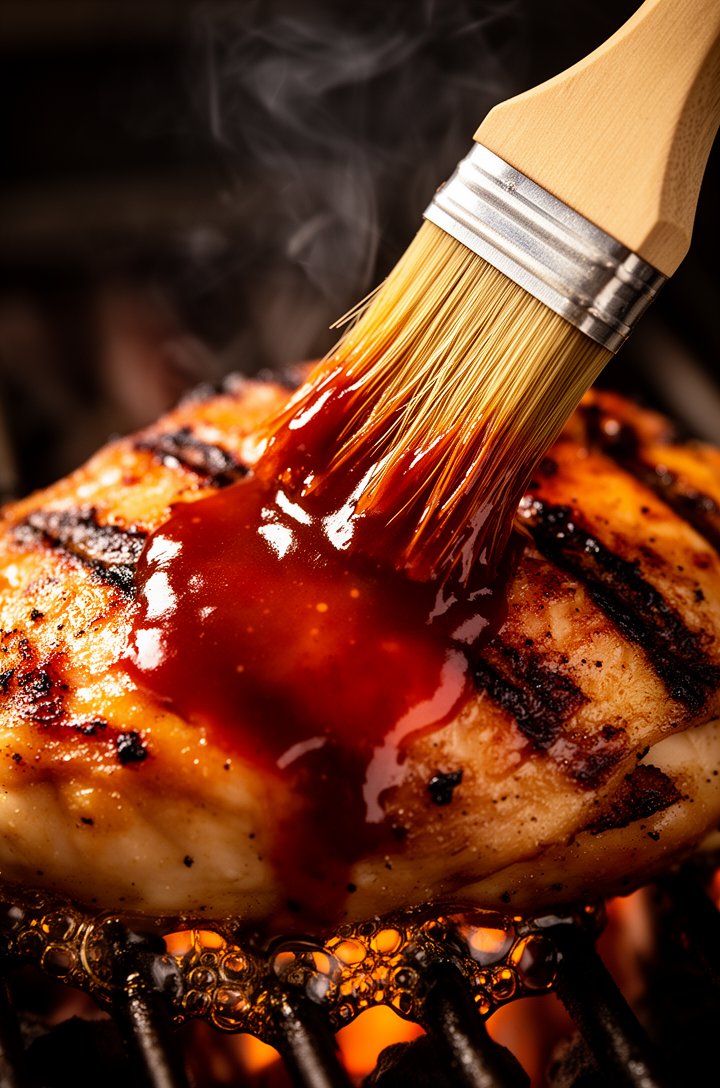
Pull the chicken off, let it rest five minutes, hit it with one more coat of fresh sauce. The contrast between the caramelized layers and that last glossy brush is what makes it look — and taste — like you spent all afternoon on it. You didn't. The grill did the work. You just timed it right.
Mise en place
Ingredients
- one 4-5 pound package bone-in chicken thighs (about 8-10 pieces)skin-on or skin removed, your call
- 2 cups BBQ sauce of choice
Beer Brine
- 1 tablespoon kosher salt (for the brine)
- one 16-ounce beer of choice (lager or pale ale works best)
Dry Rub
- 1 tablespoon kosher salt
- 3 tablespoons firmly packed brown sugar
- 1½ teaspoons chili powder
- 1½ teaspoons ground cumin
- 1½ teaspoons garlic powder
- 1½ teaspoons mustard powder
- 1½ teaspoons onion powder
- 1½ teaspoons smoked paprika
- ½ teaspoon ground black pepper
- ⅛ to ¼ teaspoon cayenne pepperOptional
Garnish
- 2 tablespoons chopped fresh chivesfinely choppedOptional
The Method
Instructions
- 01
Trim any excess skin or fat from the chicken thighs. If you prefer skinless, pull the skin off now — the brine and rub carry plenty of flavor either way.
Done when:Thighs are trimmed clean with no dangling skin flaps or large fat deposits.
- 02
Combine the beer and 1 tablespoon kosher salt in a large bowl or zip-top bag, stirring until the salt dissolves. Submerge the chicken in the brine and refrigerate for at least 30 minutes, up to 2 hours.
Done when:Chicken has been fully submerged for at least 30 minutes. The meat will look slightly paler and plumper.
- 03
Mix all dry rub ingredients together in a small bowl — salt, brown sugar, chili powder, cumin, garlic powder, mustard powder, onion powder, smoked paprika, black pepper, and cayenne if using.
Done when:Rub is uniform in color with no clumps of brown sugar. Should smell smoky and warm.
- 04
Prepare your grill for two-zone indirect cooking. On a gas grill, light one side to medium-high and leave the other off. On charcoal, bank all coals to one side. Preheat for at least 15 minutes with the lid closed.
Done when:The hot side reads 400-450°F on the grill thermometer. You can hold your hand 6 inches above the indirect side for 5-6 seconds before pulling away.
- 05
Remove chicken from the brine and pat very dry with paper towels. Season generously on all sides with the dry rub, pressing it into the meat. If using skin-on, work some rub underneath the skin too.
Done when:Every surface is coated — no bare spots. The rub should stick to the dry surface without falling off.
- 06
Place the chicken on the indirect (cool) side of the grill, skin-side up if applicable, as close to the heat source as possible without being directly over it. Close the lid and cook for 15-18 minutes, rotating the pieces halfway through for even cooking.
Done when:Internal temperature reads 155-160°F. The rub has set into a dry crust and the chicken is cooked nearly through.
- 07
Move the chicken over direct heat. If skin-on, flip skin-side down first. Brush generously with BBQ sauce and cook for 2 minutes. Flip, brush the other side with sauce, and cook another 2 minutes. Repeat one more round of flipping and saucing.
Done when:Sauce is sticky and caramelized with dark, lacquered edges. Internal temperature is 165°F or above. Some charred spots on the sauce are good — fully blackened is too far.
- 08
Transfer chicken to a platter or sheet pan lined with parchment. Rest for 5 minutes, then hit it with one final brush of fresh BBQ sauce. Scatter chives over the top if using.
Done when:Juices have settled back into the meat. When you press a thigh, the surface bounces back slightly rather than flooding juice.
Where it goes wrong
Common mistakes
- ✕Saucing too early — BBQ sauce has sugar that burns fast over direct heat. The chicken needs to be nearly cooked through before any sauce touches it.
- ✕Skipping the brine — going straight to the rub on dry chicken is why most grilled BBQ chicken tastes like seasoned cardboard.
- ✕Using a wet rub on wet chicken — if you don't pat the brined chicken dry, the rub turns to paste and never forms a crust.
- ✕Cooking entirely over direct heat — the outside chars before the inside cooks, and you end up cutting into pink meat next to burnt sauce.
Context
Compared to the usual
This is the backyard grill version of real low-and-slow barbecue chicken. A proper smoker does it at 250°F for two hours with wood chips and produces something transcendent — but it also requires equipment most people don't own and a Saturday afternoon most people don't have. The two-zone grill method gets you 85% of the way there in under 40 minutes of active cooking. The beer brine closes the remaining gap by keeping the meat juicy without the long smoke bath. Jake would disagree with that math. Jake can write his own recipe.
Glossary
Techniques used
- Two-zone grilling
- Setting up the grill with a hot side (direct heat from coals or burners) and a cool side (no heat source underneath). Lets you sear and slow-cook on the same grill without moving the food to an oven.
- Indirect heat
- The cool side of a two-zone grill. Food cooks by ambient heat with the lid closed, like a low oven. Essential for thick cuts that need time to cook through without burning the exterior.
- Beer brine
- A quick brine using beer as the liquid base instead of water. The carbonation helps the salt penetrate faster, and the malt adds a subtle sweetness that complements BBQ spice rubs.
- Basting
- Brushing sauce onto meat during cooking. For BBQ chicken, this means layering thin coats of sauce and letting each one caramelize before adding the next — builds depth instead of a single thick coat that slides off.
Riffs
Variations
Spicy chipotle version
Add 2 tablespoons adobo sauce from a can of chipotles to your BBQ sauce before basting. Bump the cayenne in the rub to ½ teaspoon. Smoky heat that builds.
Honey mustard glaze
Replace the BBQ sauce with a mix of ⅓ cup Dijon mustard, ⅓ cup honey, and 2 tablespoons apple cider vinegar. Baste the same way — it caramelizes into a golden, tangy crust.
Mixed pieces
Use a combination of thighs, drumsticks, and split breasts. Start breasts on indirect heat first (they take longer), add thighs and drums 5 minutes later. Pull each piece when it hits 165°F.
Q & A
Frequently asked
Can I use chicken breasts instead of thighs?
You can, but brine them for the full 2 hours and pull them off the grill at 160°F internal. Breasts are leaner and less forgiving — the brine matters even more.
Does the beer matter?
Not hugely. A basic lager or pale ale works best. Avoid anything heavily hopped (IPAs can leave bitterness) or dark stouts. If you don't cook with alcohol, buttermilk is a perfect swap.
Can I do this on a gas grill?
Absolutely. Light one side to medium-high, leave the other burners off. Same technique, same times. Gas is actually easier to control for two-zone cooking.
How do I know when the sauce is caramelized vs. burning?
Caramelized sauce is dark, sticky, and slightly tacky to the touch. Burnt sauce is matte black and smells acrid. The line is thin — stay close during the direct-heat phase.
What BBQ sauce should I use?
Whatever you like. A Kansas City-style sweet-and-smoky sauce caramelizes beautifully. Vinegar-based Carolina sauces work but won't glaze the same way. Use at least a cup — you want enough to baste 3-4 rounds.
Storage
Airtight container in the fridge for up to 4 days. The sauce sets into a sticky glaze that reheats well.
Reheating
350°F oven for 12-15 minutes, loosely tented with foil to prevent the sauce from burning. Brush with a little extra sauce halfway through. Avoid the microwave — it turns the glaze rubbery.
Freezing
Freeze individual pieces in a single layer on a sheet pan, then transfer to a freezer bag. Good for up to 3 months. Thaw in the fridge overnight before reheating.
Make ahead
Mix the dry rub up to 2 months ahead and store in an airtight container. Brine the chicken up to 2 hours before grilling. The rub and brine can overlap — brine first, then rub and go straight to the grill.
Serve with
Classic coleslaw, baked beans, corn on the cob, or potato salad. Cornbread if you're feeling ambitious. A stack of paper towels is not optional — this is hands-and-face food.