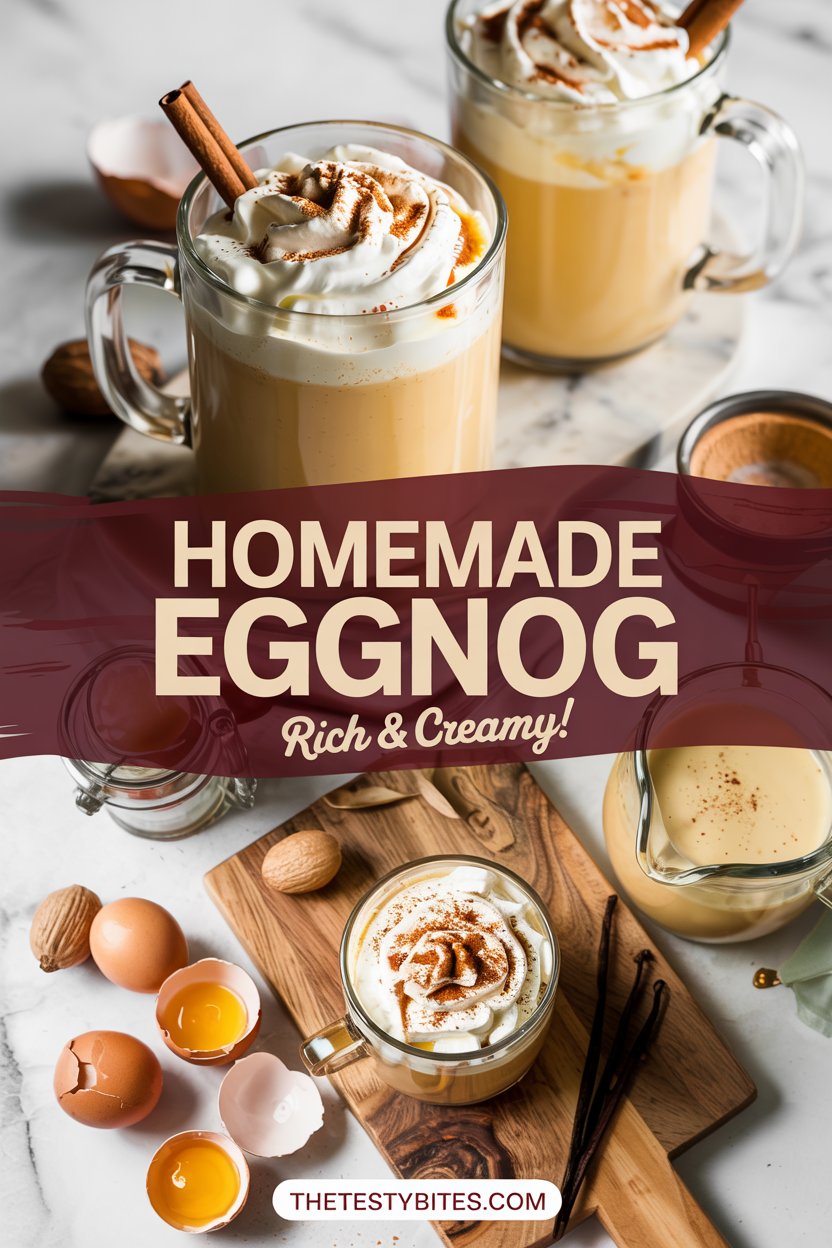
Homemade Eggnog That Actually Tastes Like Something
Rich, custardy homemade eggnog with real nutmeg and a silky body that makes the carton stuff taste like flavored milk. Twenty-five minutes, six egg yolks, and one fine-mesh strainer between you and the best thing at the party.
Tasted & written by Rachel
Prep
15 min
Cook
10 min
Total
25 min
Serves
6
The Key
Temper the eggs like you mean it. One big spoonful of hot milk into the yolks, whisk it in completely, then another. Five or six spoonfuls before you pour everything back into the pot. This raises the egg temperature gradually so the proteins set into a smooth custard instead of curdling into sweet scrambled eggs. If your thermometer reads 160°F, you're safe and silky. Pull it off the heat immediately.
David brought home a carton of store-bought eggnog last December. I took one sip, looked at him, and said nothing. He knew. The next morning I made a batch from scratch and he drank three glasses before noon. The difference isn't subtle — it's the difference between a custard and a milkshake. Real eggnog is thick, spiced, slightly warm from the cooking, and it coats the glass. The carton version is corn syrup in a holiday costume.
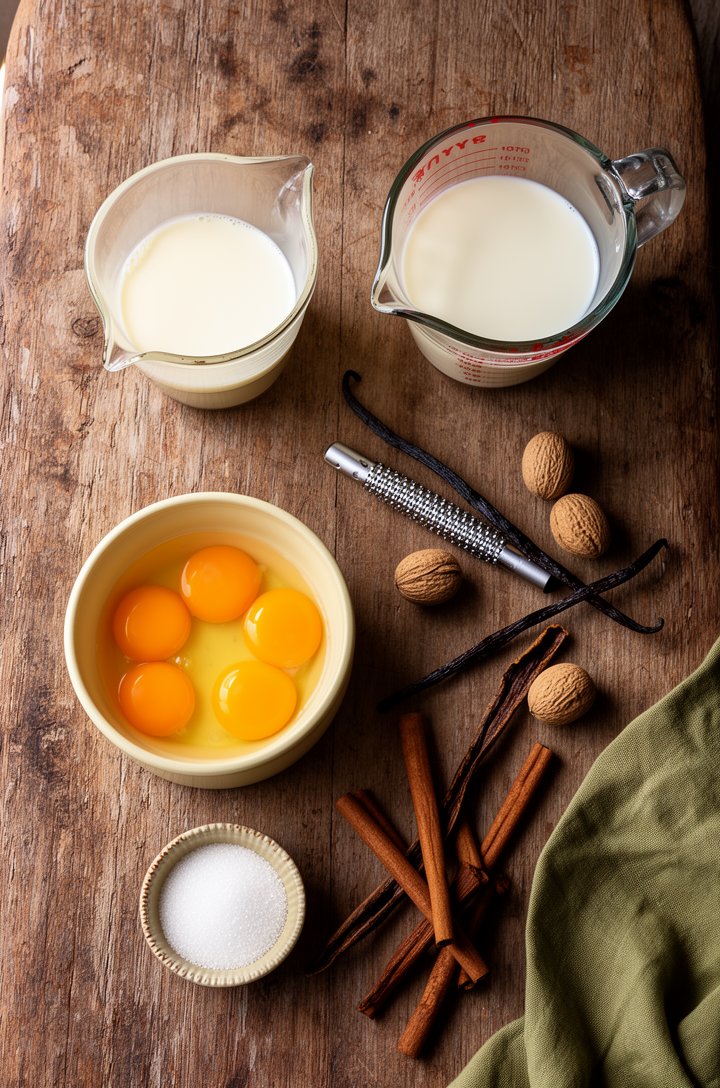
This takes twenty-five minutes. You temper some egg yolks, heat some milk, strain it, chill it. That's it. Mia likes to crack the eggs. Noah just wants the whipped cream. And I get to feel like I did something impressive for approximately zero effort.
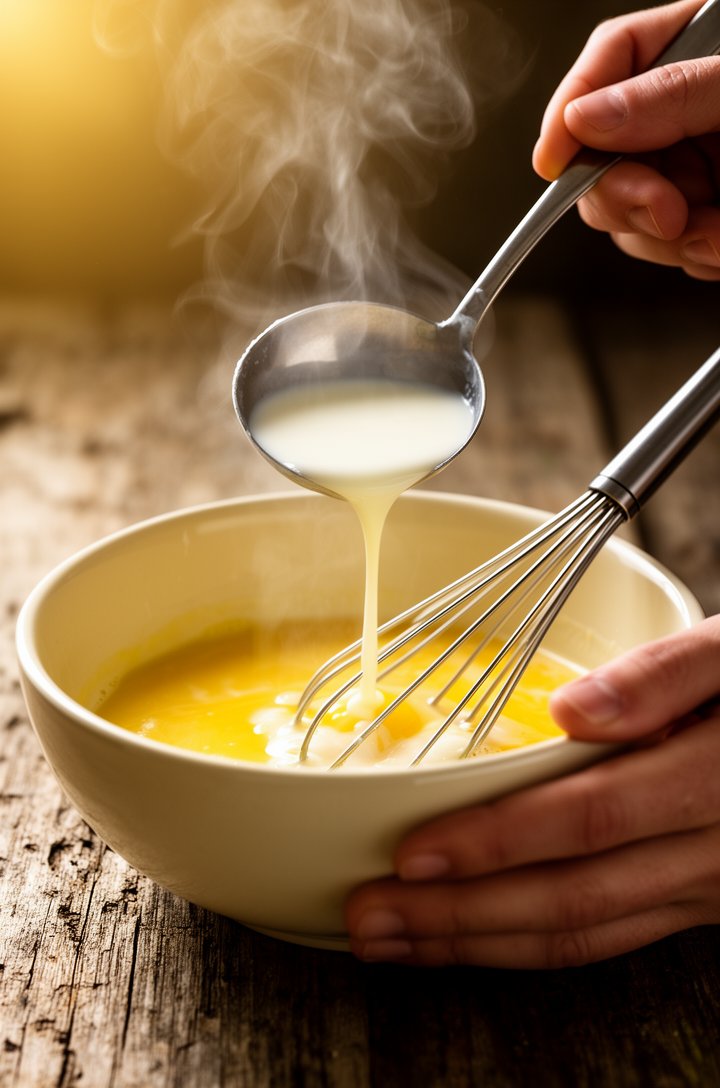
The trick — if there is one — is tempering. You add the hot milk to the eggs one spoonful at a time, whisking like your dignity depends on it. Rush this and you get sweet scrambled eggs in milk. Take your time and you get a custard so smooth it pours like velvet.
I make a batch every December and keep it in a pitcher in the fridge. It lasts a week. It never makes it to day four. David puts it in his coffee. Priya came over with her kids and I poured her a glass with bourbon and she texted me the recipe request before she got home. Jake in Austin insists his version with rum is better. It isn't.
The nutmeg matters more than you think. Pre-ground nutmeg tastes like sawdust compared to freshly grated. Buy a whole nutmeg and a microplane — one nutmeg will last you three holiday seasons and the smell alone is worth it.
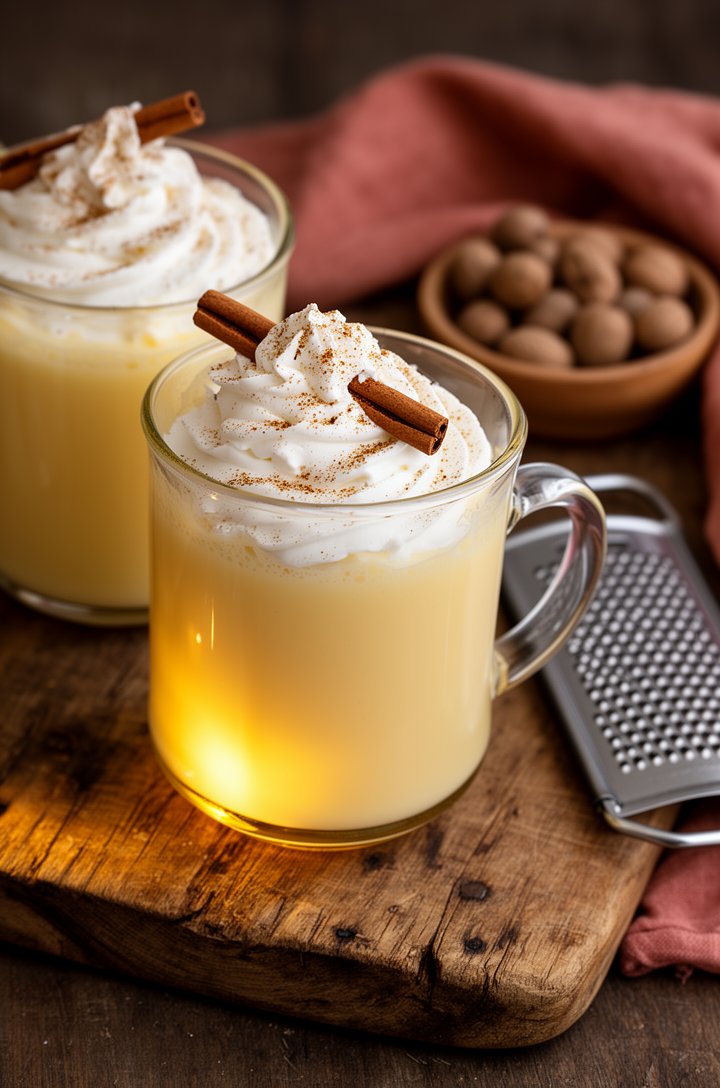
Serve it cold, in something clear so you can see that pale gold color. A fat dollop of whipped cream on top, a cinnamon stick because you earned it, and a dusting of nutmeg that makes the whole room smell like Christmas. If you're adding bourbon — and you should — do it at the glass, not the pitcher, so the kids' version stays clean.
Mise en place
Ingredients
- 6 large egg yolks
- 0.5 cup Sugar (granulated)
- 1 cup Whipping Cream
- 2 cup Whole Milk
- 1/2 teaspoon ground nutmeg (ideally freshly grated)
- 1 pinch Salt
- 0.25 tsp Vanilla Extract
For Serving
- 1 pinch Ground CinnamonOptional
- Fresh whipped cream, for toppingOptional
- Cinnamon sticks, for garnishOptional
Boozy Version
- 1/2 cup bourbon, rum, or brandyOptional
The Method
Instructions
- 01
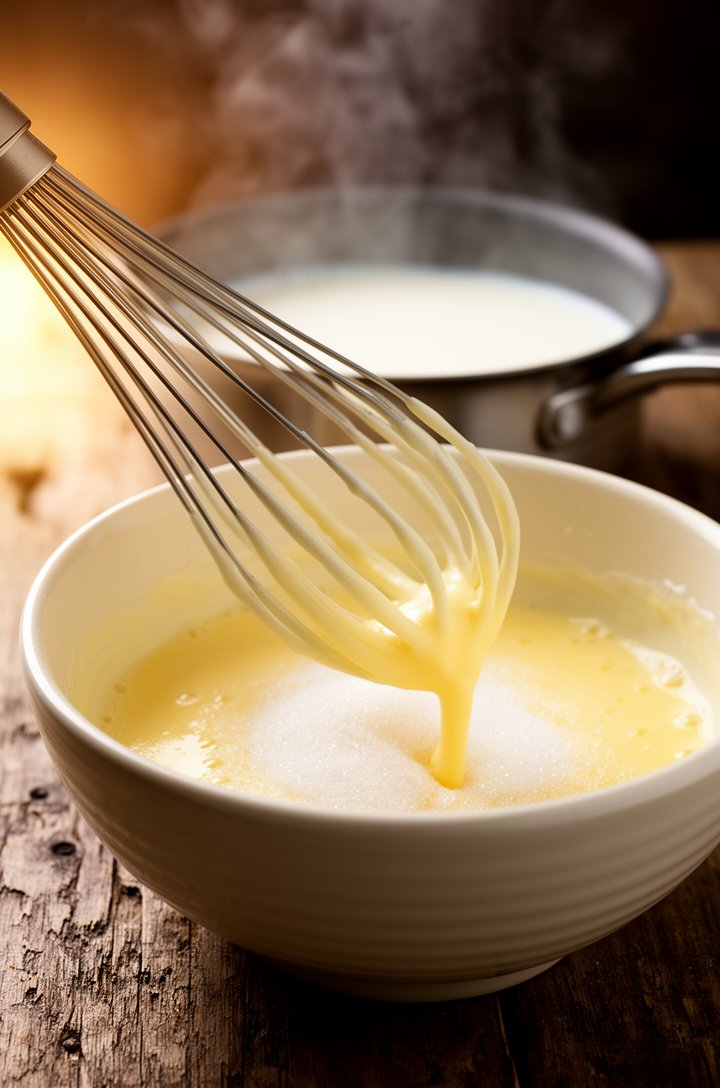
Whisk egg yolks and sugar together in a medium bowl until the mixture is light, pale, and slightly thickened.
Done when:The mixture falls off the whisk in a slow, thick ribbon and has turned from deep yellow to pale cream. About 2 minutes of vigorous whisking.
- 02
Combine cream, milk, nutmeg, and salt in a medium saucepan over medium-high heat. Stir occasionally until the mixture reaches a bare simmer.
Done when:Tiny bubbles appear around the edges and steam rises steadily. Do not let it boil — you'll scald the milk and it'll taste flat.
- 03
Temper the eggs: add one large spoonful of the hot milk mixture to the egg yolks, whisking constantly. Repeat with 4-5 more spoonfuls, one at a time.
Done when:The egg mixture feels warm to the touch (not hot) and has thinned out slightly. If you rush this, you get sweet scrambled eggs.
- 04
Pour the tempered egg mixture back into the saucepan with the remaining hot milk. Return to medium heat and whisk constantly.
Done when:The custard coats the back of a spoon and holds a line when you drag your finger through it, or reads 160°F on an instant-read thermometer. It will still look thin — it thickens as it cools.
- 05
Remove from heat immediately. Stir in vanilla extract and alcohol, if using.
Done when:Vanilla is fully incorporated and you can smell it rising off the surface.
- 06
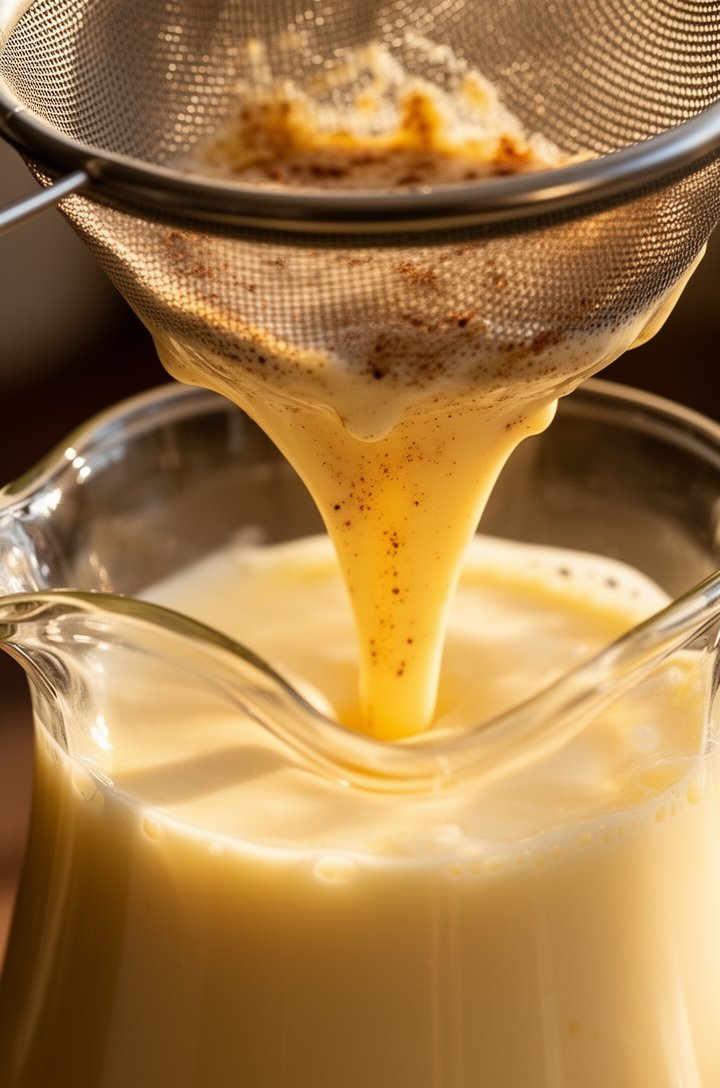
Pour the eggnog through a fine-mesh strainer into a pitcher or container. Press any solids through gently with the back of a spoon. Cover with plastic wrap pressed directly against the surface.
Done when:The strained eggnog is silky smooth with no lumps. The plastic wrap touches the liquid to prevent a skin from forming.
- 07
Refrigerate until thoroughly chilled, at least 2 hours or up to overnight. The eggnog will thicken significantly as it cools.
Done when:Cold throughout and noticeably thicker — it should pour like heavy cream, not like milk. If it's too thick for your taste, whisk in 1-2 tablespoons of cold milk.
- 08
Serve in glasses or mugs with a dollop of fresh whipped cream, a sprinkle of cinnamon or nutmeg, and a cinnamon stick.
Done when:Topped and garnished. The whipped cream should sit on the surface, not sink — that's how you know the body is right.
Where it goes wrong
Common mistakes
- ✕Dumping the hot milk into the eggs all at once — instant scramble. Temper spoonful by spoonful.
- ✕Boiling the custard — it curdles above 180°F. Pull it at 160°F and trust it'll thicken as it cools.
- ✕Skipping the strainer — even if it looks smooth, there are always tiny bits. The strainer is the difference between good and flawless.
- ✕Using pre-ground nutmeg — it tastes like dust compared to freshly grated. This is the one spice that matters here.
Context
Compared to the usual
Traditional eggnog splits into two camps: cooked custard (what we're making here) and raw egg (the old-fashioned way your grandparents probably drank it). The raw version is richer and more intensely eggy, but it means drinking uncooked eggs — fine if you're using pasteurized eggs, dicey if you're not. Cooked custard is the safer bet and still tastes like actual eggnog, not the watered-down carton version. Some recipes fold in beaten egg whites for a frothy top — we skip that because the whipped cream does the same job with less effort and more flavor.
Glossary
Techniques used
- Tempering
- Gradually raising the temperature of eggs by adding small amounts of hot liquid while whisking. Prevents the proteins from seizing up and scrambling on contact with the heat.
- Nappe
- The stage where a custard coats the back of a spoon and holds a line when you drag your finger through it. The French term for 'coated' — and the visual cue that your eggnog base is done.
- Fine-mesh strainer
- A wire-mesh sieve with very small holes. Catches any bits of cooked egg protein that would otherwise make your eggnog slightly grainy. Non-negotiable for a smooth result.
Riffs
Variations
Bourbon-Vanilla Eggnog
Add 1/4 cup bourbon and double the vanilla extract to 1/2 teaspoon. The bourbon amplifies the vanilla and adds a warm, oaky backbone. David's preferred version.
Spiced Rum Eggnog
Swap in 1/4 cup dark spiced rum and add a pinch each of ground cloves and ginger. Heavier on the holiday spice, more like a liquid gingerbread.
Dairy-Free Eggnog
Use full-fat coconut milk in place of the whole milk and coconut cream in place of heavy cream. The custard still sets up, though the flavor leans tropical. Add an extra pinch of nutmeg to compensate.
Eggnog Latte
Pour 2-3 tablespoons of chilled eggnog into a mug of hot espresso or strong coffee. Stir. This is the real reason to keep a batch in the fridge all December.
Q & A
Frequently asked
Is homemade eggnog safe to drink?
Yes — cooking the custard to 160°F kills any potential bacteria in the eggs. Use an instant-read thermometer if you're nervous. The carton stuff is pasteurized at a factory; you're doing the same thing on your stove.
Can I make eggnog without alcohol?
Absolutely. The base recipe is non-alcoholic. The booze is optional and stirred in at the end, so you can easily make a batch for kids and spike individual glasses for adults.
How long does homemade eggnog last?
Up to 5-7 days in the fridge, covered. It actually tastes better on day two. If it separates slightly, just give it a good whisk before serving.
Can I use whole eggs instead of just yolks?
You can, but the texture changes. Yolks-only gives you that rich, custardy body. Whole eggs make it lighter and slightly frothy. If you want to use whole eggs, the old-fashioned method is to fold in beaten whites at the end.
What's the best alcohol for eggnog?
Bourbon for warmth and vanilla notes, dark rum for sweetness and depth, brandy for a more refined flavor. A 50/50 mix of bourbon and rum is David's preferred ratio. Start with a quarter cup per batch and adjust up.
Storage
Airtight container in the fridge for up to 7 days. Press plastic wrap against the surface to prevent a skin. If it thickens too much, whisk in a tablespoon of cold milk to loosen.
Reheating
Eggnog is best served cold. If you want it warm (it's good that way too), heat gently in a saucepan over low heat, stirring constantly. Do not boil — it'll curdle. Pull it off the heat when steam rises.
Freezing
Freeze in an airtight container for up to 1 month. Thaw overnight in the fridge and whisk vigorously — the texture won't be quite as silky as fresh but it's still better than anything from a carton.
Make ahead
Make the full batch up to 3 days ahead. It actually improves overnight as the flavors meld and the body thickens. Store covered in the fridge. Whisk briefly before serving — it may separate slightly, which is normal.
Serve with
Pour into glass mugs for the full effect — you want to see that pale gold color. Top with freshly whipped cream (not the can), a cinnamon stick, and a grating of whole nutmeg. Serve alongside gingerbread cookies, pecan pie, or just a plate of shortbread. A splash of bourbon on the side for guests who want to spike their own.