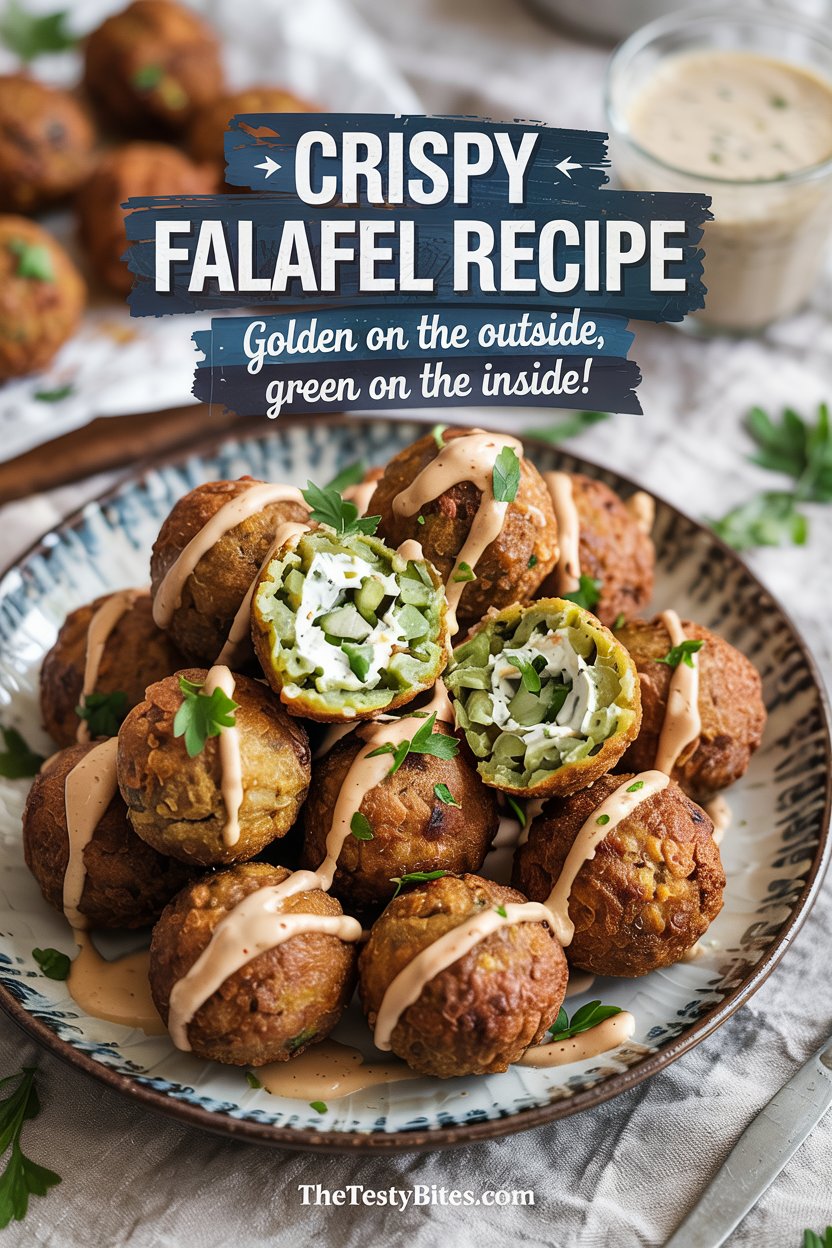
Homemade Falafel
Crispy-shelled, impossibly green falafel made from soaked dried chickpeas, fresh herbs, and warm spices. Fried in five minutes, gone in less. The kind of recipe that makes you wonder why you ever ordered takeout.
Tasted & written by Rachel
Prep
45 min
Cook
10 min
Total
55 min
Serves
18
The Key
Pulse, don't blend. The food processor should run in 2-3 second bursts with scraping between rounds. You want a texture like coarse sand with visible herb flecks — the moment it turns into a smooth paste, you've gone too far and the falafel will be dense and gummy instead of light and crisp.
David came home from a half-marathon last spring and said, unprompted, 'We should learn to make falafel.' No context. No lead-up. Just a man who'd run 13 miles and decided he needed chickpea fritters.
So I did. And after six batches — two that fell apart in the oil, one that was basically a spice puck — this is the version that stuck. The secret nobody tells you on the first try: you cannot use canned chickpeas. Dried, soaked, uncooked. That's it. The raw starch is what holds everything together and gives you that shockingly green interior.
These are not health food. They're fried. They're salty. Mia eats three before dinner's even plated. Noah ignores them completely, which is fine — more for the rest of us.
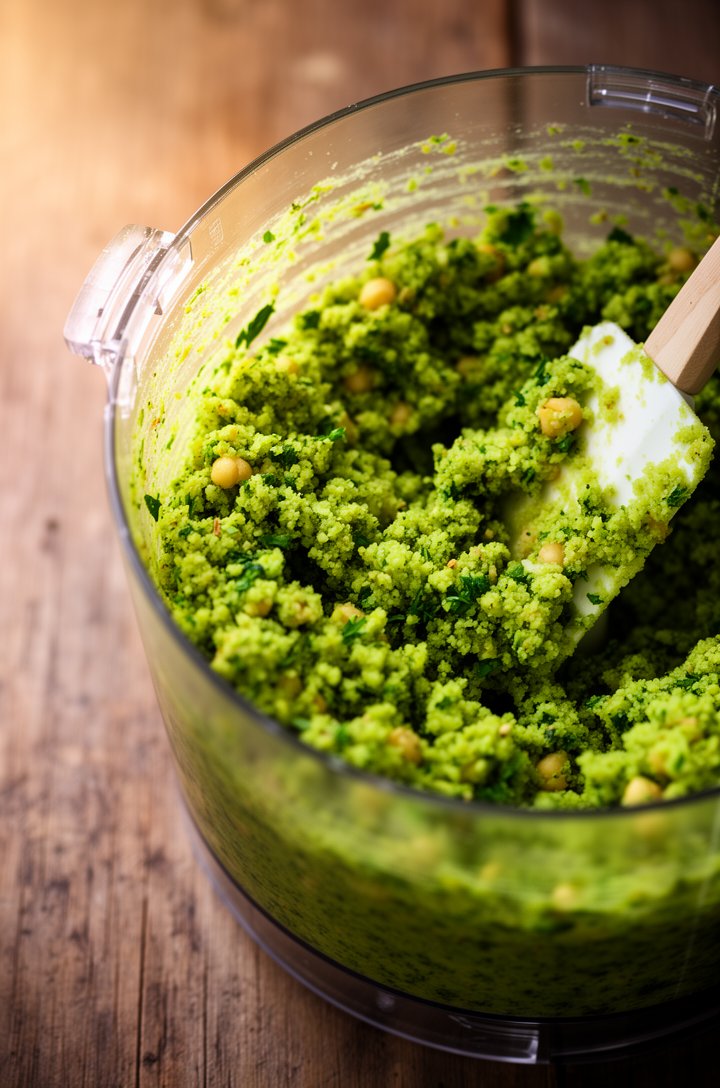
The texture you're after in the food processor is wet sand — coarse enough to see individual herb flecks, fine enough to squeeze into a ball that holds. The moment it turns into a smooth paste, you've gone too far. Pulse in short bursts. Scrape the sides. Be patient with it.
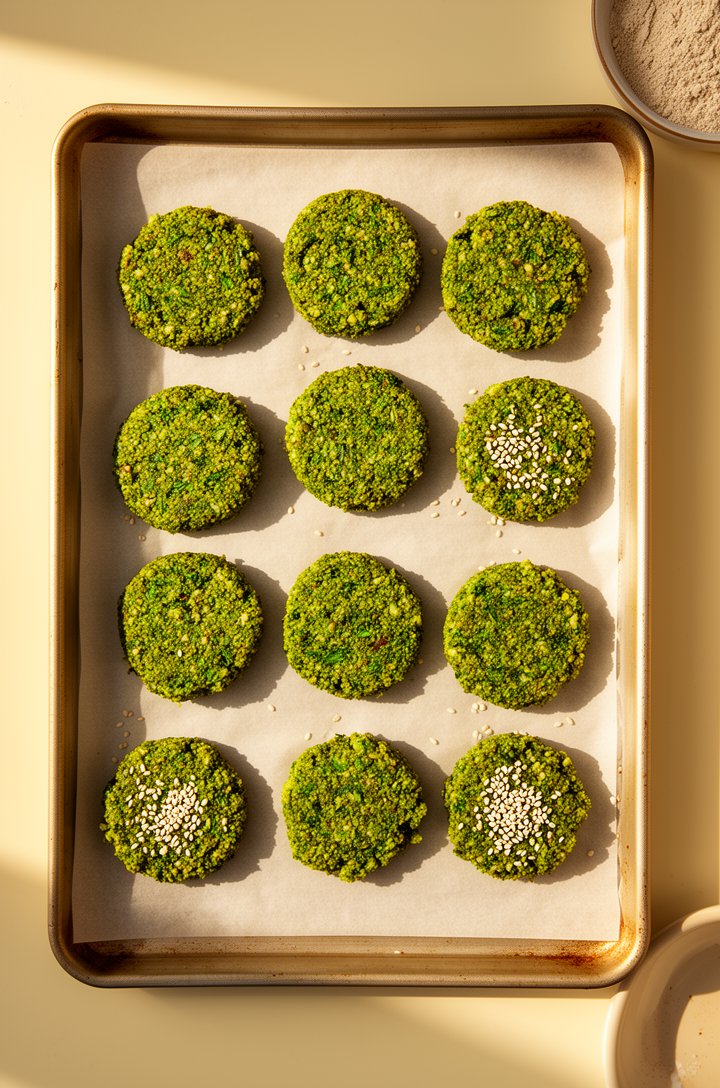
Once your mixture is chilled and firm, shaping goes fast. I use a small ice cream scoop — uniform size means uniform cooking. Flatten each ball slightly into a thick disc so the center cooks through before the outside burns. Line them up on a sheet pan. They look like little green hockey pucks, and that's correct.
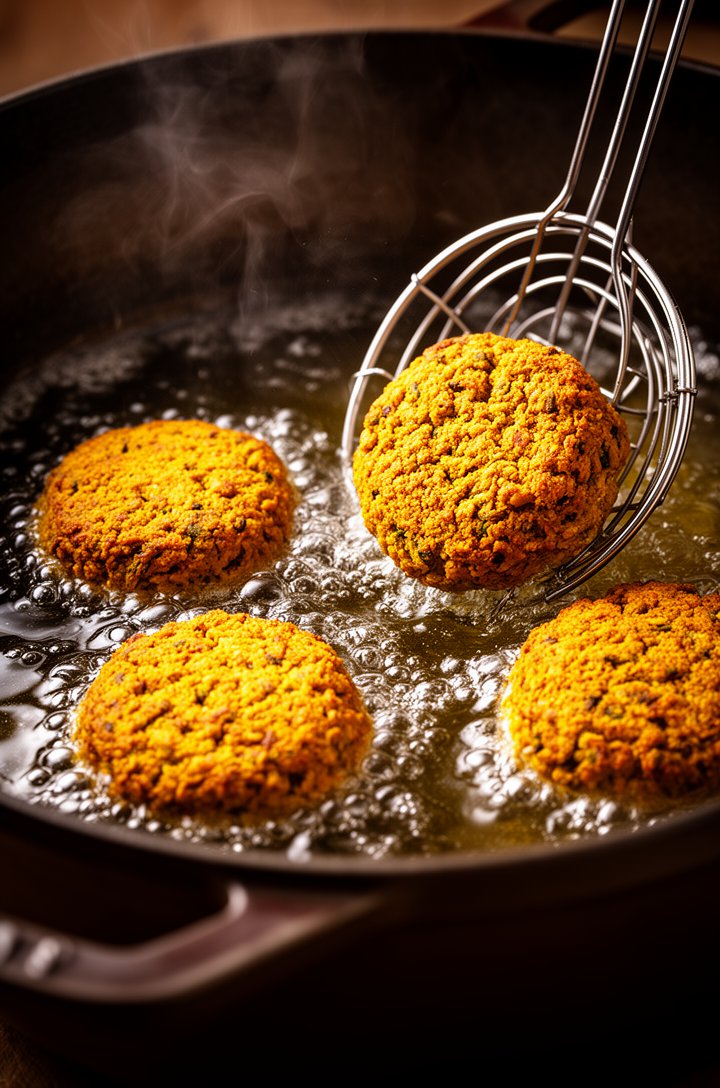
The frying itself is the fast part — 3 to 4 minutes per batch. Keep the oil at 350°F and don't crowd the pot. Four or five at a time. They float, they sizzle, they turn that deep golden brown that means the crust is set. Break one open on the first batch to check: the inside should be bright green and steaming, not grey and dense.
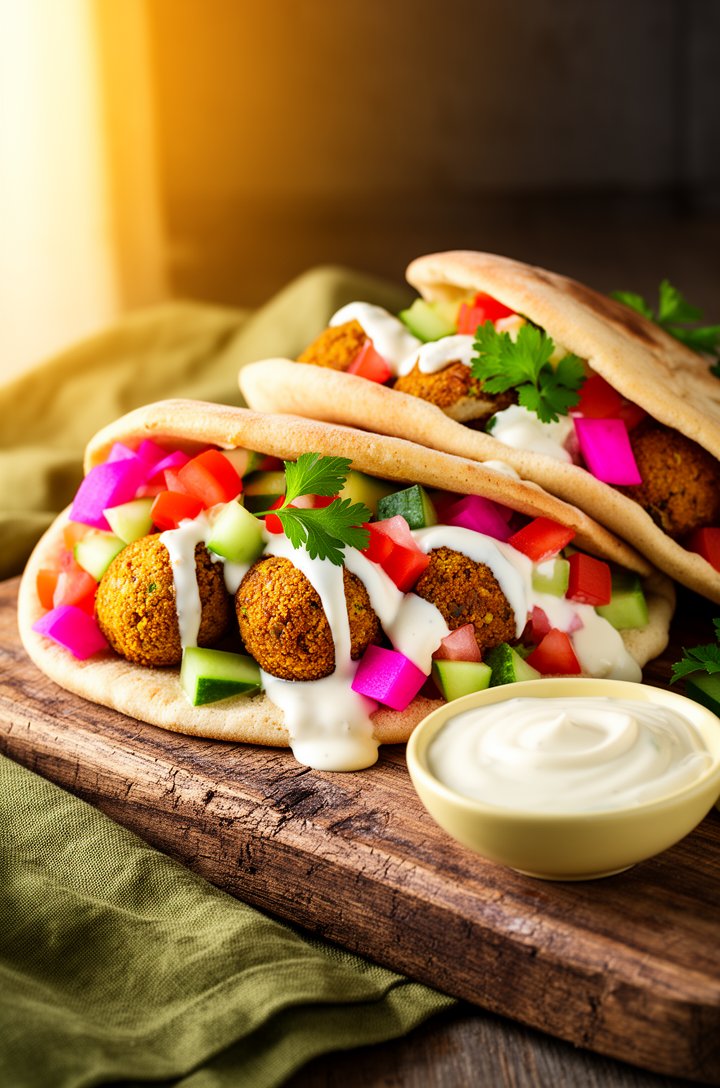
Priya makes a green chutney for hers instead of tahini. David dumps hot sauce on everything. I keep it classic — tahini, cucumber, tomato, pickled turnips, warm pita. The tahini sauce takes two minutes: just whisk until it loosens up and drizzles. If it seizes into a thick paste, add water a tablespoon at a time. It always comes back.
Mise en place
Ingredients
- 1 cup dried chickpeas (about 225g)soaked overnight
- ½ cup onionroughly chopped
- 1 cup fresh parsley, packedroughly chopped, stems removed
- 1 cup fresh cilantro, packedroughly chopped, stems removed
- 1 small serrano or jalapeño pepperseeded for less heat
- 3 garlic clovespeeled
- 1 tsp Ground Cumin
- 1 tsp Salt
- 0.5 tsp Ground Cardamom
- 0.25 tsp Black Pepper
- 2 tablespoons chickpea flour (or all-purpose)
- 0.5 tsp Baking Soda
- Neutral oil for frying (about 3-4 inches in the pot)
Tahini Sauce
- 0.5 cup Tahini
- 3 tbsp Lemon Juice
- 1 clove Garlicminced
- 3-4 tablespoons cold water
- 1 pinch Salt
For Serving
- 6 whole Pita BreadOptional
- 1 medium CucumberdicedOptional
- 2 medium TomatodicedOptional
- 0.25 cup Pickled TurnipsOptional
The Method
Instructions
- 01
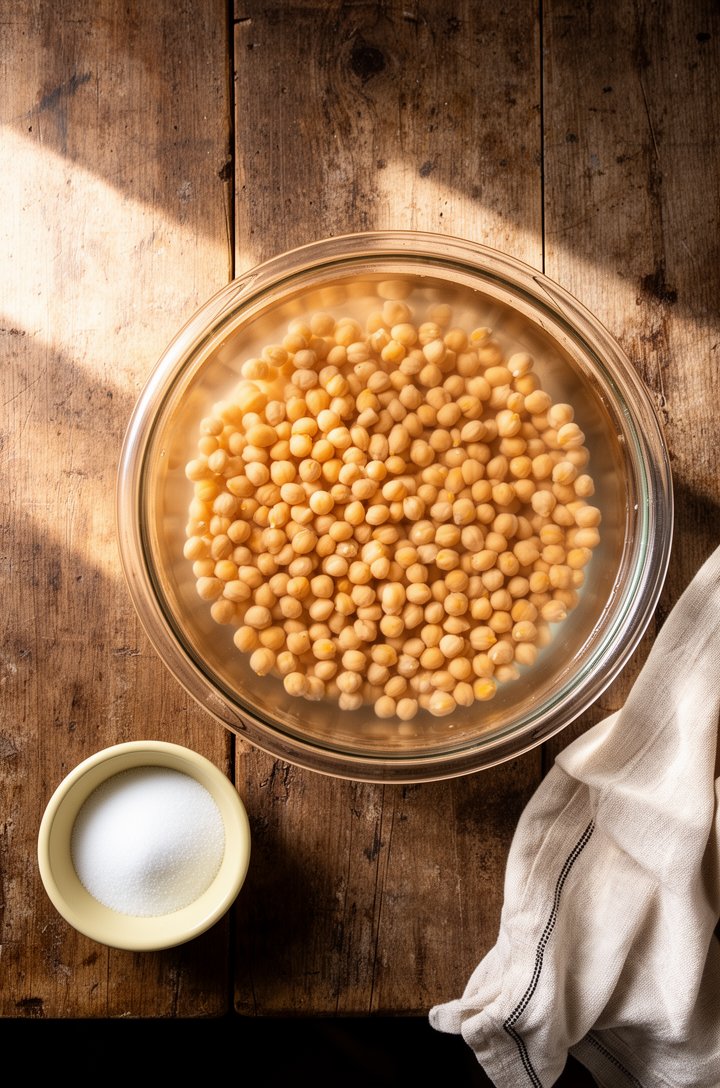
Soak the dried chickpeas in a large bowl with plenty of cold water and a pinch of baking soda. Cover by at least 3 inches — they'll triple in size. Let them sit at room temperature for at least 12 hours or overnight.
Done when:Chickpeas have visibly tripled in size, feel firm but you can split one cleanly with your fingernail. No hard chalky center.
- 02
Drain and rinse the chickpeas thoroughly. Shake off excess water and pat dry with a clean towel.
Done when:Chickpeas are damp but not sitting in water. No pooling liquid when you tilt the bowl.
- 03
Add chickpeas, onion, parsley, cilantro, serrano pepper, garlic, cumin, salt, cardamom, and black pepper to a food processor. Pulse in short bursts, scraping down the sides between rounds.
Done when:Mixture is finely ground and holds together when you squeeze a handful — like wet sand. You should still see tiny flecks of green herbs and chickpea, not a smooth paste.
- 04
Transfer the mixture to a bowl. Stir in the chickpea flour and baking soda. Cover tightly and refrigerate.
Done when:Mixture has firmed up noticeably — scoops hold their shape without sagging. At least 30 minutes, up to an hour.
- 05
Shape the falafel into balls about 1½ inches across, or use a small ice cream scoop. Slightly flatten each ball into a thick disc. Set them on a parchment-lined sheet pan.
Done when:Each falafel is compact with no cracks around the edges. If the mixture feels too wet, add another tablespoon of chickpea flour.
- 06
Heat 3 inches of oil in a heavy-bottomed pot over medium heat until it reaches 350°F (175°C). Test with a tiny pinch of the mixture — it should sizzle immediately and float.
Done when:A small piece of falafel mixture dropped in sizzles vigorously, rises to the surface within 2 seconds, and begins browning.
- 07
Fry the falafel in batches of 4-5, turning once halfway through. Don't crowd the pot — the temperature will drop and the falafel will absorb oil instead of crisping.
Done when:Deep golden brown all over, crust is audibly crispy when tapped with the slotted spoon. Interior is cooked through — break one open to check for bright green, not grey-brown.
- 08
Transfer to a wire rack or paper towel-lined plate. Season with a pinch of flaky salt while still hot.
Done when:Falafel are draining and the crust is set — they'll feel firm to the touch, not soft.
- 09
Make the tahini sauce: whisk together tahini, lemon juice, minced garlic, and a pinch of salt. Add cold water one tablespoon at a time until it reaches a pourable consistency.
Done when:Sauce is smooth, creamy, and drizzles off the whisk in a steady stream — not thick like peanut butter, not thin like milk.
- 10
Serve falafel warm in pita pockets with tahini sauce, diced cucumber, tomatoes, and pickled turnips.
Done when:Falafel are still warm and the crust is crispy. Best eaten within 20 minutes of frying.
Where it goes wrong
Common mistakes
- ✕Using canned chickpeas — they're pre-cooked, have no binding starch, and your falafel will crumble in the oil every time.
- ✕Over-processing in the food processor — you want coarse texture, not hummus. Pulse, don't run continuously.
- ✕Crowding the pot — dropping in too many at once tanks the oil temperature and gives you greasy, pale falafel instead of crispy ones.
- ✕Skipping the chill — warm mixture is too soft to hold its shape and falls apart the moment it hits hot oil.
Context
Compared to the usual
This is the Levantine chickpea version — the kind you'd get from a street cart in Amman or a hole-in-the-wall in Beirut. Egyptian falafel (ta'ameya) swaps chickpeas for dried fava beans, giving a darker color and earthier flavor. Some recipes add cooked chickpeas or use canned for convenience, but every serious falafel maker I've talked to treats that as a different dish entirely. The dried-chickpea version is more work upfront — the overnight soak is real commitment — but the payoff is a falafel that's crispy outside, impossibly green inside, and holds together without any egg or breadcrumb binder.
Glossary
Techniques used
- Falafel
- Deep-fried fritters made from ground raw chickpeas (or fava beans in Egypt), fresh herbs, and spices. A street-food staple across the Middle East and Mediterranean — every country has its own version.
- Chickpea flour
- Also called besan or gram flour. Made from ground dried chickpeas. Acts as a binder here — it absorbs excess moisture and helps the falafel hold together in hot oil.
- Spider strainer
- A wide, flat mesh skimmer on a long handle. The best tool for lifting fried foods out of oil — lets the oil drain through instead of coming along for the ride.
- Pickled turnips
- Turnips pickled in vinegar and beet juice, which turns them hot pink. A classic Middle Eastern condiment — tangy, crunchy, and the perfect counterpoint to rich fried falafel.
Riffs
Variations
Baked falafel
Brush shaped falafel with olive oil and bake at 400°F for 20-25 minutes, flipping halfway. Less crispy but significantly less mess. Spray with oil halfway for better browning.
Air fryer falafel
Spray basket with oil, arrange falafel in a single layer, cook at 375°F for 12-15 minutes, shaking halfway. Closest to fried texture without the oil.
Herb-heavy green falafel
Double the parsley and cilantro, add ¼ cup fresh dill. The interior will be vivid green and more herbaceous — beautiful when you break one open.
Spiced falafel
Add 1 tsp ground coriander and ½ tsp cayenne to the food processor. Gives a warmer, more complex heat that builds as you eat.
Q & A
Frequently asked
Can I bake falafel instead of frying?
You can. Brush them with oil and bake at 400°F for 20-25 minutes, flipping halfway. They'll be drier and won't get that shatteringly crispy shell, but they're still good. Air fryer at 375°F for 12-15 minutes works better than the oven.
Why can't I use canned chickpeas?
Canned chickpeas are already cooked. The starch that holds falafel together comes from raw chickpeas — once cooked, that binding power is gone. Canned-chickpea falafel will fall apart in the oil or need so much flour they taste like fried dough.
How do I know when the oil is hot enough?
350°F on a thermometer is ideal. No thermometer? Drop a tiny pinch of the mixture in — it should sizzle immediately and float to the top within a couple of seconds. If it sinks and sits, the oil isn't ready.
Can I make falafel ahead of time?
Shape the raw mixture into balls and freeze on a sheet pan, then transfer to a bag. Fry from frozen — no thawing needed, just add a minute to the cook time. Already-fried falafel reheat best in a 375°F oven for 8-10 minutes.
My falafel fell apart in the oil. What went wrong?
Usually one of three things: too much moisture (dry those chickpeas after draining), over-processed mixture (paste instead of coarse grind), or oil not hot enough (they need to set fast on the outside).
Storage
Cooked falafel keep in an airtight container in the fridge for up to 4 days. They soften as they sit — the crust won't be the same, but the flavor holds.
Reheating
Oven at 375°F for 8-10 minutes until the exterior crisps back up. The microwave will make them rubbery — don't do it.
Freezing
Freeze uncooked shaped falafel on a parchment-lined sheet pan until solid, then transfer to a freezer bag. Fry directly from frozen — add 1 extra minute to cooking time. Keeps for 3 months.
Make ahead
The falafel mixture can be made up to 24 hours ahead and refrigerated. It actually shapes better when it's very cold. Shape into balls up to 3 months ahead and freeze on a sheet pan before bagging.
Serve with
Warm pita is essential. Stuff with tahini sauce, diced cucumber, tomatoes, pickled turnips, and a handful of fresh herbs. A simple fattoush salad alongside turns it into a full spread. For a platter, add hummus, baba ganoush, and tabbouleh. Mia skips the pita and dips hers straight into tahini — also valid.