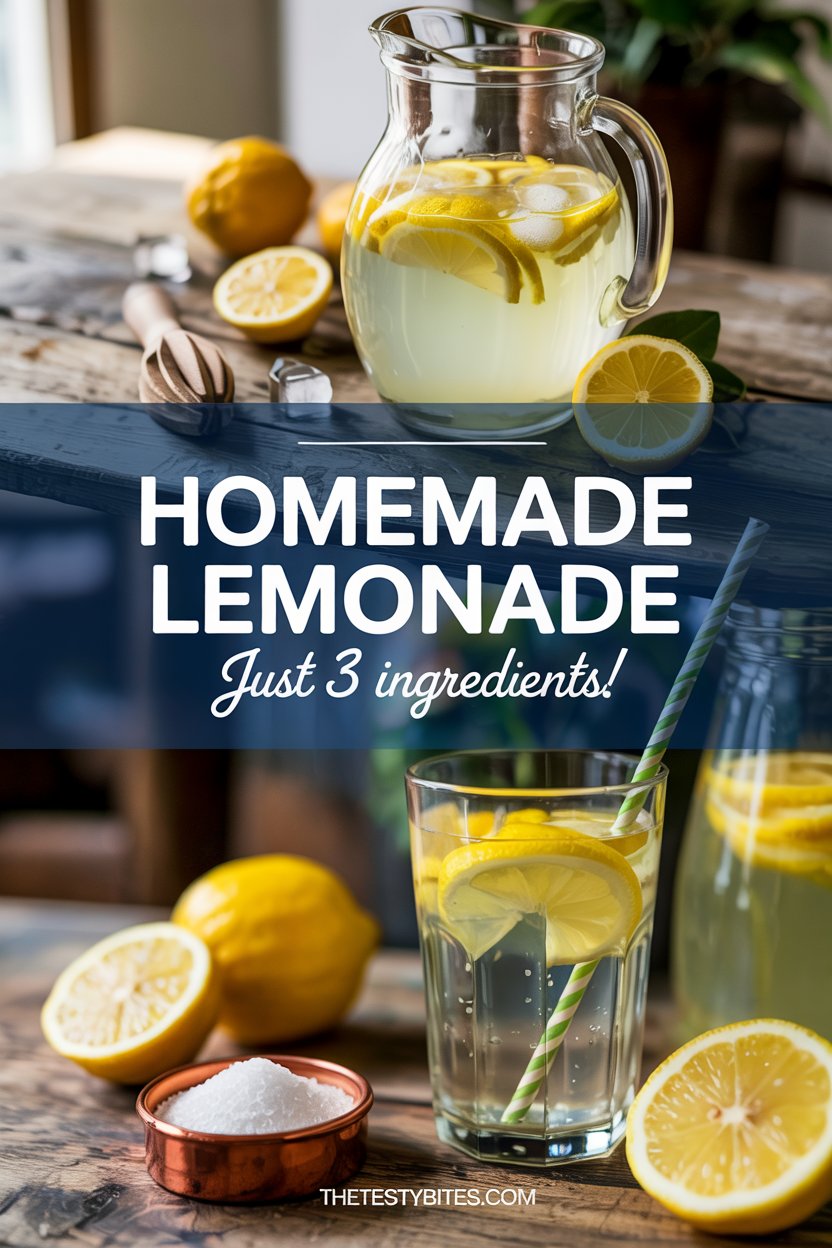
Homemade Lemonade
Three ingredients, fifteen minutes, and a pitcher that empties before dinner. Simple syrup dissolves the sugar completely — no grit, no stirring into cold water and hoping — just clean, tart-sweet lemonade that tastes like you meant it.
Tasted & written by Rachel
Prep
10 min
Cook
5 min
Total
15 min
Serves
8
The Key
Make the simple syrup. It takes three extra minutes and it's the entire difference between real lemonade and that grainy, half-dissolved situation at the bottom of every pitcher at every cookout you've ever been to. Medium-low heat, stir until clear, done.
Noah won't drink it. I'm putting that out there now. He took one sip, made a face like I'd insulted his bloodline, and went back to his sippy cup of water. Everyone else — David, Mia, Priya's kids, the entire post-run crew — drained the pitcher in under an hour.
This is a three-ingredient recipe that barely qualifies as cooking, but the simple syrup step is what separates it from the sad, granular stuff you stir desperately at cookouts. Sugar dissolves fully. Lemon juice goes in fresh. Water brings it together. That's it.
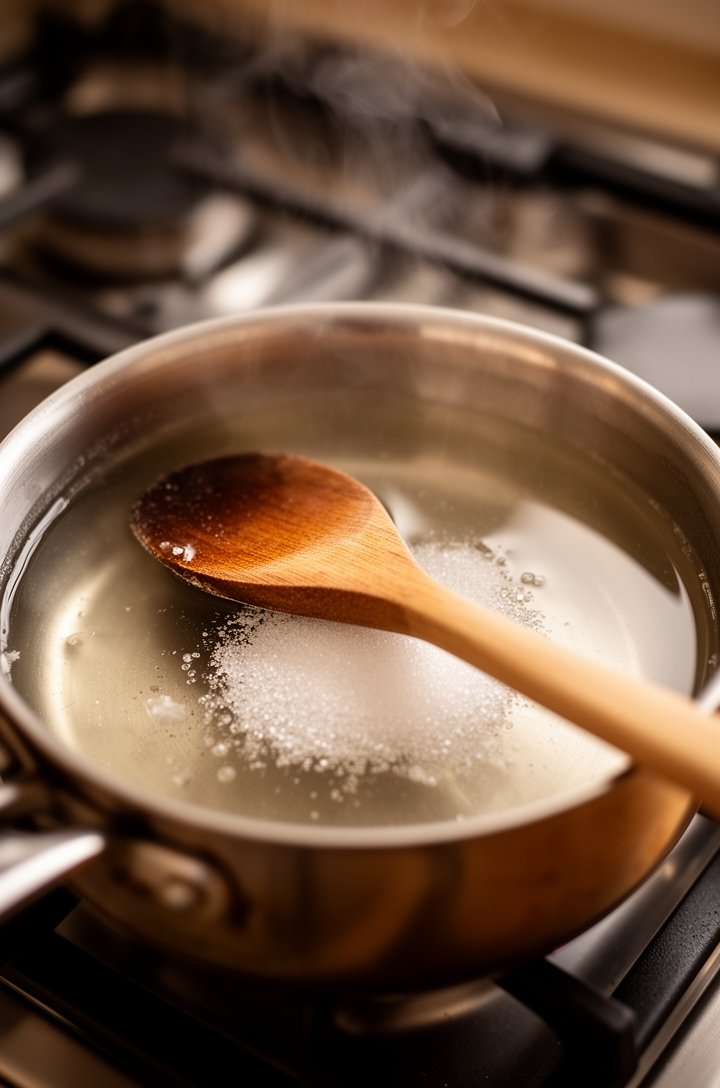
The simple syrup takes three minutes. I know that sounds like an unnecessary step when you could just dump sugar into cold water and stir. But sugar doesn't fully dissolve in cold liquid. It sinks. It sits. You drink the last glass and get a mouthful of sweet sludge. The syrup fixes that permanently.
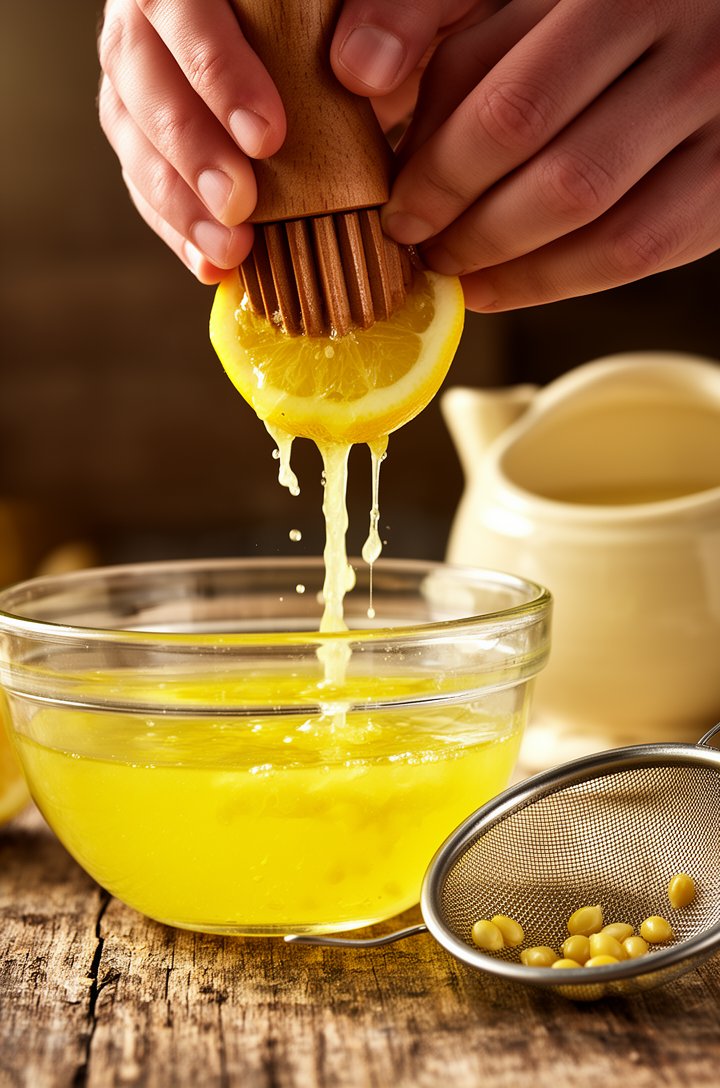
Mia insists on squeezing the lemons. She's five, so the yield is questionable, but the enthusiasm is unmatched. We use a reamer — the old-fashioned ridged cone — because it's easier for small hands and honestly easier for adult hands too. Six to eight lemons gets you about a cup of juice. Roll them on the counter first. It makes a real difference.
Once the syrup cools — ten minutes, or three if you're impatient and set the pan in an ice bath — everything goes into the pitcher. Syrup, juice, five cups of cold water, a stir. Taste it. This is the moment you calibrate. Too tart? The syrup ratio was off. Too sweet? Splash in another tablespoon of lemon juice. You'll know when it's right because you'll take a second sip before you meant to.

David's running club goes through two pitchers on Saturday. I've started making the simple syrup in bulk on Sundays — a mason jar in the fridge, good for two weeks. Then it's just a squeeze and a stir away from a full pitcher. Mia calls it "Mama's lemon water." Close enough.
Mise en place
Ingredients
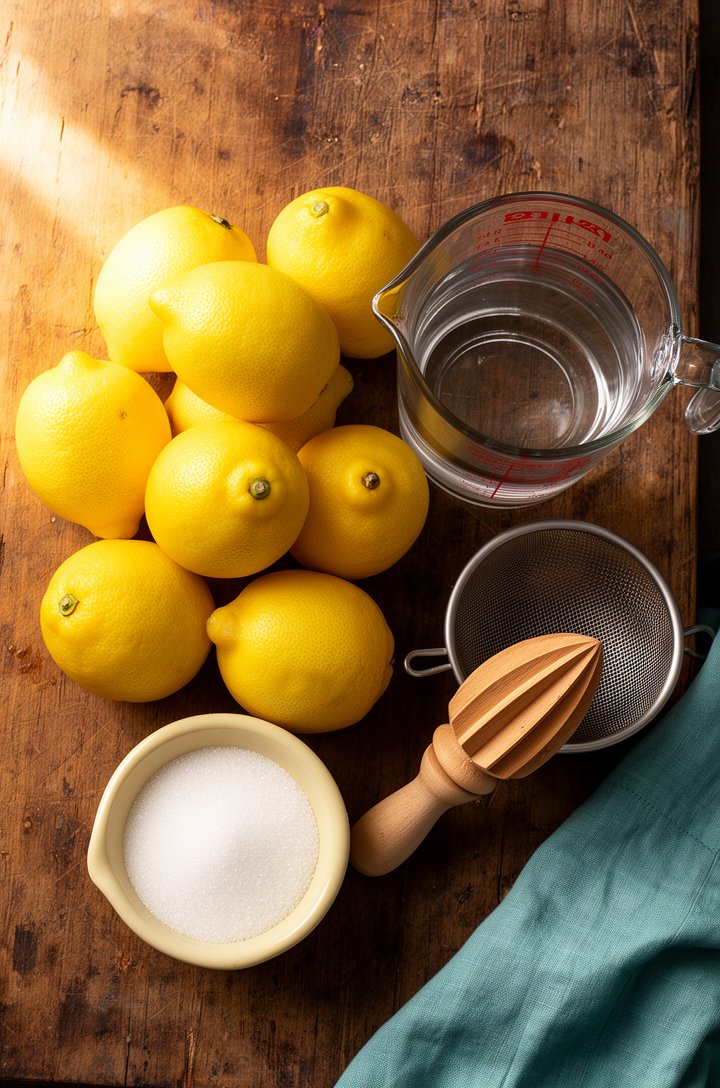
- 6 cups water (divided — 1 cup for syrup, 5 cups for pitcher)
- 1 cup granulated sugar
- 1 cup fresh-squeezed lemon juice (about 6-8 lemons)seeds removed
For serving
- 1 lemon, thinly sliced into wheelsthinly slicedOptional
- Ice, for servingOptional
The Method
Instructions
- 01
Combine 1 cup water and 1 cup sugar in a small saucepan over medium-low heat. Stir gently until the sugar dissolves completely.
Done when:Liquid is fully clear — no visible crystals when you lift the spoon. If it's still cloudy, keep stirring.
- 02
Remove the simple syrup from heat and let it cool for 10 minutes.
Done when:Saucepan is warm to the touch but not hot. You can speed this up by setting the pan in an ice bath for 3 minutes.
- 03
Squeeze lemons and strain the juice through a fine mesh strainer into the pitcher to catch seeds and excess pulp.
Done when:You have about 1 cup of juice. A little pulp passing through is fine — it adds body.
- 04
Pour the cooled simple syrup into the pitcher with the lemon juice. Add the remaining 5 cups of cold water and stir well.
Done when:Liquid is evenly pale yellow throughout — no syrup pooling at the bottom.
- 05
Taste and adjust. Add more water if too tart, a splash more lemon if too sweet. Serve over ice with lemon wheel slices, or refrigerate until cold.
Done when:The balance hits that spot where you taste lemon first, then sweetness catches up. If it's cloying, you went too far on the syrup — add a tablespoon of lemon juice.
Where it goes wrong
Common mistakes
- ✕Stirring sugar directly into cold water — it never fully dissolves and you get grit at the bottom of every glass
- ✕Using bottled lemon juice — the preservatives and pasteurization kill the brightness, and it tastes flat
- ✕Boiling the simple syrup — you only need medium-low heat. Boiling concentrates the sugar and can caramelize, which tints the color
- ✕Adding ice to the whole pitcher — dilutes it as the ice melts. Chill in the fridge instead and pour over ice in individual glasses
Context
Compared to the usual
This is the classic American lemonade stand version — sugar, lemons, water, nothing else. It's not the Italian limonata (which adds sparkling water and sometimes milk), not the French citron pressé (which serves syrup and juice separately so you mix your own), and not the Indian nimbu pani (which adds salt and roasted cumin). What makes the American version work is the ratio: enough sugar to tame the acid, enough water to make it sessionable. It's not trying to be complex. It's trying to be cold.
Glossary
Techniques used
- Simple syrup
- Equal parts sugar and water, heated until the sugar dissolves. The standard sweetener for cold drinks because sugar won't dissolve properly in cold liquid.
- Reamer
- A ridged cone you press into a halved citrus fruit and twist. Cheaper than a juicer, easier to clean, and gets the job done for 6-8 lemons.
Riffs
Variations
Strawberry lemonade
Blend 1 cup hulled strawberries with 2 tablespoons of the simple syrup, strain, and stir into the finished lemonade. Turns it pink and adds a berry sweetness kids go wild for.
Lavender lemonade
Add 2 tablespoons dried culinary lavender to the saucepan while making the simple syrup. Strain out the buds before adding to the pitcher. Floral, slightly perfumed, surprisingly good.
Arnold Palmer
Mix half lemonade, half unsweetened iced tea. David's go-to after a long run. Use strong-brewed black tea cooled to room temp.
Q & A
Frequently asked
How many lemons do I need?
About 6-8 medium lemons for 1 cup of juice. Bigger, softer lemons give more. Roll them on the counter first.
Can I use honey instead of sugar?
Yes — use 3/4 cup honey in the syrup step (honey is sweeter than sugar by volume). The flavor will be noticeably different but still good.
How long does it last in the fridge?
5-7 days in a covered pitcher. It actually tastes best on day two after the flavors meld overnight.
Can I make it sparkling?
Replace the 5 cups still water with chilled sparkling water, but add it right before serving — it goes flat quickly.
Storage
Covered pitcher in the refrigerator for up to 7 days. Give it a stir before pouring — the pulp settles.
Reheating
Not applicable — serve cold.
Freezing
Freeze in ice cube trays for lemonade cubes that won't dilute your drink. Or freeze the full batch in a freezer-safe container for up to 3 months — thaw overnight in the fridge and stir well.
Make ahead
Make the simple syrup up to 2 weeks ahead and refrigerate in a jar. When ready, just squeeze lemons and combine. The full pitcher can be made a day ahead — it tastes better chilled overnight.
Serve with
Pour over a full glass of ice with a lemon wheel on the rim. A sprig of mint is nice if you have it. Pairs with anything grilled, anything fried, or just a porch and a Tuesday evening.