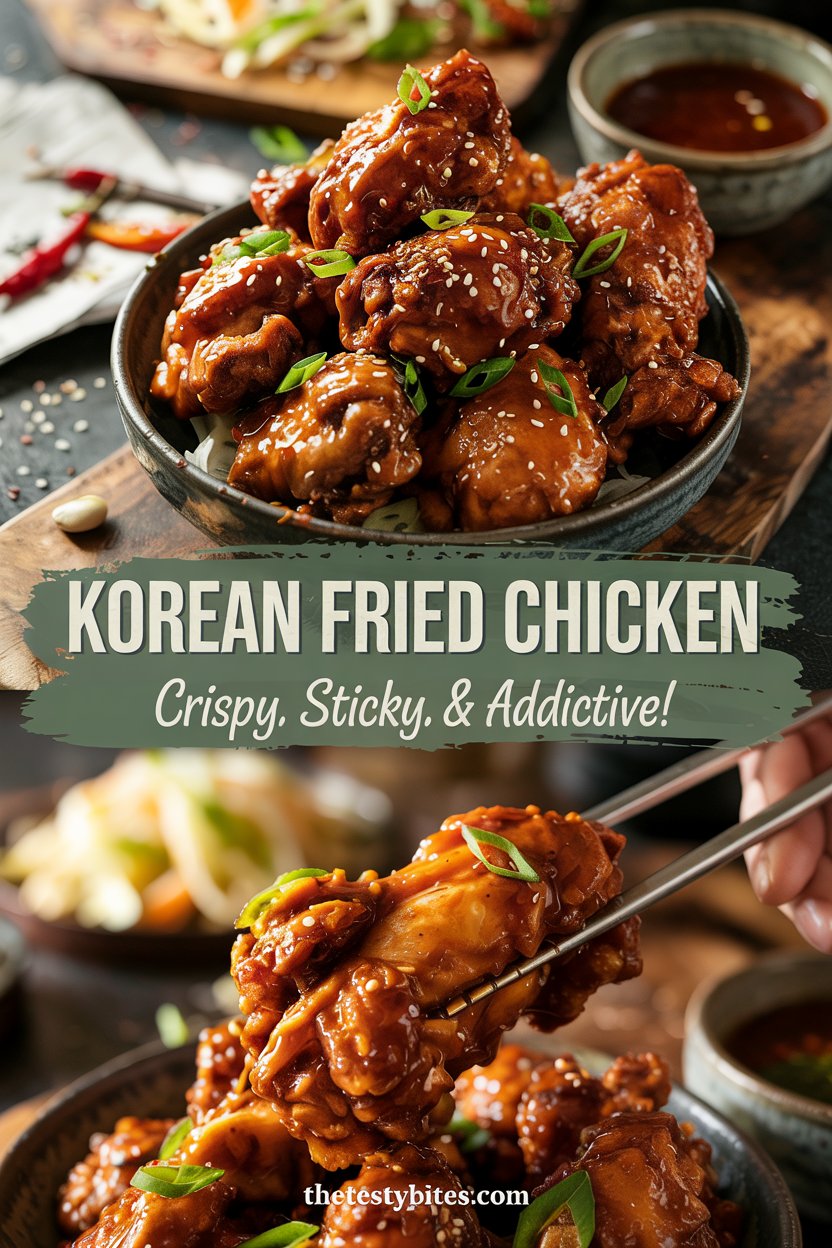
Korean Fried Chicken with Sticky Gochujang Glaze
Double-fried chicken coated in potato starch for shatter-crisp skin, then tossed in a sweet-hot gochujang glaze that stays sticky for hours. The crunch holds up even after saucing.
Tasted & written by Rachel
Prep
15 min
Cook
35 min
Total
50 min
Serves
4
The Key
Fry twice, rest between. The first fry at 160°C cooks the chicken through. The five-minute rest on a rack lets surface moisture escape. The second fry at 190°C for just 2-3 minutes dehydrates the starch coating into a glass-hard shell that holds its crunch even under a thick, sticky glaze.
David came home from a Charlotte wings spot last month and said, "We can do better." He was right, but not for the reason he thought. The trick isn't the sauce — every recipe on the internet has a gochujang glaze. The trick is frying the chicken twice.
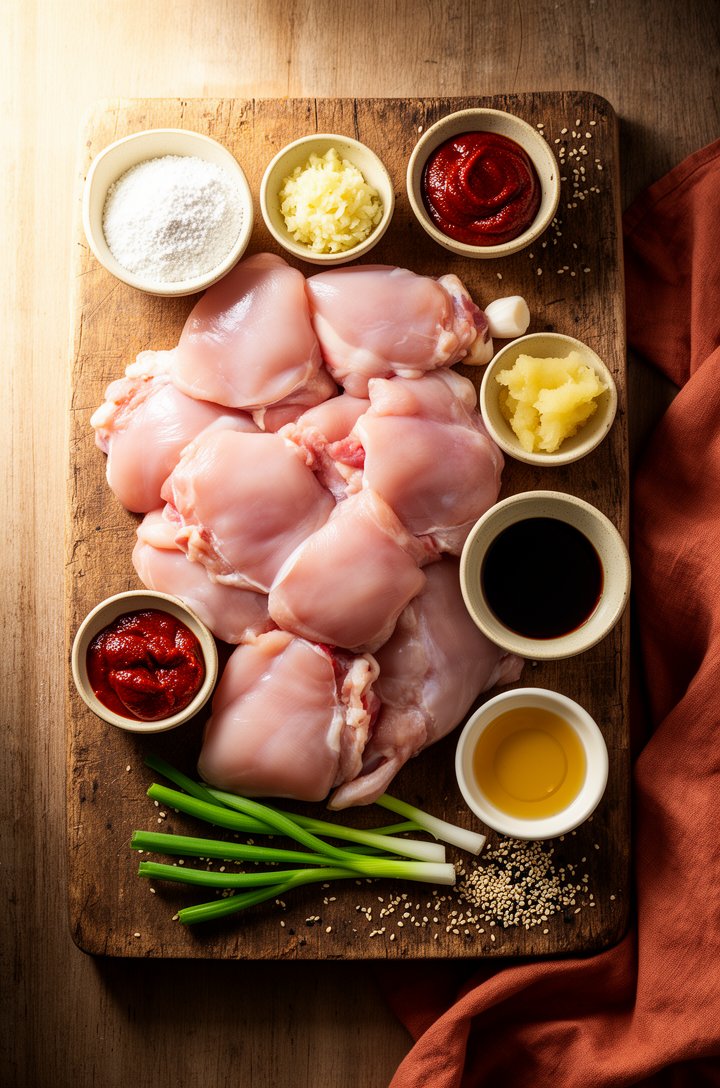
First fry cooks it through. Second fry — hotter and shorter — dehydrates the crust into something that refuses to go soggy even after you drown it in sauce. I made three batches in a week dialing it in. Mia ate the plain ones. Noah ate cheese. David's running club finished everything else.
The potato starch matters more than you think. Flour absorbs sauce and turns pasty. Cornstarch is decent but grainy. Potato starch creates a coating so thin and glassy it shatters when you bite through it, then holds its structure under the glaze like armor. Find it at any Asian grocery store for about two dollars.
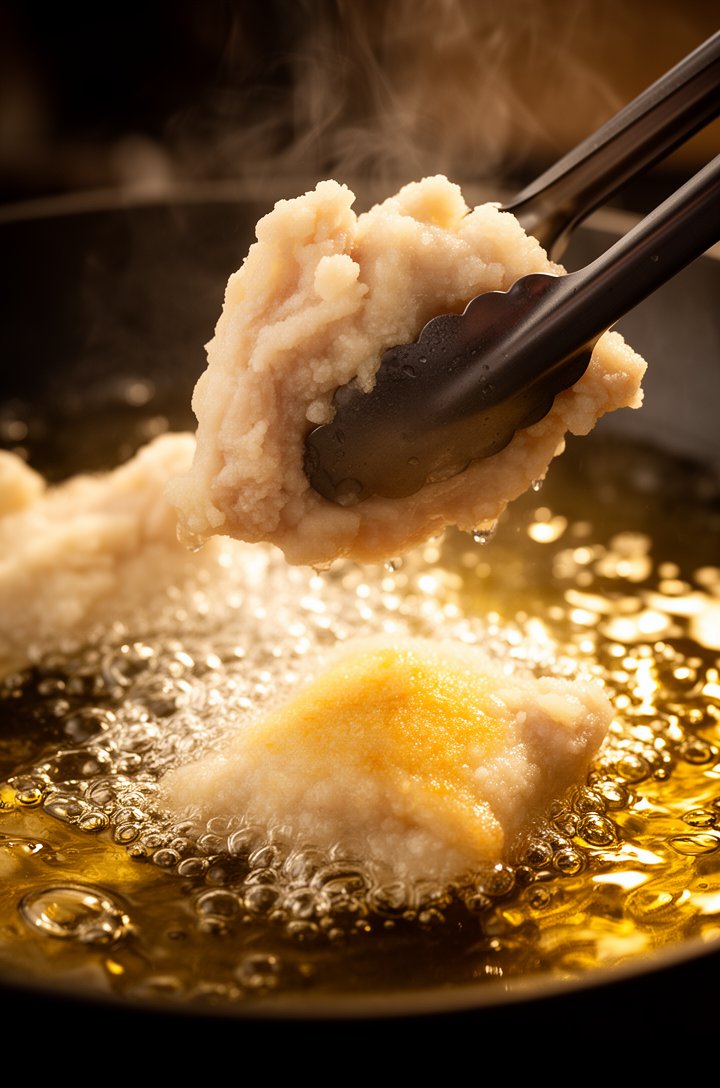
The rest between fries is where most people lose patience. Five minutes on a rack while you bump the oil temperature. That's it. But those five minutes let the surface steam off — and the second fry at 190°C turns that damp coating into something almost ceramic. Two minutes. Maybe three. You'll hear the difference.
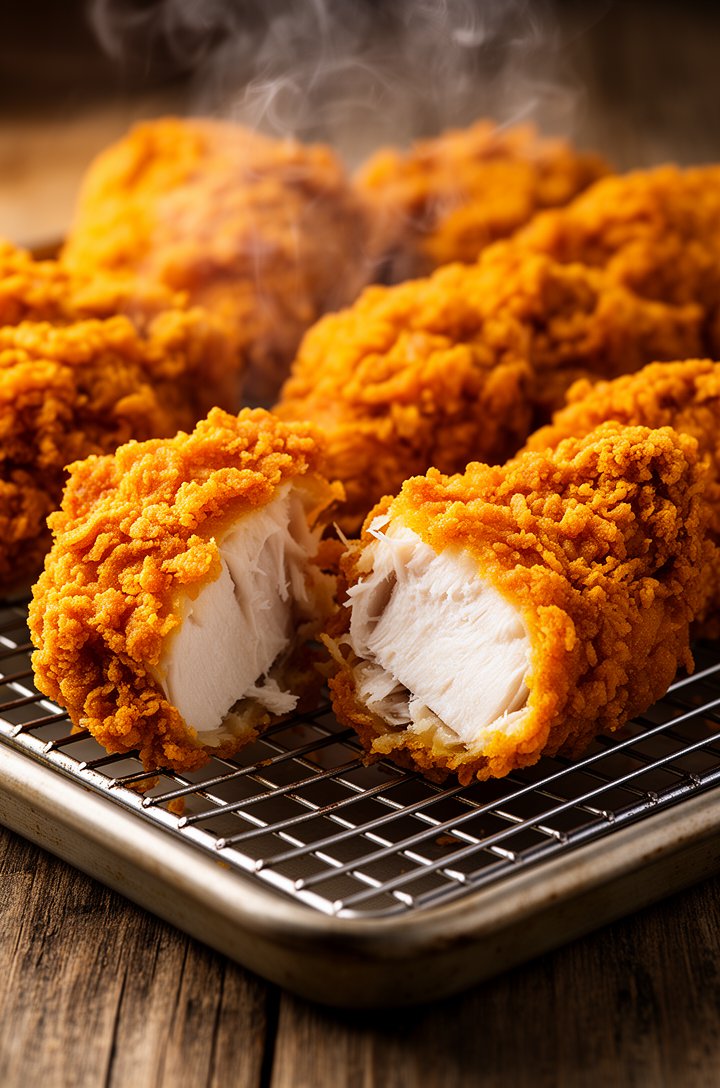
The glaze comes together in three minutes while the second batch fries. Gochujang, honey, brown sugar, soy sauce, garlic, sesame oil, a little tomato sauce for body. It hits the back of a spoon in a thick glossy ribbon, and it hits the chicken while both are still warm — that's when the coating grabs the sauce and holds it.

Pile it high. Don't be precious about plating. Sesame seeds, green onions, and whatever is left of your dignity after eating the first three pieces standing at the stove.
Mise en place
Ingredients
- 1.4 kg whole chicken, cut into 10-12 piecescut into drumettes, wings, thighs, and breast pieces (bone-in)
- 2 tbsp Chinese Rice Wine (Mijiu)
- 2 tsp Ginger (fresh)minced
- 1 tsp Fine Sea Salt
- 0.5 tsp Ground Black Pepper
- 1 cup Potato Starch
- about 1 litre neutral oil for deep frying (rice bran, canola, or peanut)
Gochujang Glaze
- 2 tbsp gochujang (Korean chili paste)
- 3 tbsp tomato sauce (ketchup)
- 0.25 cup Honey
- 0.25 cup Brown Sugar
- 2 tbsp Soy Sauce
- 2 tbsp Garlicminced
- 1 tbsp Sesame Oil
Garnish
- 2 tbsp Toasted Sesame Seeds
- 3 whole Scallions (Green Onions)thinly sliced on the bias
The Method
Instructions
- 01
Season the chicken pieces with rice wine, ginger, salt, and black pepper. Toss to coat evenly and let sit for 10 minutes at room temperature.
Done when:Chicken looks glossy and slightly wet from the rice wine, no dry patches of seasoning remaining.
- 02
Add the potato starch to a wide shallow bowl. Dredge each chicken piece, pressing the starch into every crevice. Shake off excess and set on a wire rack.
Done when:Every piece has a dry, opaque white coating with no wet spots showing through. The rack keeps the bottom from getting soggy.
- 03
Heat oil in a large heavy-bottomed pot or Dutch oven to 160°C (320°F). Use a thermometer — guessing will wreck everything.
Done when:Thermometer reads a steady 160°C. A pinch of starch dropped in should sizzle gently and float, not brown immediately.
- 04
Fry the chicken in batches (4-5 pieces at a time) for 10-12 minutes, turning occasionally. Remove to the wire rack.
Done when:Crust is pale golden — not deep brown. Chicken is cooked through (cut a thick piece open to check — no pink). This is the gentle fry, not the pretty one.
- 05
Raise the oil temperature to 190°C (375°F). While it heats, let the first-fried chicken rest on the rack for at least 5 minutes — this dries the surface and primes it for the second fry.
Done when:Oil hits 190°C and chicken pieces feel dry to the touch on the surface, not wet or steaming.
- 06
Return chicken to the hot oil in batches for 2-3 minutes until deep golden-brown and aggressively crunchy.
Done when:Crust is deep golden-brown and audibly crackles when you lift a piece with tongs. Tap it against the side of the pot — it should sound hollow.
- 07
While the chicken gets its second fry, make the glaze. Combine gochujang, tomato sauce, honey, brown sugar, soy sauce, garlic, and sesame oil in a saucepan over medium-low heat.
Done when:Everything is melted and combined. The sauce should be smooth with no sugar granules visible.
- 08
Bring the glaze to a gentle simmer and cook for 3-4 minutes until slightly thickened.
Done when:Glaze coats the back of a spoon and drips slowly in a thick ribbon. It will thicken more as it cools, so pull it before it looks 'done.'
- 09
Transfer the hot fried chicken to a large bowl. Pour the warm glaze over and toss quickly with tongs, folding the chicken through the sauce until every piece is coated.
Done when:Each piece has an even, glossy ruby-red coating. No bare patches of crust visible. Work fast — the glaze sets up quickly.
- 10
Pile onto a serving plate lined with parchment. Shower with sesame seeds and sliced green onions. Serve immediately.
Done when:The pile looks glossy, messy-on-purpose, and smells like a Friday night you earned.
Where it goes wrong
Common mistakes
- ✕Skipping the double fry — single-fried chicken goes soggy the second the sauce hits it
- ✕Crowding the pot — dropping too many pieces kills the oil temp and you steam instead of fry
- ✕Making the glaze too early — it over-reduces into thick candy that clumps instead of coating
- ✕Using flour instead of potato starch — flour absorbs sauce and turns pasty within minutes
Context
Compared to the usual
This is dakgangjeong — the sweet-sticky glazed version of Korean fried chicken, not the dry-seasoned yangnyeom style. The street vendors in Seoul use small boneless nuggets fried in massive woks. The restaurant version (chimaek, served with beer) uses whole wings or drumsticks. Ours splits the difference: bone-in pieces for better flavor, cut small enough that the sauce-to-crunch ratio stays high. If you want the dry-rub version, skip the glaze entirely and toss the double-fried chicken in gochugaru flakes, garlic powder, and salt while it's still hot from the oil.
Glossary
Techniques used
- Dakgangjeong
- Korean sweet crispy fried chicken. 'Dak' means chicken, 'gangjeong' is the technique of coating fried food in a sweet sticky glaze. This recipe is a home version of the street food classic.
- Gochujang
- Fermented Korean chili paste made from red chili flakes, glutinous rice, fermented soybeans, and salt. Deeply savory with moderate heat and a subtle sweetness. Sold in red tubs at Asian grocery stores — CJ Haechandle is the most common brand.
- Double frying
- Frying twice at two different temperatures. The first fry cooks the food through. The rest period and second fry at higher heat dehydrate the surface, creating a significantly crunchier crust than a single fry ever could.
- Potato starch
- A fine white starch extracted from potatoes. Creates a lighter, crispier coating than wheat flour or cornstarch because it contains almost no protein — no gluten formation means less chew, more shatter.
Riffs
Variations
Soy-garlic (non-spicy)
Replace the gochujang and tomato sauce with 3 tbsp more soy sauce and 1 tbsp rice vinegar. Double the garlic. This is the other classic Korean fried chicken flavor — salty-sweet without any heat. Noah might actually eat this one.
Extra-hot
Add 1 tbsp gochugaru (Korean red pepper flakes) and 1 tsp sambal oelek to the glaze. This pushes it from 'noticeable warmth' to 'you'll want a cold beer.' David's preferred version.
Q & A
Frequently asked
Can I use an air fryer?
You can try, but the double-fry technique doesn't translate well. You'll get decent crunch on a single air-fry at 200°C for 20 minutes, but it won't hold up under the glaze the same way.
How spicy is this?
Moderate. The honey and brown sugar offset the gochujang heat significantly. Mia wouldn't eat it, but David's running club — none of whom claim to like spicy food — went through the entire batch. Add an extra half tablespoon of gochujang if you want real warmth.
Can I use boneless chicken?
Yes — cut boneless thighs into 4cm chunks. Reduce the first fry to 6-7 minutes. The crunch is great but you lose the juiciness that bone-in provides.
What oil should I use?
Any neutral oil with a high smoke point. Rice bran, peanut, canola, or vegetable oil all work. Avoid olive oil — the flavor fights the glaze and the smoke point is too low for the second fry.
Storage
Refrigerate unglazed fried chicken for up to 3 days. Store leftover glaze separately. The glazed chicken is best within 2 hours but survives overnight in the fridge.
Reheating
Spread pieces on a wire rack over a sheet pan and bake at 200°C for 8-10 minutes until the crust re-crisps. Re-warm the glaze separately and toss just before serving. The microwave turns it into leather.
Freezing
Freeze after the first fry only — spread on a sheet pan, freeze solid, then bag. To serve: thaw, second-fry at 190°C, then glaze fresh. Do not freeze glazed chicken.
Make ahead
Season and starch the chicken up to 4 hours ahead — keep refrigerated on the wire rack, uncovered. The glaze ingredients can be premeasured. Do not fry ahead of time.
Serve with
Pickled daikon radish (danmuji) on the side — the vinegar cuts through the sweetness. Steamed rice if you want a full meal. Cold beer is traditional and correct. A simple cucumber salad with rice vinegar and sesame oil works as a palate cleanser between pieces.