
Microwave Mochi
Soft, chewy, impossibly stretchy rice cakes made in the microwave in under 10 minutes. Three ingredients for the dough, endless filling options, and a texture you cannot get from anything else on earth.
Tasted & written by Rachel
Prep
5 min
Cook
4 min
Total
9 min
Serves
15
The Key
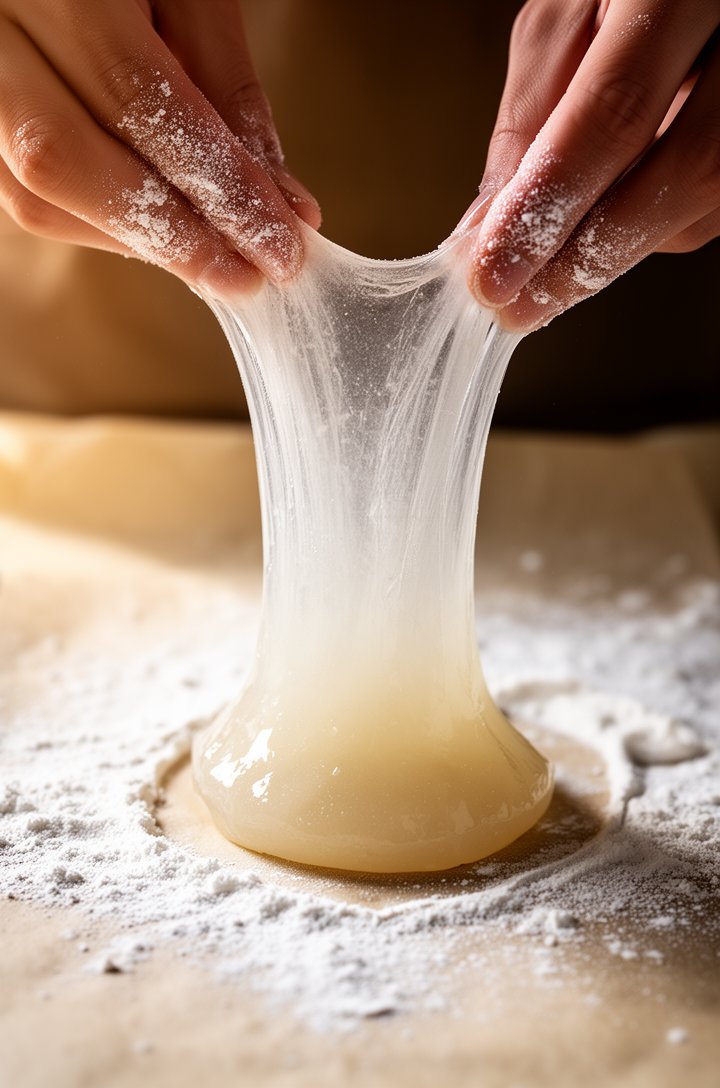
Cook until the dough goes translucent. White and opaque means the starch hasn't fully gelatinized and you'll get a gummy, dense chew instead of the pillowy stretch you want. It should look almost see-through and pull in long elastic strings when you lift it with a spoon.
Mia asked me what mochi was after seeing it at the grocery store. I said it was a rice cake. She said, 'Like a Rice Krispie?' No, kid. Not like a Rice Krispie. I made a batch that afternoon — four minutes in the microwave, cornstarch everywhere, Mia's hands covered in sticky dough she refused to stop poking. She ate three before dinner. Noah ate half of one and spit it on the floor, which is his way of saying he needs more time.
The thing about mochi is that nothing else has this texture. Soft, stretchy, slightly tacky, with a chew that lands somewhere between marshmallow and fresh pasta. You can't fake it. Glutinous rice flour does one thing and it does it perfectly.
The microwave method takes about four minutes of actual cooking. The rest is shaping, which is meditative if you're alone and chaotic if you have a five-year-old helping. I won't pretend there isn't a learning curve — the first one always looks like a crime scene. By the third, you'll have a system. Cornstarch on everything. Work fast. Don't let the dough cool.
I've made this with red bean paste, ice cream, strawberries, peanut butter, and once just Nutella because it was Tuesday. They all work. The dough doesn't care what's inside. The real move is the vinegar — two drops in the batter keep the mochi soft for hours instead of firming up into something you could bounce off the floor. I learned that from a Hawaiian recipe blog and I've never gone back.
David calls these 'the sticky things' which tells you everything about his dessert vocabulary. He eats four. Mia decorates hers with sprinkles. Noah — actually, Noah has come around. He'll eat the plain ones now, no filling, just the dough. Progress.

Mise en place
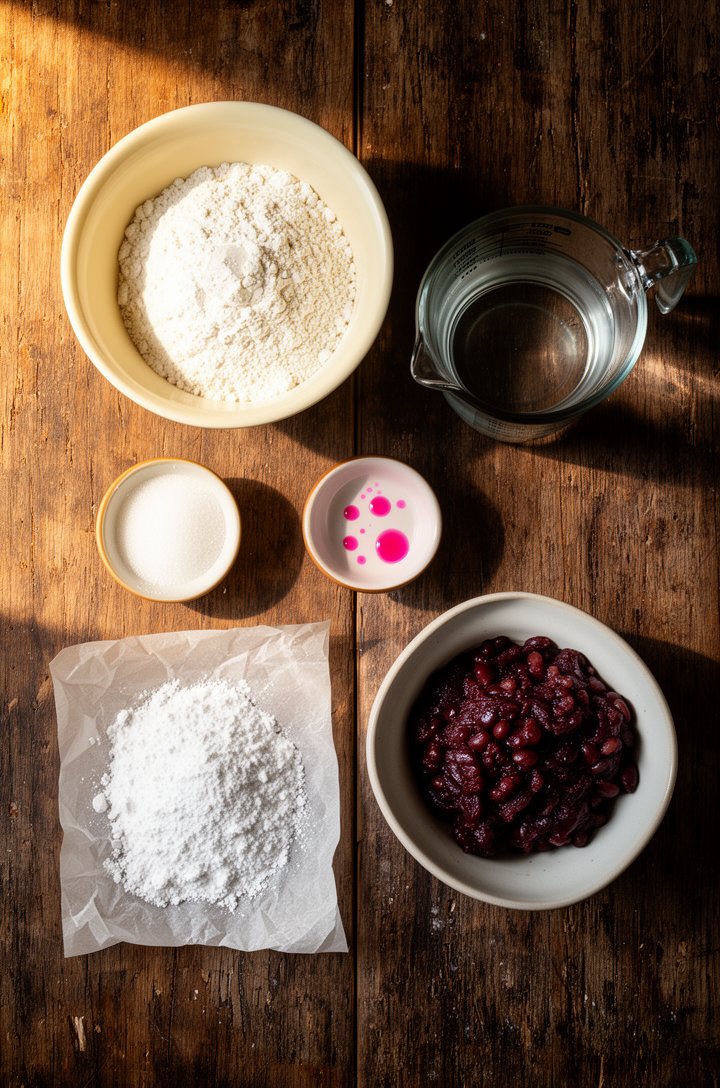
Ingredients
- 1½ cups glutinous rice flour (mochiko)
- 1 cup Sugar (granulated)
- 1.5 cup Water
- 2 drops white vinegarkeeps mochi pliable
- A few drops food coloringOptional
- ½ cup cornstarch for dustingfor dusting surface and hands
Filling
- 1 cup filling of choice (red bean paste, fruit, ice cream)pre-portioned into 1-tablespoon ballsOptional
The Method
Instructions
- 01
Prep your filling first. Scoop 1-tablespoon balls of red bean paste (or your chosen filling) onto a parchment-lined plate. Freeze for at least 30 minutes.
Done when:Filling balls are firm enough to hold their shape when picked up — they shouldn't squish between your fingers.
- 02
Whisk together glutinous rice flour and sugar in a microwave-safe bowl. Add water, vinegar, and food coloring if using. Whisk until completely smooth with no lumps.
Done when:Batter is thin, pourable, and uniform — like crepe batter. No dry pockets hiding at the bottom.
- 03
Cover the bowl with a microwave-safe plate or silicone cover. Microwave on high for 1 minute.
Done when:Edges will look slightly set while the center is still liquid. This is normal.
- 04
Remove and stir vigorously with a wet wooden spoon or rubber spatula. Cover and microwave another minute. Stir again. Repeat until you've cooked for about 4 minutes total, stirring between each interval.
Done when:Dough pulls away from the bowl in a cohesive, glossy mass. It should look translucent — not chalky-white — and feel extremely sticky and elastic when you pull it with the spoon.
- 05
Dust your counter generously with cornstarch. Lay down parchment paper first if you value your sanity. Scrape the hot mochi dough onto the cornstarch using a rubber spatula.
Done when:Dough is on the surface in one mass. It will be very hot — do not touch it directly yet.
- 06
Dust the top of the dough and your hands heavily with cornstarch. Once cool enough to handle, pinch off a golf-ball-sized piece and flatten it into a 3½ to 4-inch disc.
Done when:Disc is thin enough to see your fingers through slightly, but not so thin it tears. About ⅛-inch thick.
- 07
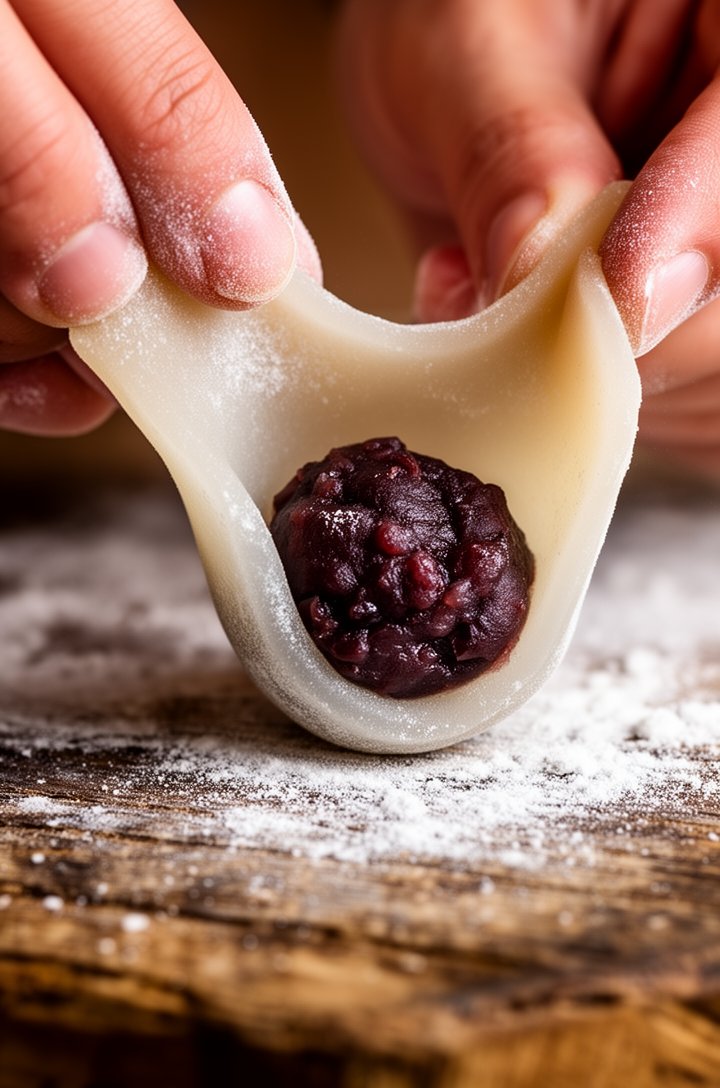
Place a frozen filling ball in the center of the disc. Pull the edges up and around the filling, pinching them together at the top. Make sure all seams are sealed — no holes.
Done when:Seams are fully pinched closed. When you roll it gently between your palms, it feels smooth with no gaps where filling could leak.
- 08
Roll the sealed mochi into a smooth ball and place seam-side down on a plate dusted with cornstarch. Repeat with remaining dough and filling.
Done when:All mochi are shaped, smooth, and sitting seam-side down. None are sticking to each other or the plate.
Where it goes wrong
Common mistakes
- ✕Using regular rice flour instead of glutinous rice flour — completely different starch, completely wrong texture. The package must say 'glutinous' or 'sweet' rice flour.
- ✕Undercooking the dough — if it's still white and opaque, it needs another minute. Properly cooked mochi is translucent and glossy.
- ✕Not using enough cornstarch for dusting — the dough will fuse to your counter, your hands, and your will to live.
- ✕Letting the dough cool completely before shaping — cold mochi is stiff and tears instead of stretching. Work while it's warm.
Context
Compared to the usual
Traditional mochi is made by pounding steamed glutinous rice with wooden mallets in a giant mortar — a process called mochitsuki that takes two people and serious arm strength. The microwave version is the home cook's shortcut that's been standard in Japanese-American kitchens since the 1980s, when Hawaiian and Japanese-American communities started using mochiko flour and microwaves to skip the pounding entirely. Purists will note the texture is slightly softer than pounded mochi, but for filled mochi (daifuku), the microwave dough is actually easier to work with — it stretches thinner without tearing.
Glossary
Techniques used
- Mochiko
- Japanese glutinous rice flour made from short-grain sweet rice. 'Glutinous' means sticky, not that it contains gluten — it's naturally gluten-free.
- Glutinous rice flour
- Flour milled from sticky short-grain rice. High in amylopectin starch, which gives mochi its characteristic stretch and chew. Not interchangeable with regular rice flour.
- Retrogradation
- The process where cooked starch molecules re-crystallize as they cool, causing the texture to firm and stiffen. The vinegar in this recipe slows it down.
- Daifuku
- The Japanese term for filled mochi — literally 'great luck.' If you're wrapping something inside, you're technically making daifuku.
Riffs
Variations
Mochi Ice Cream
Scoop small balls of ice cream onto a parchment-lined tray and freeze solid (at least 2 hours). Wrap in mochi dough, working fast so the ice cream doesn't melt. Freeze wrapped mochi for 1 hour before eating. Let sit 5 minutes at room temperature before biting in.
Strawberry Mochi (Ichigo Daifuku)
Wrap a whole small strawberry with a thin layer of red bean paste, then wrap in pink-tinted mochi dough. The contrast of fresh berry, sweet bean paste, and chewy dough is the reason this exists.
Butter Mochi
A Hawaiian-style baked version. Mix mochiko flour with coconut milk, eggs, butter, sugar, and vanilla, pour into a 9x13 pan, and bake at 350°F for about an hour. Custardy, chewy, coconutty — more cake than traditional mochi but addictive in its own right.
Peanut Mochi
Skip the filled approach. Shape plain mochi into small balls and roll in a mixture of finely ground toasted peanuts, sugar, and a pinch of salt. A Taiwanese-Vietnamese classic that Priya introduced me to.
Q & A
Frequently asked
Is mochi gluten-free?
Yes. Despite the name 'glutinous rice flour,' it contains zero gluten. The 'glutinous' refers to the sticky, glue-like texture. Safe for celiac if your cornstarch is also certified GF.
Can I use regular rice flour?
No. Regular rice flour makes a crumbly, dry dough. You need glutinous (sweet) rice flour — the starch composition is completely different.
Why is my mochi hard after a few hours?
Starch retrogradation. Either eat it same-day, add the vinegar (it slows firming), or freeze and thaw as needed. Don't refrigerate — the cold accelerates hardening.
Can I steam instead of microwave?
Absolutely. Steam the batter on high for 15-20 minutes, stirring halfway. Same result, slightly more hands-off but takes longer.
Where do I find glutinous rice flour?
Any Asian grocery store. Mochiko (blue and white box, Koda Farms) is the most common brand in the US. Also available on Amazon.
Storage
Cover with plastic wrap at room temperature for up to 8 hours. Do not refrigerate — cold firms the starch and ruins the texture. For longer storage, freeze.
Reheating
Frozen mochi thaws at room temperature in about 10 minutes. For plain mochi that's firmed up, microwave for 5-10 seconds — no more, or it melts into a puddle.
Freezing
Wrap each mochi individually in plastic wrap and freeze in a single layer. Keeps for up to 1 month. Ice cream mochi should be stored in the freezer anyway — they're meant to be eaten slightly frozen.
Make ahead
The filling (red bean paste balls, ice cream scoops) should be frozen ahead. Mochi dough is best shaped immediately after cooking while still warm and pliable.
Serve with
Eat same-day at room temperature for the best texture. Serve on a plate dusted with cornstarch or kinako (roasted soybean powder) to prevent sticking. Green tea on the side is not optional — it cuts the sweetness perfectly.