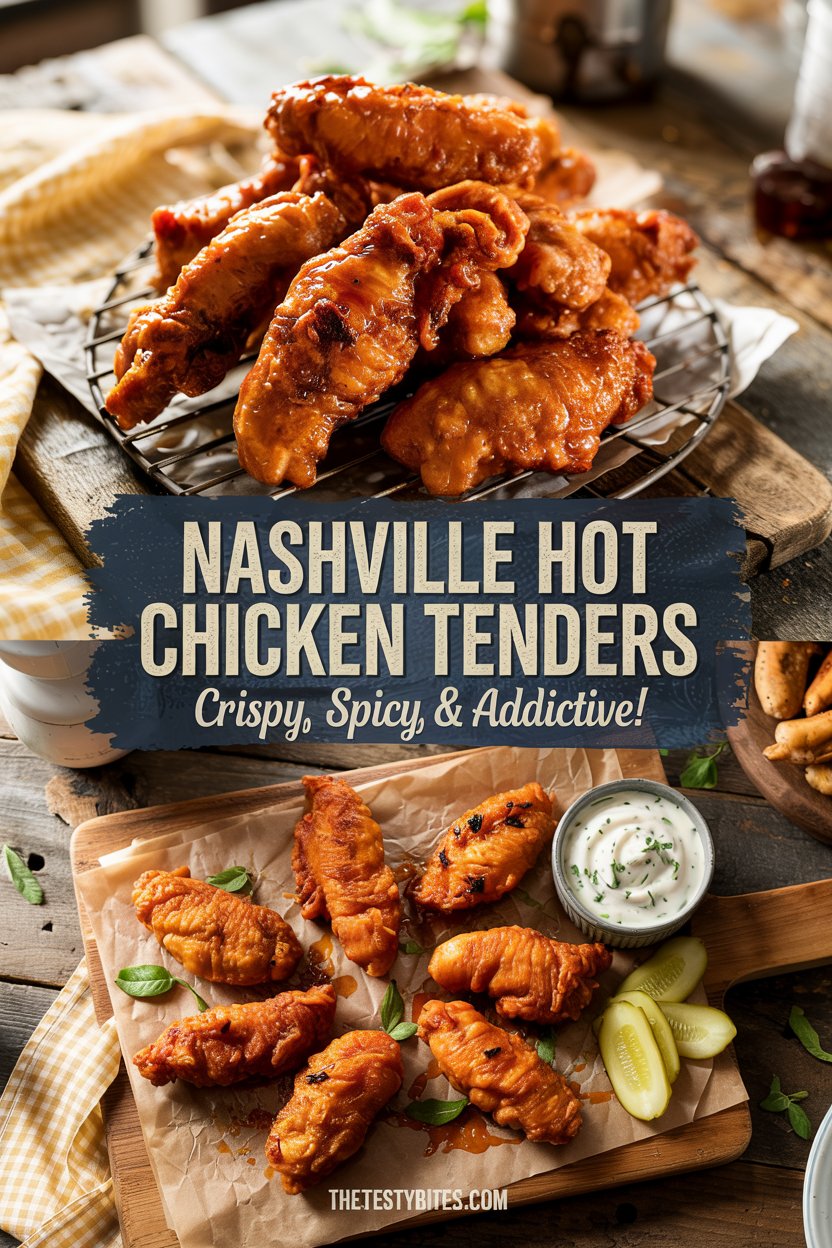
Nashville Hot Chicken Tenders
Buttermilk-soaked chicken tenders double-dredged in seasoned flour, fried until shatteringly crispy, then brushed with a cayenne-brown sugar hot oil that stains your fingers and ruins your napkin. Worth every paper towel.
Tasted & written by Rachel
Prep
35 min
Cook
15 min
Total
50 min
Serves
6
The Key
The Nashville hot paste is not a glaze — it's a fat-based spice infusion. You use the actual frying oil, still hot, and whisk the cayenne and brown sugar directly into it. The heat blooms the spices and the fat carries them into every crevice of the breading. Cold oil won't do it. Fresh oil won't do it. It has to be the oil you fried in.
David came back from a work trip to Nashville last fall and wouldn't shut up about the chicken. 'You could make this.' He said it four times. So I did — and then I made it again the next week, and the week after that, until Mia started calling Tuesday 'hot chicken night.'
The trick isn't the heat. Any recipe can be spicy. The trick is the sweet-smoky paste you brush on after frying — hot oil from the fryer mixed with cayenne and brown sugar. That's what makes it Nashville and not just fried chicken with red pepper flakes. The oil carries the spice into every crevice of that craggy breading, and the brown sugar adds a barely-there sweetness that makes your brain say more instead of stop.
The double-dredge is where the magic happens. Flour, then back in the buttermilk, then flour again — pressing hard each time so you get those shaggy, irregular ridges that fry up into pure crunch. Don't be gentle. You want the coating to look messy and overbuilt before it hits the oil.
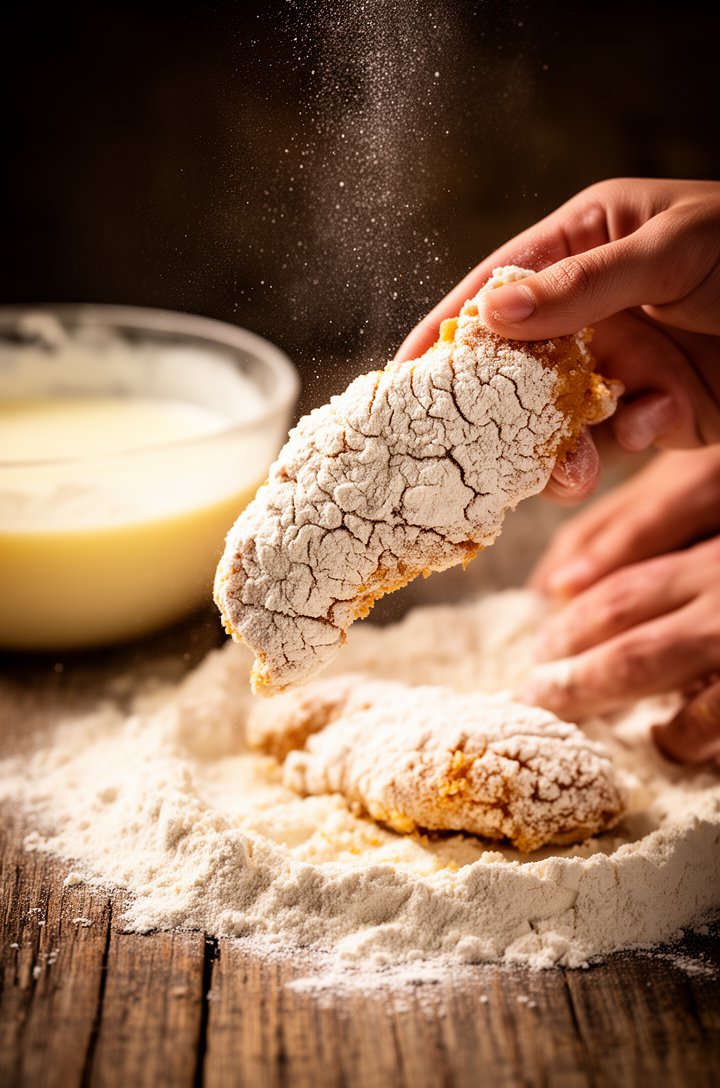
I let the coated tenders sit for 15 minutes before frying. It feels like doing nothing, but the flour hydrates against the wet buttermilk and locks on. Skip this step and half your breading ends up floating in the oil instead of on the chicken.
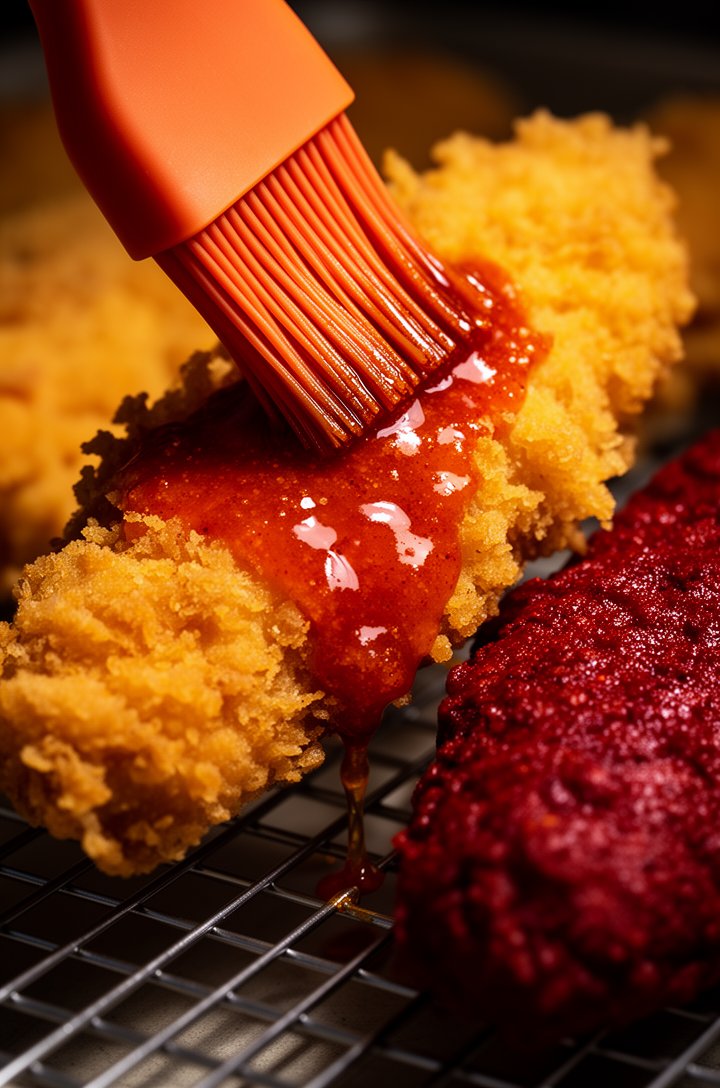
The paste goes on while everything is still screaming hot. You ladle a cup of the frying oil — the same oil that just cooked the chicken — into a bowl and whisk in the cayenne, brown sugar, and smoked paprika. It blooms the spices instantly. Brush it on thick. If your tenders aren't staining the white bread underneath, you haven't used enough.
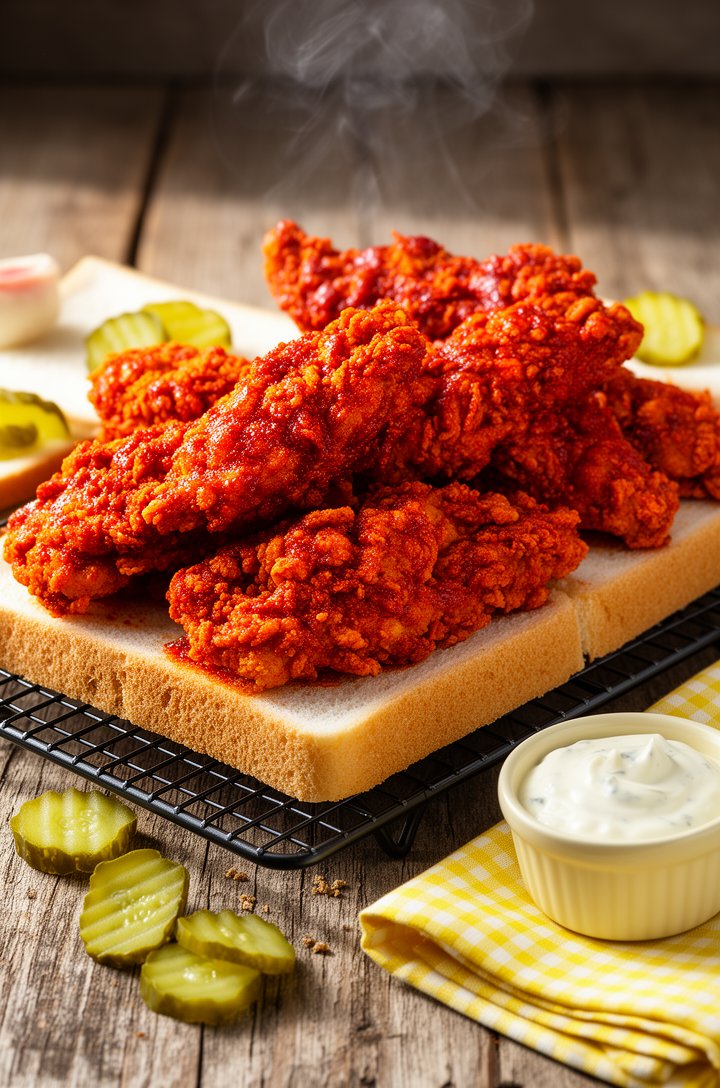
Serve them the Nashville way — stacked on cheap white bread with pickle chips. The bread soaks up the spiced oil and becomes this soft, fiery, slightly greasy thing that's honestly the best part. David's running club demolished a double batch last Saturday. Jake texted from Austin asking for the recipe. I sent him a photo instead.
Mise en place
Ingredients
- about 10 chicken tenders (roughly 2 lbs)
- vegetable oil for frying (about 2 inches in pot)
Buttermilk Soak
- 2 cup Buttermilk
- ⅓ cup hot sauce (like Frank's RedHot)
Seasoned Flour
- 2.5 cup All-Purpose Flour
- 3 tbsp Cornstarch
- 3 tbsp Seasoned Salt
- 1 tbsp Paprika
- 2 tsp Cayenne Pepper
- 2 tsp Black Pepper
- 0.5 tsp Garlic Powder
- 1 tbsp Onion Powder
Nashville Hot Paste
- ⅓ cup cayenne pepper
- 1.5 tbsp Dark Brown Sugar
- 1 tsp Chili Powder
- 1 tsp Garlic Powder
- 1 tsp Smoked Paprika
For Serving
- 6 slice Bread (white)
- dill pickle slices
The Method
Instructions
- 01
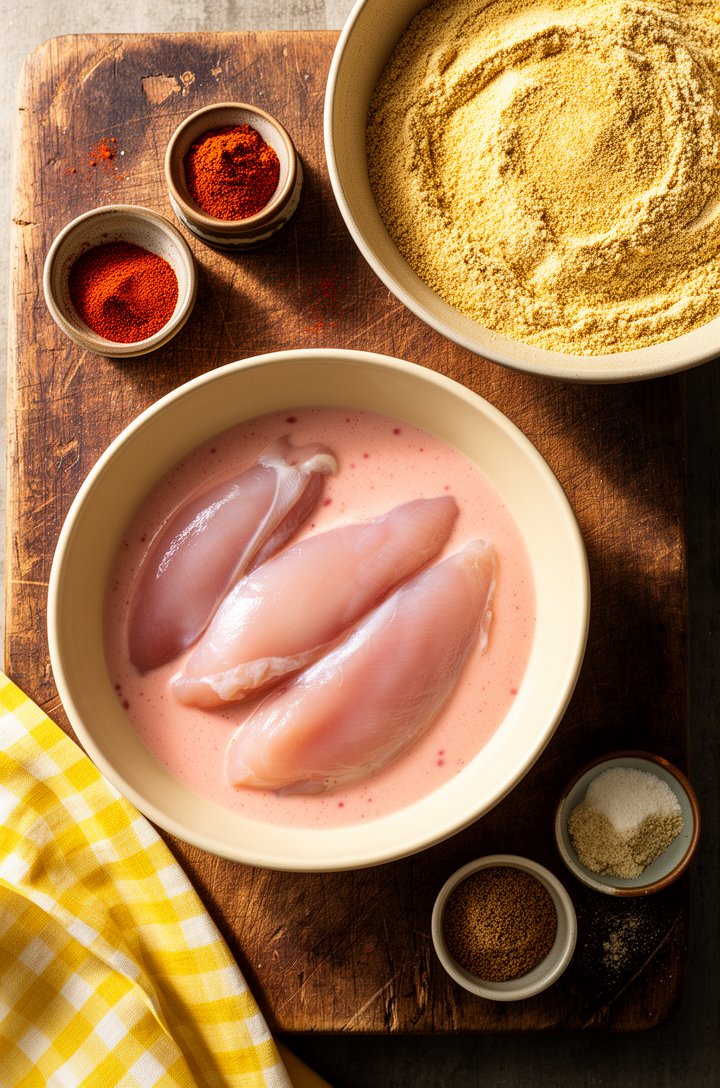
Whisk buttermilk and hot sauce together in a large bowl. Add chicken tenders, turn to coat, cover, and refrigerate for at least 20 minutes or up to overnight.
Done when:Chicken is fully submerged and the buttermilk has turned slightly pink from the hot sauce.
- 02
Whisk flour, cornstarch, seasoned salt, paprika, cayenne, black pepper, garlic powder, and onion powder together in a wide shallow bowl.
Done when:Mixture is one uniform color — no white flour streaks or spice clumps visible.
- 03
Pull one tender from the buttermilk, let excess drip off for a second, then press firmly into the flour mixture. Flip, press again. Dip back into buttermilk briefly, then back into flour and press a final time. Set on a sheet pan. Repeat with all tenders.
Done when:Each tender has a thick, shaggy coat with visible craggy bits — no smooth or bald patches. The coating looks dry and crumbly, not wet.
- 04
Let the coated tenders rest on the sheet pan for 15 to 20 minutes while the oil heats. This sets the crust.
Done when:Coating feels dry and firmly stuck to the chicken — tap it and the flour doesn't fall off in sheets.
- 05
Add 2 inches of vegetable oil to a heavy-bottomed pot or Dutch oven. Heat over medium-high until oil reaches 350°F (175°C). Flick a pinch of flour in — it should sizzle immediately and turn golden in a few seconds.
Done when:Thermometer reads 350°F, or a flour flick sizzles vigorously and turns golden brown within 3-4 seconds.
- 06
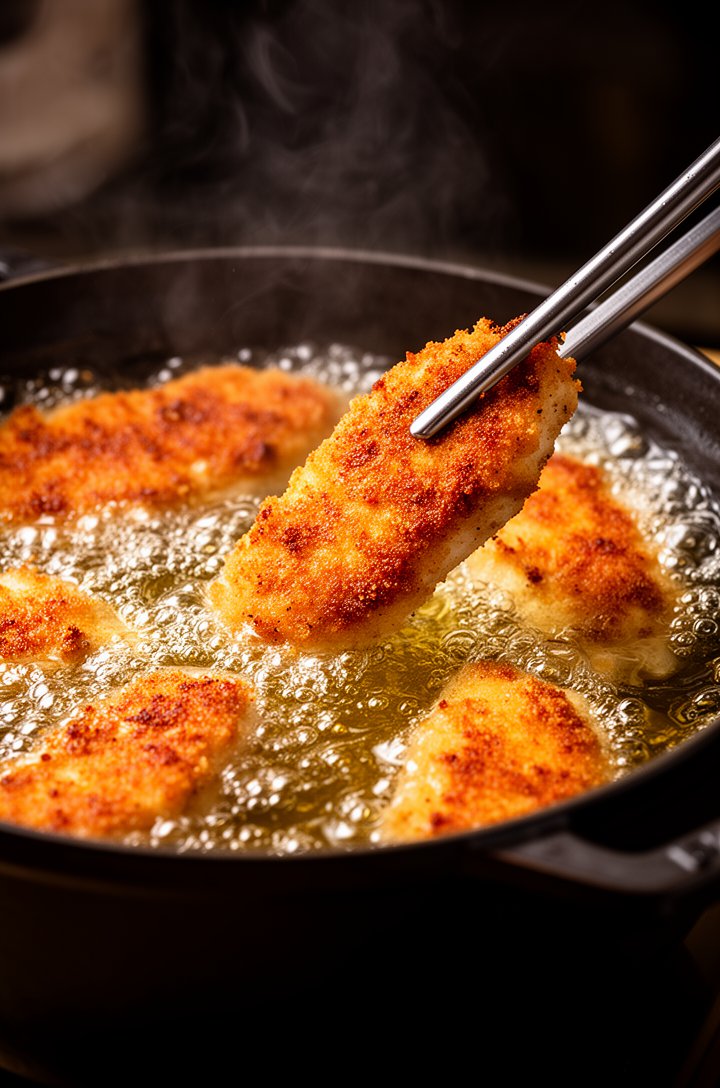
Carefully lower 3-4 tenders into the oil using tongs. Do not overcrowd. Fry for 2-3 minutes per side, flipping once, until deep golden brown and cooked through (internal temp 165°F).
Done when:Crust is deep golden brown — not pale tan, not dark mahogany. Chicken feels firm when pressed with tongs, not squishy. Internal temperature reads 165°F.
- 07
Transfer fried tenders to a wire rack set over a sheet pan. Let the oil come back to 350°F before frying the next batch.
Done when:Oil has stopped bubbling aggressively and thermometer reads 350°F again.
- 08
Make the hot paste: carefully ladle 1 cup of the hot frying oil into a heatproof bowl. Whisk in cayenne pepper, brown sugar, chili powder, garlic powder, and smoked paprika until smooth.
Done when:Paste is smooth, dark red, and slightly syrupy — no dry spice clumps floating on top.
- 09
Brush the hot paste generously over every surface of each fried tender. Use a silicone brush or spoon it on — you want full coverage.
Done when:Every tender is uniformly coated in the deep reddish-orange paste. No bare spots of plain breading visible.
- 10
Serve immediately on white bread slices with pickle chips on the side.
Done when:Tenders are still sizzling slightly when they hit the bread. Bread should start soaking up the spiced oil on contact.
Where it goes wrong
Common mistakes
- ✕Crowding the pot — dropping in too many tenders at once tanks the oil temperature and you get pale, greasy chicken instead of crispy
- ✕Skipping the rest after breading — the flour hasn't set yet and it'll slough off in the oil, leaving bald patches
- ✕Making the paste with cold oil — the spices don't bloom and the paste sits on top of the chicken like wet paint instead of soaking in
- ✕Draining on paper towels instead of a wire rack — the bottom goes soggy while it sits in its own steam
Context
Compared to the usual
Real Nashville hot chicken — the Prince's Hot Chicken Shack original — uses bone-in pieces, usually breast quarters and thighs, marinated overnight and fried in cast iron with lard. This tenders version is the weeknight compromise: same buttermilk soak, same paste technique, but faster-cooking cuts and neutral oil. You lose some of the juiciness that comes from frying bone-in on the bone, but you gain speed and the ability to feed five-year-olds without needing a cleaver. The heat is authentic. The format is practical.
Glossary
Techniques used
- Double-dredge
- Coating chicken in flour, dipping back in liquid, then coating in flour again. Builds a thicker, craggier crust with more surface area for crunch.
- Nashville hot paste
- A mixture of cayenne pepper, brown sugar, and hot frying oil brushed onto freshly fried chicken. The signature element that separates Nashville hot chicken from regular spicy fried chicken.
- Bloom
- Heating ground spices in hot fat to release their volatile oils and deepen their flavor. Happens when the hot frying oil hits the cayenne in the paste.
- Seasoned salt
- A commercial blend of salt, garlic, onion, and paprika. Lawry's is the standard. Don't substitute plain salt — the balance is different.
Riffs
Variations
Air fryer version
Spray breaded tenders with oil, air fry at 400°F for 10-12 minutes, flipping halfway. The crust won't be as craggy but it's respectable for a weeknight. Still apply the hot paste after.
Nashville hot chicken sandwich
Skip the bread-on-the-bottom tradition. Put one tender on a buttered brioche bun with coleslaw and extra pickles. David's running club calls this 'the upgrade.'
Mild honey-hot version
Replace half the cayenne in the paste with sweet paprika and add 1 tablespoon honey. Still has kick but the sweetness rounds it out. This is the version Noah will eventually eat.
Q & A
Frequently asked
Can I use chicken breast instead of tenders?
Yes — slice boneless skinless breasts into strips about ¾ inch thick. They'll need an extra minute per side in the oil. Pound any thick spots even so they cook uniformly.
How do I make this less spicy for kids?
Cut the cayenne in the paste to 1-2 tablespoons. Brush it on lightly or serve some tenders plain before you paste the rest. The breading itself has manageable heat — it's the paste that brings the fire.
Can I bake these instead of frying?
You can, but you won't get the same crust. Bake at 425°F on a wire rack for 20-25 minutes, flipping halfway. Spray with oil before baking. The paste still goes on after.
What oil is best for frying?
Vegetable, canola, or peanut oil. All have high smoke points and neutral flavor. Avoid olive oil — it smokes too early and the flavor competes with the spice.
Why white bread?
It's traditional. The bread soaks up the spiced oil dripping off the chicken and becomes this soft, fiery, slightly greasy thing that's weirdly the best part. Don't overthink it — cheap white sandwich bread is correct here.
Storage
Store leftover tenders in an airtight container in the fridge for up to 3 days. The crust will soften but the flavor holds.
Reheating
Reheat on a wire rack in a 400°F oven for 8-10 minutes until the crust crisps back up. Avoid the microwave — it turns the breading into cardboard.
Freezing
Freeze fried tenders (without the paste) on a sheet pan, then transfer to freezer bags. Good for 2 months. Reheat from frozen at 400°F for 15-18 minutes, then brush with freshly made hot paste.
Make ahead
Soak the chicken in buttermilk up to 24 hours ahead — longer marination means more tender meat. Mix the seasoned flour in advance and store in an airtight container. Don't bread until you're ready to fry.
Serve with
White bread underneath, pickle chips on top — that's the traditional Nashville plate. Add creamy coleslaw, ranch dressing for dipping, or mac and cheese on the side. A cold beer is not optional.