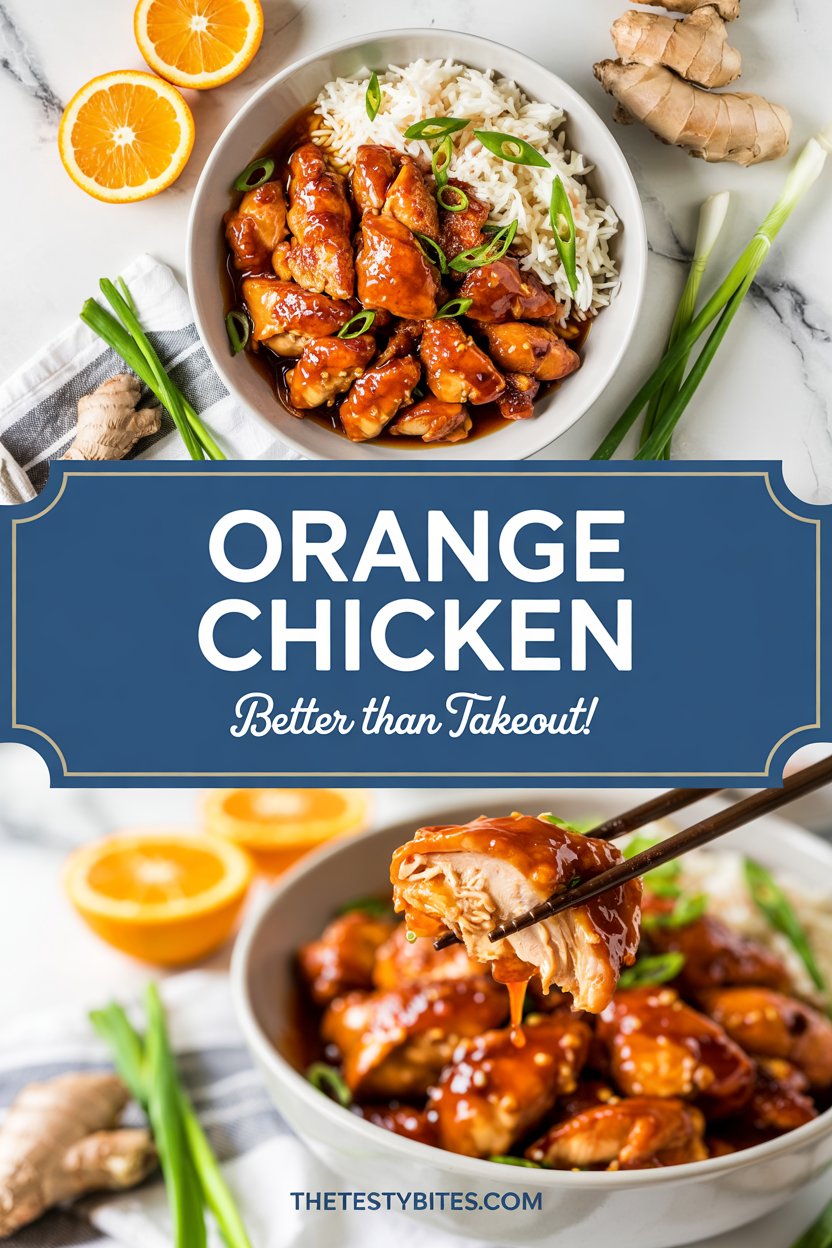
Orange Chicken
Crispy cornstarch-coated chicken thighs tossed in a glossy sweet-tangy orange sauce with ginger and garlic. Better than the takeout box on a Wednesday? Absolutely. Better than Panda Express? By a mile.
Tasted & written by Rachel
Prep
40 min
Cook
20 min
Total
1h
Serves
4
The Key
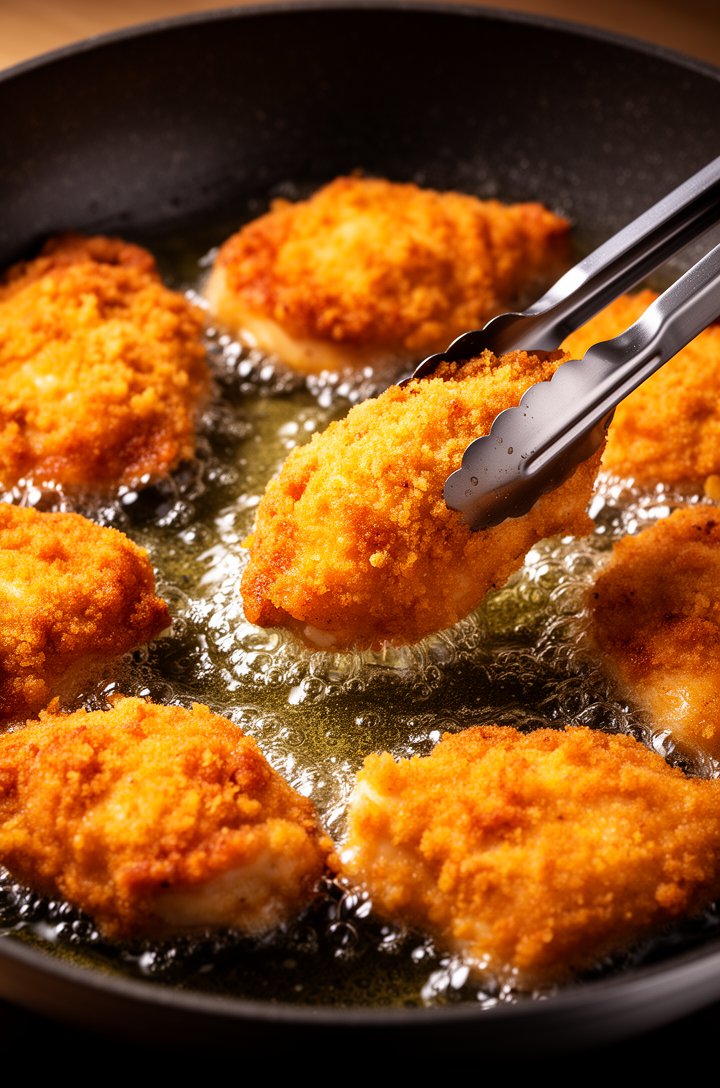
Coat the chicken when the dredge looks too thick. You want shaggy, craggy, almost lumpy pieces — not a smooth even coating. Those irregular ridges are what fry up into crispy edges that trap the sauce in every crack. Smooth coatings slide off the moment they hit liquid.
Better than the restaurant version? No. Better than takeout on a Wednesday when Noah's screaming and nobody wants to wait forty minutes for a delivery driver? Yes. By a lot.
I made this five times in two weeks trying to get the coating right. The secret is baking soda — just a pinch in the cornstarch dredge gives the chicken that craggy, shatteringly crispy texture that actually holds up under the sauce. Most recipes skip it, and you end up with soggy chicken in a puddle. David's running club demolished two batches last Saturday without asking what was in the sauce. That's the review that matters.
The coating is everything. You want it thick, shaggy, almost lumpy — those craggy ridges fry into crispy edges that trap sauce in every crack. Smooth coatings are the enemy. They slide off the moment they hit liquid, and you're left with naked chicken sitting in a pool.
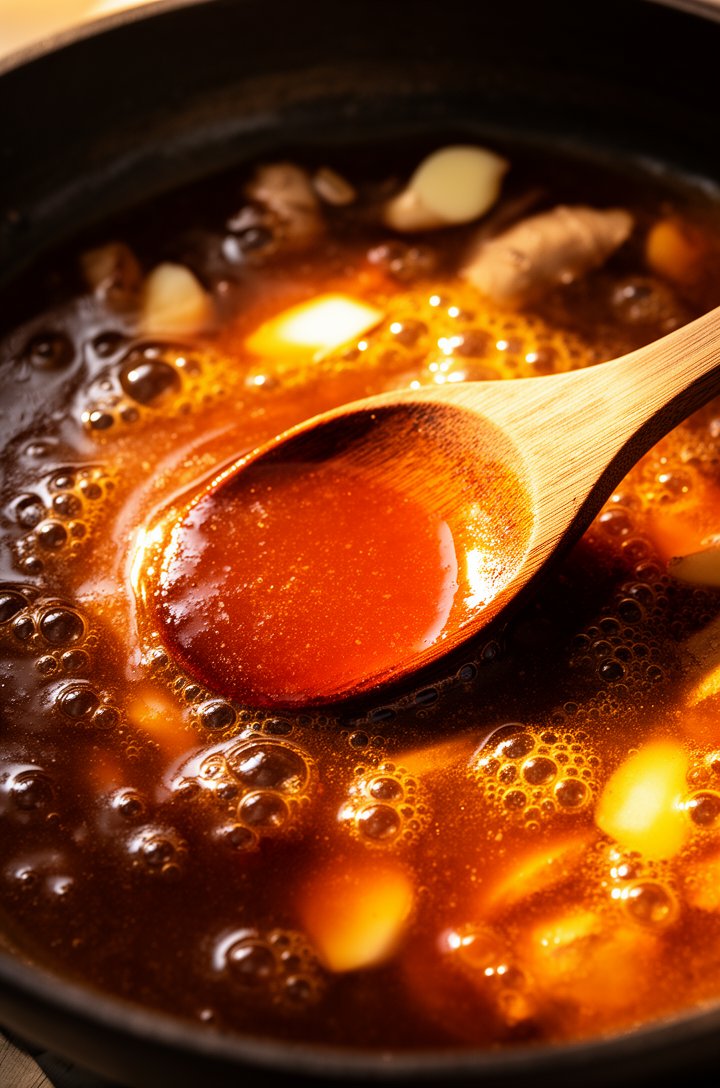
The sauce comes together in two minutes while the chicken drains. Soy sauce, brown sugar, vinegar, orange juice, chicken broth — it sounds like a lot of sweet, but the vinegar and broth pull it back. Without them you get candy. With them you get takeout.
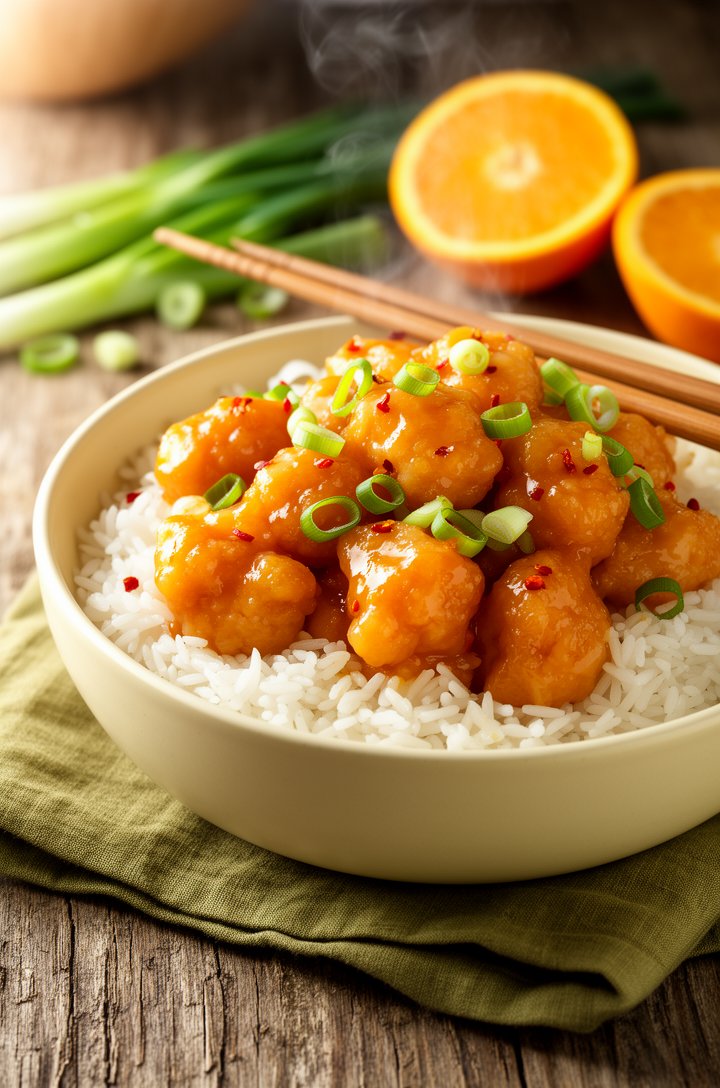
Toss the chicken in at the end. Thirty seconds in the sauce — just enough for the glaze to grip those craggy ridges. Pile it on rice. Hit it with scallions and a little orange zest if you're feeling fancy. Mia will pick the scallions off. Noah won't touch it either way. David will eat everyone's share.
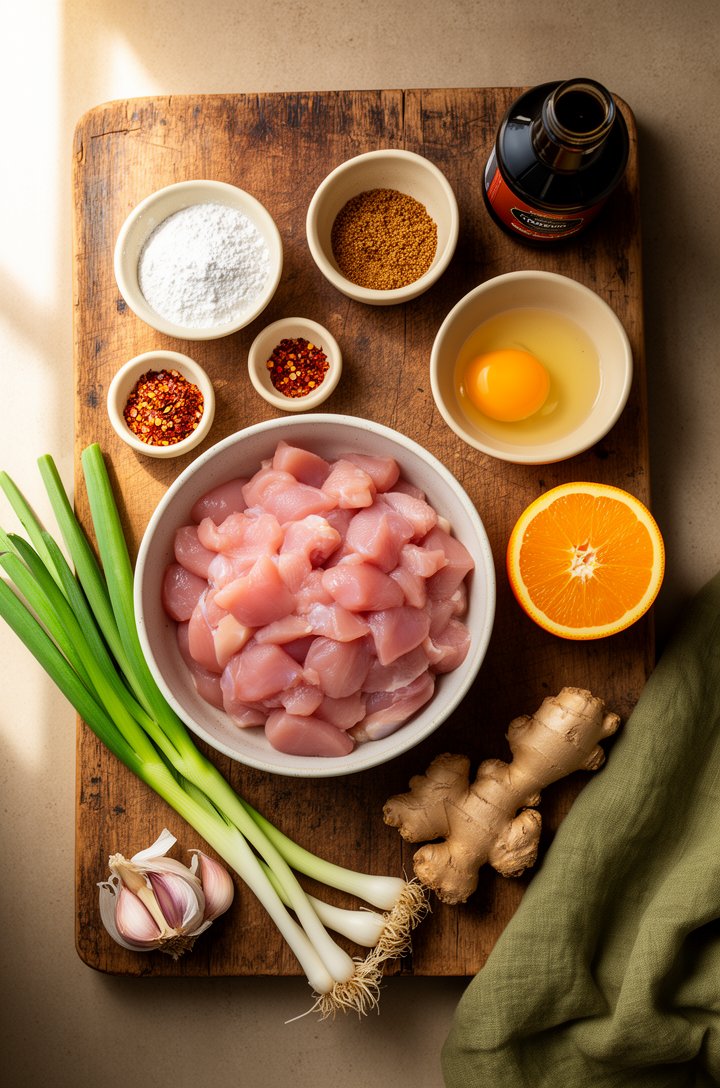
Mise en place
Ingredients
Marinade
- 1 whole Eggs
- 1 tbsp Soy Sauce
- 0.5 tsp Light Brown Sugar
Chicken
- 1.5 lbs boneless skinless chicken thighs, cut into 1-inch piecescut into 1-inch pieces
- vegetable oil (for shallow frying, about 1/4 inch deep)
Coating
- 1 cup Cornstarch
- 0.33 cup All-Purpose Flour
- 0.25 tsp Baking Soda
Sauce
- 0.25 cup Soy Sauce
- 1/2 cup packed light brown sugarpacked
- 0.25 cup Distilled White Vinegar
- 1/4 cup fresh orange juice (from 1 orange)
- 1 cup Chicken Broth
- 2 tbsp Cornstarch
- 1.5 tsp Sesame Oil
- 0.75 tsp Crushed Red Pepper
Finish
- 1 tablespoon fresh ginger, minced (from a 2-inch knob)minced
- 3 clove Garlicminced
- 4 scallions, thinly sliced (white and green parts separated)thinly sliced, whites and greens separated
- zest from 1 orangeOptional
Serving
- cooked white rice, for servingcooked
The Method
Instructions
- 01
Marinate the chicken. Beat the egg, 1 tablespoon soy sauce, and 1/2 teaspoon brown sugar in a large bowl. Add the chicken pieces and toss until evenly coated. Let sit at room temperature for 30 minutes.
Done when:Chicken pieces are uniformly coated in a thin, glossy egg wash. The marinade should look absorbed, not pooling at the bottom.
- 02
Make the sauce. Whisk 1/4 cup soy sauce, 1/2 cup brown sugar, vinegar, orange juice, chicken broth, 2 tablespoons cornstarch, sesame oil, and red pepper flakes in a small bowl until the cornstarch dissolves completely. Set aside.
Done when:No cornstarch lumps visible. The mixture should be smooth, thin, and the color of weak tea.
- 03
Coat the chicken. Whisk 1 cup cornstarch, flour, and baking soda in a medium bowl. Sprinkle the mixture over the marinated chicken and toss until every piece separates and has a dry, shaggy coating.
Done when:Each piece is individually coated with a thick, craggy layer — no wet spots showing through. The coating should look dry and clumpy, not smooth.
- 04
Fry the chicken. Heat about 1/4 inch of vegetable oil in a large nonstick skillet over medium-high heat to 350°F. Working in two batches, add chicken pieces in a single layer without crowding. Cook 2-3 minutes per side, turning once.
Done when:Deep golden brown on both sides. The coating is audibly crispy when you tap it with tongs. Internal temperature reads 165°F. Transfer to a paper-towel-lined plate.
- 05
Fry the second batch. Add the remaining chicken to the hot oil, adjusting heat to maintain 350°F. Cook the same way — 2-3 minutes per side until golden and cooked through.
Done when:Same deep golden color as the first batch. All pieces draining on paper towels.
- 06
Build the aromatics. Carefully drain the oil from the skillet and wipe clean with a paper towel. Add about 1 tablespoon fresh oil over medium heat. Add ginger, garlic, and scallion whites. Cook, stirring constantly, for about 30 seconds.
Done when:Garlic is fragrant and barely golden — not brown. The kitchen smells sharply of ginger.
- 07
Finish the sauce. Give the sauce mixture a final whisk (cornstarch settles), then pour into the skillet. Bring to a simmer, stirring constantly, until thickened and glossy.
Done when:Sauce coats the back of a spoon thickly. It should be glossy, dark amber, and reduced by about a third. A line drawn through the sauce on the spoon holds its shape.
- 08
Toss the chicken. Add all the fried chicken to the sauce and toss gently until every piece is coated. Cook for 30 seconds more so the sauce grips the coating. Serve immediately over rice, garnished with scallion greens and orange zest.
Done when:Every piece has a thick, even glaze. The sauce clings to the craggy coating rather than sliding off. No dry spots visible.
Where it goes wrong
Common mistakes
- ✕Crowding the skillet — chicken steams instead of fries, and the coating goes pale and soft
- ✕Tossing the chicken in sauce too early — wait until the sauce is fully thickened and glossy, or it dilutes and slides right off
- ✕Using pre-minced garlic from a jar — the water content splatters in hot oil and the flavor is flat compared to fresh
- ✕Skipping the vinegar — without it, the sauce is one-note sweet. The acid is what makes it taste like takeout.
Context
Compared to the usual
This is the Chinese American takeout version — sticky, sweet, built for wide appeal. The Hunan original uses dried tangerine peel, Sichuan peppercorns, and dried chilies, and the chicken is wok-fried without batter. Ours is closer to what Panda Express popularized in the '80s: battered, fried, and tossed in a thick glaze. No shame in it. Different dish, different job.
Glossary
Techniques used
- Shallow fry
- Cooking in about 1/4 inch of oil in a skillet — enough to submerge the bottom half of the food. You flip once. Uses far less oil than deep frying but achieves similar crispiness.
- Velveting
- A Chinese technique of marinating protein in egg and cornstarch before cooking. Coats the surface, seals in moisture, and creates a silky texture. The marinade step in this recipe is a simplified version.
- Cornstarch slurry
- Cornstarch whisked into cold liquid before adding to a hot pan. Adding dry cornstarch directly to hot liquid creates instant lumps. Always re-whisk before pouring — cornstarch settles fast.
- Maillard browning
- The chemical reaction between amino acids and sugars that creates the deep golden crust on fried foods. Higher pH (from baking soda) speeds it up, which is why the coating browns faster and darker.
Riffs
Variations
Spicy orange chicken
Double the red pepper flakes to 1.5 teaspoons and add 1 tablespoon of sambal oelek to the sauce. Garnish with toasted sesame seeds.
Air fryer version
Spray coated chicken with oil and air fry at 400°F for 12 minutes, shaking halfway. Make the sauce on the stovetop separately. Less crispy than pan-fried but significantly less oil.
Orange tofu
Press extra-firm tofu for 30 minutes, cube, and follow the same coating and frying process. Reduce fry time to 2 minutes per side. The sauce works identically.
Q & A
Frequently asked
Can I use chicken breasts instead of thighs?
You can, but cut them slightly smaller (3/4-inch pieces) and watch the fry time closely. Breasts overcook faster and will be noticeably drier. Thighs are more forgiving.
Can I bake the chicken instead of frying?
Technically yes — 425°F on a wire rack for 20-25 minutes, flipping halfway. The coating won't be as crispy or craggy. Spray generously with oil before baking.
How do I make it less sweet?
Cut the brown sugar to 1/3 cup and add an extra tablespoon of vinegar. The sauce will be tangier and thinner but still coats well.
Is this gluten-free?
Swap the all-purpose flour for more cornstarch and use tamari instead of soy sauce. The texture changes slightly — a bit more shatteringly crisp, less chewy.
Storage
Chicken and sauce in separate airtight containers for up to 3 days. The coating softens in the fridge no matter what — reheating is key.
Reheating
Spread chicken on a wire rack over a sheet pan. Reheat at 400°F for 8-10 minutes until the coating crisps back up. Warm the sauce separately and toss just before serving. Avoid the microwave entirely.
Freezing
Freeze fried chicken (unsauced) in a single layer on a sheet pan, then transfer to a freezer bag. Keeps 2 months. Reheat from frozen at 400°F for 15 minutes. Freeze sauce separately.
Make ahead
Make the sauce up to 3 days ahead and refrigerate. Marinate the chicken up to 8 hours ahead. Do not coat or fry until ready to serve — the coating goes soft if it sits.
Serve with
Over steamed jasmine rice with a side of steamed broccoli. Sesame seeds and extra scallion greens on top. A cold beer doesn't hurt.