
Pork Tamales with Red Chile Sauce
Slow-braised pork shoulder in homemade red chile sauce, wrapped in fluffy masa and steamed in corn husks. A weekend project that fills the house with the kind of smell that makes neighbors knock.
Tasted & written by Rachel
Prep
1h 30m
Cook
3h 30m
Total
5h
Serves
24
The Key
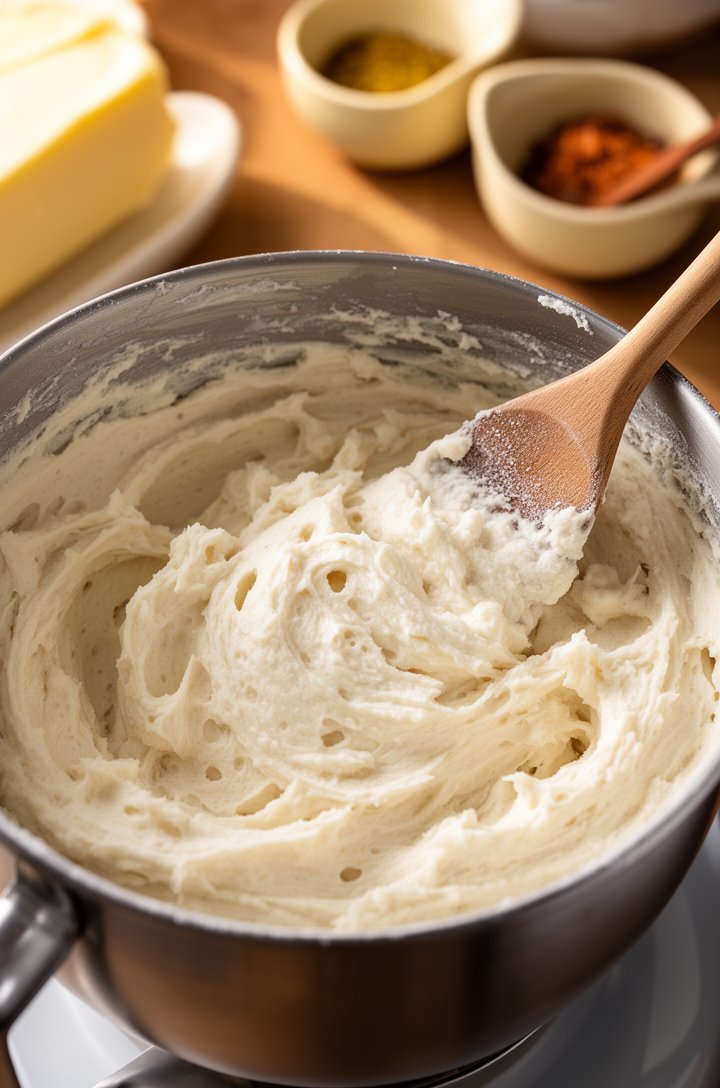
Whip the lard. Not just mix — whip. Three to five minutes with an electric mixer until it looks like buttercream frosting. That air is the entire difference between dense, heavy tamales and the light, fluffy ones you remember. If a small ball of finished dough doesn't float in water, keep beating.
I'll admit this one took me three tries. The first batch: too dry, masa like cornbread. The second: overstuffed, blew open in the steamer like sad little corn husk volcanoes. The third time, standing in the kitchen at 7 AM with corn husks soaking in the sink and David's running club not due for six hours, everything clicked.
The masa was soft enough to spread like hummus. The pork had braised so long it fell apart when I looked at it wrong. And when the first one came out of the steamer and the husk peeled clean — that sound, that little separation — I knew.
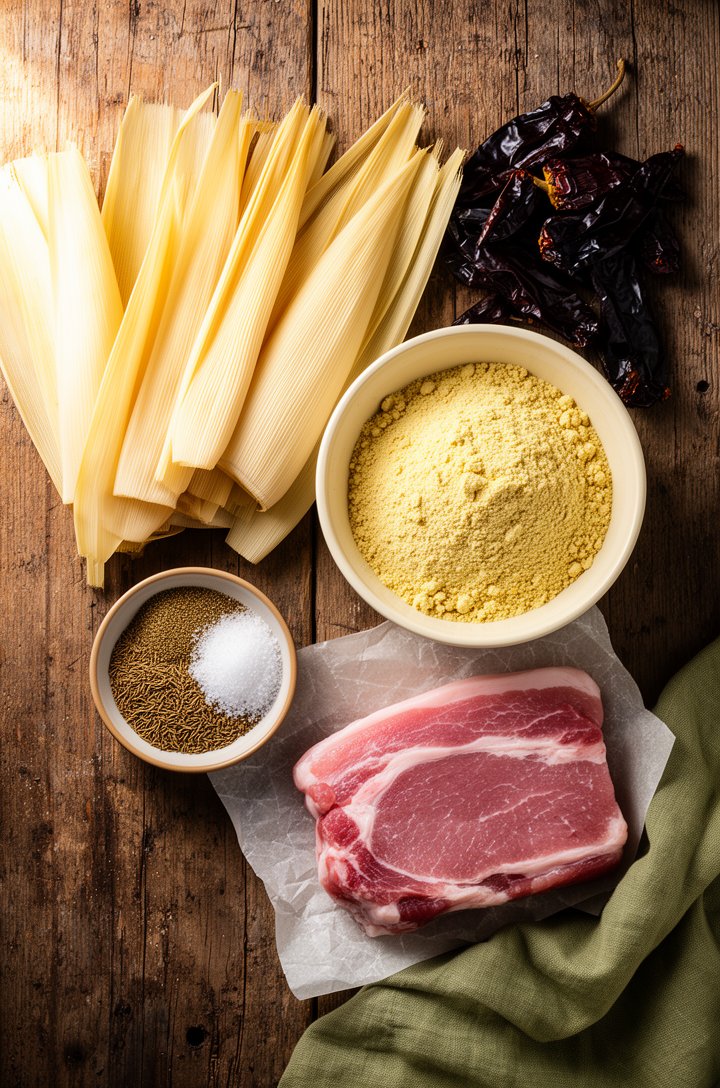
These are the ones. They're a project — I won't pretend otherwise. Plan on a Saturday afternoon with a podcast and a clean counter. But they freeze beautifully, they reheat like a dream, and when Mia helps fold the husks she gets this look on her face like she's building something important. She is.
The key to fluffy tamales lives in two places: the lard and the broth. You have to whip the lard until it looks like buttercream — actually fluffy, not just mixed. That air is everything. And the broth goes in warm, not cold, so the whipped fat doesn't seize back into a solid lump. The first time I got the float test right — a little ball of dough bobbing in a cup of water — I did a victory lap around the kitchen island.
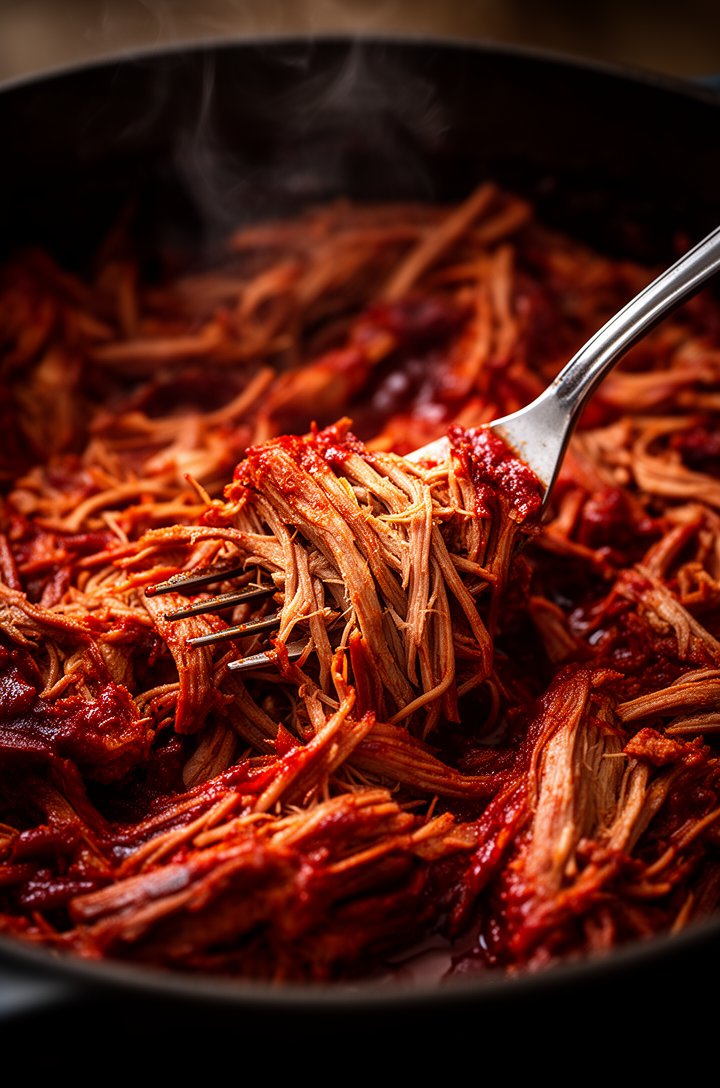
The filling is straightforward: pork shoulder braised low and slow in a homemade red chile sauce made from two kinds of dried chiles. Guajillo for brightness, ancho for that deep, almost raisin-sweet warmth. Together they create a sauce that no jar of chile powder will ever touch. The pork soaks it up for two and a half hours until it shreds if you even think about it too hard.
Assembly is meditative once you get the rhythm. Spread, fill, fold, stack. David put on a playlist, Mia stood on her step stool, and Noah ate cheese off the counter. An hour later we had forty tamales standing upright in the steamer like little soldiers. The house smelled like someone's abuela was visiting.

After an hour in the steamer, the moment of truth. Peeled back the husk. Clean release. The masa was firm but tender, the pork filling centered perfectly. I topped two with sour cream, diced onion, and a squeeze of lime. David ate four before the running club even arrived.
Mise en place
Ingredients
Husks
- 1 (8 oz) package dried corn husks
Red Chile Pork
- 2.5 lbs boneless pork shoulder, cut into 4-inch chunkscut into 4-inch chunks
- 3 oz guajillo chiles (about 8-10), stemmed and seededstemmed and seeded
- 3 oz ancho chiles (about 4-5), stemmed and seededstemmed and seeded
- 1.5 tsp Garlic Powder
- 0.75 tsp Ground Cumin
- 3 tsp kosher salt, divided
- 2 tbsp Olive Oil
- 1 piece Bay Leaf (Fresh)
Masa Dough
- 4 cup Masa Harina
- 2 tsp Baking Powder
- 1 tsp Kosher Salt
- 1 tsp Ground Cumin
- 1 1/3 cups lard (or vegetable shortening)
- 3 cups warm chicken broth, plus more as needed
For Serving
- 0.25 cup Cilantro (fresh)choppedOptional
- 0.5 cup Sour CreamOptional
- 2 limes, cut into wedgescut into wedgesOptional
The Method
Instructions
- 01
Soak the corn husks in a large bowl of very hot water. Weigh them down with a plate to keep them submerged. Let them soak for at least 1 hour.
Done when:Husks are pliable and bend easily without cracking. They should feel like wet fabric, not stiff paper.
- 02
Place guajillo and ancho chiles in a medium pot with enough water to cover. Bring to a boil over high heat, then remove from heat, cover, and let sit for 20 minutes.
Done when:Chiles are soft and swollen, the water is deep brick-red, and the chiles tear easily with a spoon.
- 03
Transfer the softened chiles to a blender with 1 cup of the soaking liquid, 1.5 cups fresh water, garlic powder, 1.5 teaspoons kosher salt, and cumin. Blend on high until completely smooth.
Done when:Sauce is silky-smooth with no visible chile skin pieces. It should pour like thin ketchup — no chunks when rubbed between your fingers.
- 04
Heat olive oil in a large Dutch oven over medium-high heat. Season the pork chunks with the remaining 1.5 teaspoons kosher salt. Working in two batches, sear the pork on all sides.
Done when:Each side is deep brown with a hard crust — not grey, not pale. The fond on the pot bottom should be dark golden, not black.
- 05
Return all pork to the pot. Pour in the blended chile sauce and add the bay leaf. Bring to a boil, reduce heat to low, cover, and simmer for 2.5 hours until the meat shreds with a fork.
Done when:Meat falls apart when pressed with a fork — no resistance at all. The sauce should have reduced and thickened to coat the back of a spoon.
- 06
Remove pork from the sauce and shred with two forks, discarding any large fat pieces. Mix enough of the remaining chile sauce back into the shredded pork to keep it moist but not soupy. Reserve any extra sauce for serving.
Done when:Pork is in thin shreds, evenly coated in red sauce. It should be moist enough to hold together when scooped but not dripping liquid.
- 07
Beat the lard with 2 tablespoons of broth in a stand mixer on medium-high speed until light and fluffy, about 3-5 minutes.
Done when:Lard is whipped, white, and increased in volume — looks like buttercream frosting. A small piece should float in a cup of water.
- 08
In a separate bowl, whisk together the masa harina, baking powder, salt, and cumin. Add the dry mixture to the whipped lard and beat on low. Gradually add the warm broth, beating on medium-high until the dough is soft and spreadable.
Done when:Dough spreads like thick hummus or creamy peanut butter. It's slightly sticky and holds a finger indent. A small ball floats in water — if it sinks, beat longer.
- 09
Drain the corn husks and pat dry. Lay a husk smooth-side up on the counter, wide end at the top. Spread about 1/4 cup of masa dough into a thin rectangle on the upper two-thirds of the husk, leaving a 1-inch border on the sides.
Done when:Dough layer is about 1/4-inch thick, even, and covers the top two-thirds of the husk. Use the back of a spoon or a piece of plastic wrap to smooth it.
- 10
Place 1-2 tablespoons of shredded pork filling in a line down the center of the dough. Fold one long side of the husk over the filling, then fold the other side overlapping the first. Fold the narrow bottom end up.
Done when:Tamal feels snug but not bursting. The fold holds when you set it down open-end up. Filling isn't squeezing out the sides.
- 11
Set up the steamer pot with water below the rack. Place a few extra soaked husks over the rack. Stand the tamales upright with the open end facing up, packing them just tightly enough to stay standing. Cover the tops with more soaked husks, then a damp kitchen towel, then the lid.
Done when:Tamales stand upright without falling. They're snug but not crushed together — you could wiggle one free if you needed to.
- 12
Bring the water to a rolling boil over high heat, then reduce to medium-low. Steam for 60-90 minutes, checking the water level every 30 minutes and adding hot water as needed.
Done when:Pull one out and wait 5 minutes. The husk peels away cleanly from the masa with no sticking. If the dough is still gooey or wet-looking, steam 15 more minutes and test again.
Where it goes wrong
Common mistakes
- ✕Spreading the masa too thick — you want 1/4 inch, not 1/2 inch. Thick masa overwhelms the filling and takes forever to steam.
- ✕Overstuffing the filling — 1-2 tablespoons is enough. More than that and they burst open in the steamer.
- ✕Lifting the lid during the first 45 minutes — every peek drops the temperature and adds 10 minutes to the cook time.
- ✕Using cold broth in the masa — warm broth keeps the whipped lard from seizing up and helps the dough come together smoothly.
Context
Compared to the usual
This is the Texas-by-way-of-Mexico Christmas tamale — the version that shows up at every holiday tamalada from San Antonio to El Paso. The traditional Oaxacan version uses banana leaves and a mole negro filling that takes two days. The Michoacán corunda is triangular and uses fresh masa. Ours takes the most common American approach: dried husks, masa harina (not fresh-ground nixtamal), and a simple red chile pork that doesn't require sourcing five kinds of dried chiles. It's not the fanciest version. It's the one people actually make.
Glossary
Techniques used
- Masa harina
- Corn flour made from dried corn kernels treated with lime (nixtamalized). Not the same as cornmeal or cornstarch — they are not interchangeable. Maseca is the most common brand.
- Guajillo chile
- A dried chile with moderate heat and bright, tangy flavor. The workhorse of red chile sauces in Mexican cooking. Deep red color, smooth skin.
- Ancho chile
- A dried poblano pepper — mild heat, with sweet, raisin-like undertones. Adds depth and body to the sauce without adding too much fire.
- Nixtamalization
- The ancient process of soaking corn in alkaline water (usually lime). It's what makes masa harina different from regular corn flour — changes the texture, flavor, and nutritional profile.
- Float test
- A ball of properly aerated masa dough will float in water. If it sinks, the fat hasn't been whipped enough to incorporate the air bubbles that make tamales light.
Riffs
Variations
Salsa verde chicken
Swap pork for shredded chicken thighs braised in tomatillo salsa verde. Brighter, lighter, and faster — the chicken only needs 45 minutes.
Bean and cheese (vegetarian)
Skip the meat entirely. Fill with refried black beans and a strip of Oaxaca cheese or Monterey Jack. They melt into each other in the steamer.
Sweet tamales
Add 1/3 cup sugar and a teaspoon of cinnamon to the masa. Fill with raisins, pecans, and a smear of dulce de leche. These are the pink ones you see at bakeries.
Q & A
Frequently asked
Can I use chicken instead of pork?
Absolutely. Use bone-in chicken thighs, braise for 45 minutes instead of 2.5 hours. The flavor is lighter but it works. Shred the same way.
How do I know when the tamales are done?
Pull one out, wait 5 minutes for it to set, then peel the husk. If the masa pulls away cleanly from the husk with no sticking, they're done. If it's gooey, give them another 15 minutes.
Can I make tamales without a steamer?
Use a large pot with a metal colander or heat-safe bowl inverted at the bottom as a rack. You just need to keep the tamales above the water line.
How far ahead can I make these?
Filling: 3 days ahead. Assembled but uncooked: freeze for up to 3 months. Cooked: fridge 5-7 days, freezer 3 months. They reheat perfectly by re-steaming for 15-20 minutes.
Storage
Cooked tamales keep in an airtight container in the fridge for 5-7 days. They genuinely taste better on day two — the masa firms up and the flavors meld.
Reheating
Re-steam for 15-20 minutes (still in the husks). Microwave works in a pinch — wrap in a damp paper towel and heat 1-2 minutes. The steamer method is worth the wait.
Freezing
Freeze cooked tamales in the husks, wrapped tightly in plastic wrap, then in freezer bags. Good for 3 months. Re-steam from frozen for 25-30 minutes — do not thaw first.
Make ahead
The filling improves overnight in the fridge — make it a day ahead. Assembled uncooked tamales can be frozen flat on a sheet pan, then transferred to freezer bags for up to 3 months. Steam directly from frozen, adding 25-30 minutes to the cook time.
Serve with
Unwrap onto a plate and top with extra red chile sauce, a spoonful of sour cream, diced white onion, and fresh cilantro. Lime wedges are non-negotiable. A side of Mexican rice or refried beans if you're feeding a crowd — but honestly, three tamales and a cold beer is a complete meal.