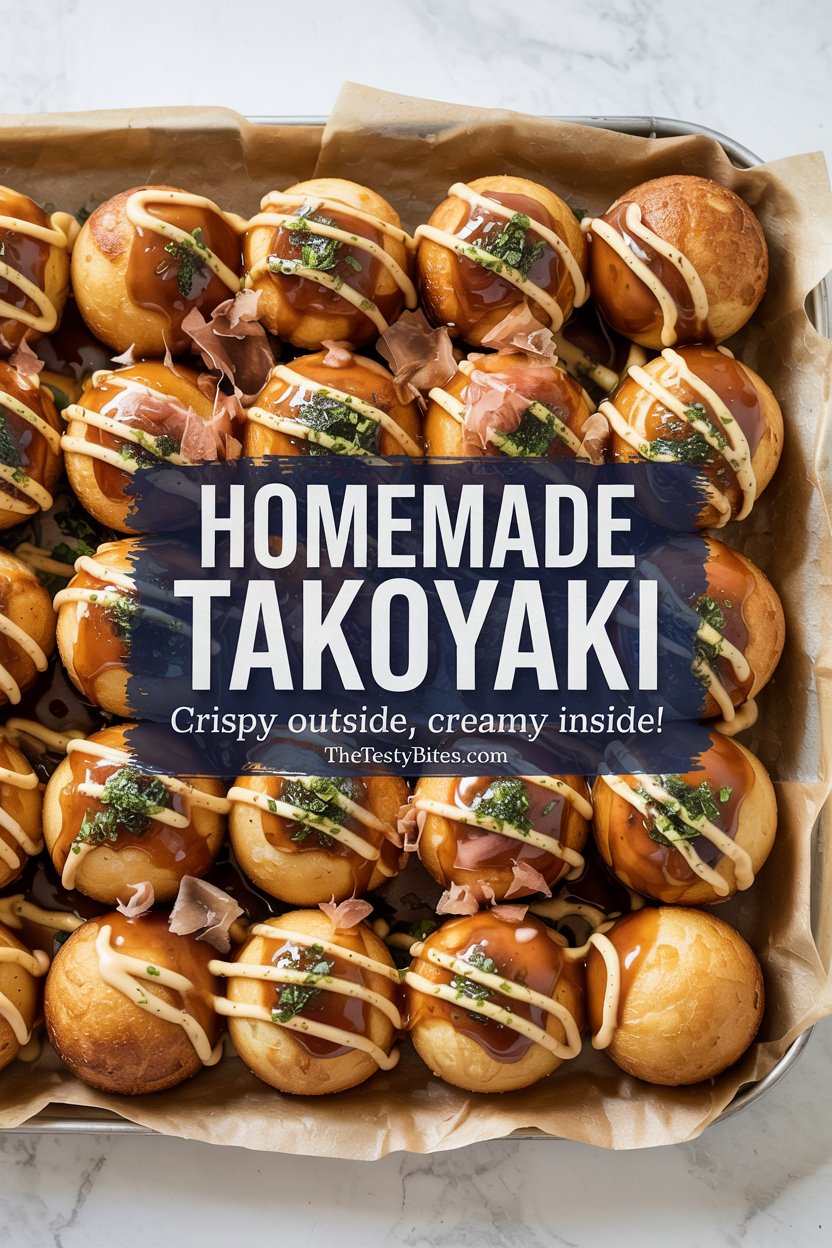
Takoyaki (Japanese Octopus Balls)
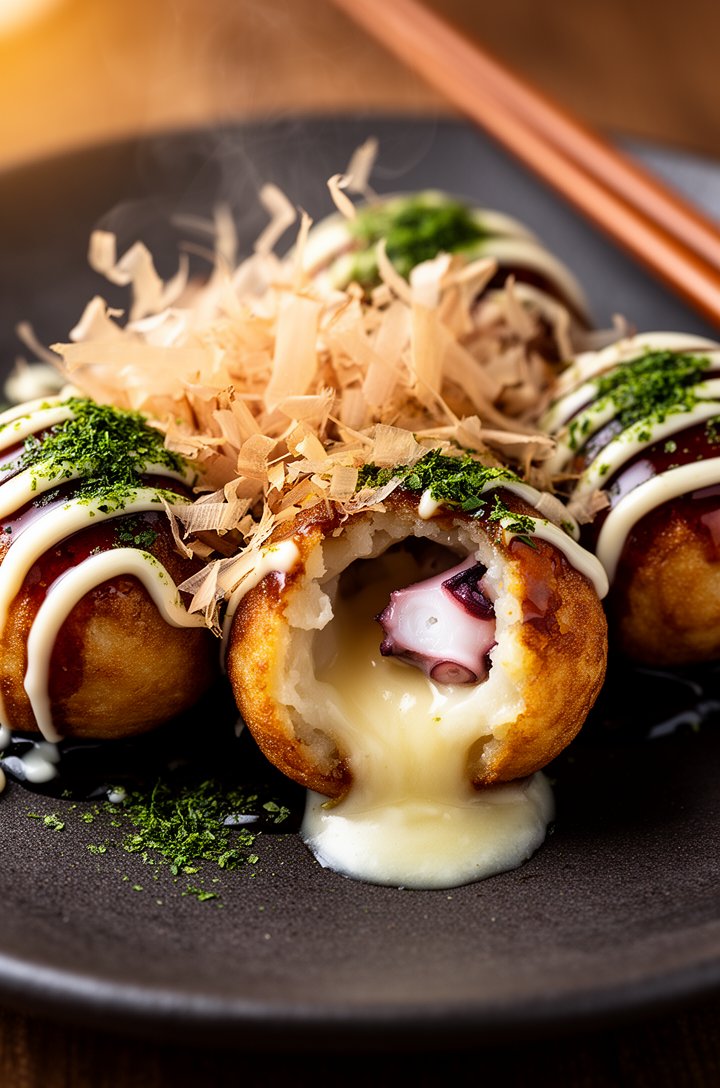
Crispy-shelled, molten-centered Japanese street food balls stuffed with tender octopus, pickled ginger, and tempura crumbs — drizzled with tangy sauce, Kewpie mayo, and dancing bonito flakes. A weekend project that earns every minute.
Tasted & written by Rachel
Prep
15 min
Cook
15 min
Total
30 min
Serves
4
The Key
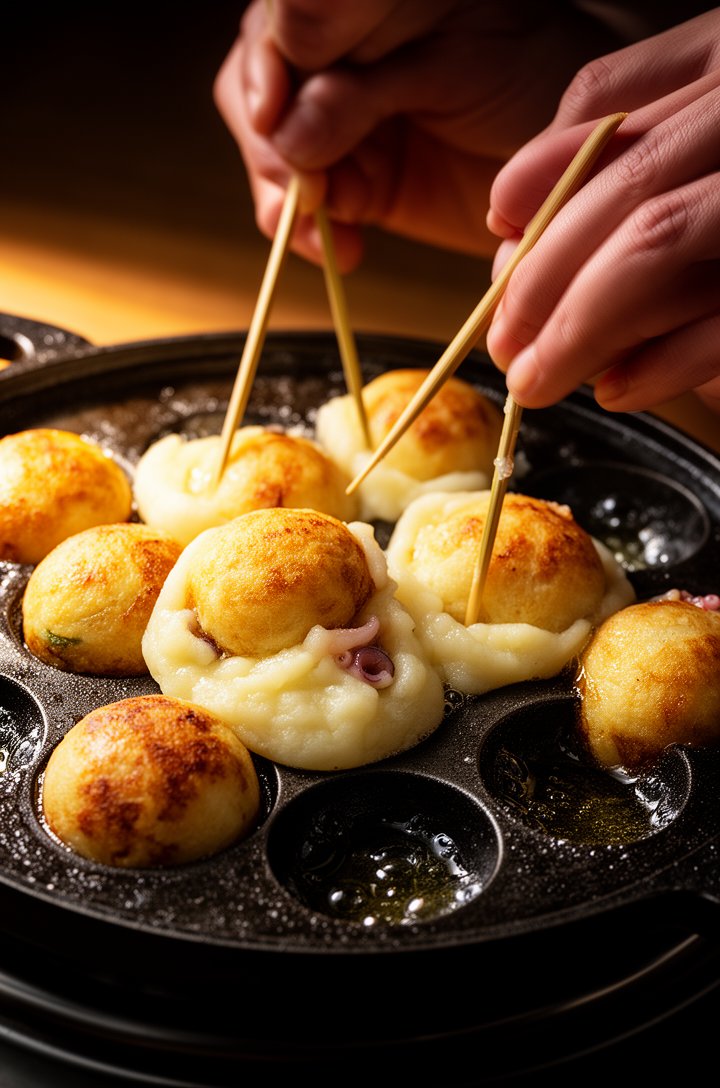
The flip is everything. Push your skewer along the edge of the well to separate the batter, then slide it under the ball and rotate 90 degrees — not a full flip. You're building the sphere in stages, folding excess batter into the uncooked top each time. Three or four quarter-turns over a few minutes, and the ball closes itself.
David came back from a work trip to Chicago with exactly one food opinion: 'We need a takoyaki pan.' He'd eaten them at a festival stand, standing in the rain, burning the roof of his mouth. Three weeks later the pan arrived. Three batches later, we stopped ordering them out.
They're fussier than most things I make — you need the pan, you need the wrist-flip, you need to accept that your first batch will look like modern art. But the payoff is unreasonable. Crispy shell, molten savory custard inside, octopus that gives you something to chew on. Mia calls them 'hot balls' and eats six before I can plate them.
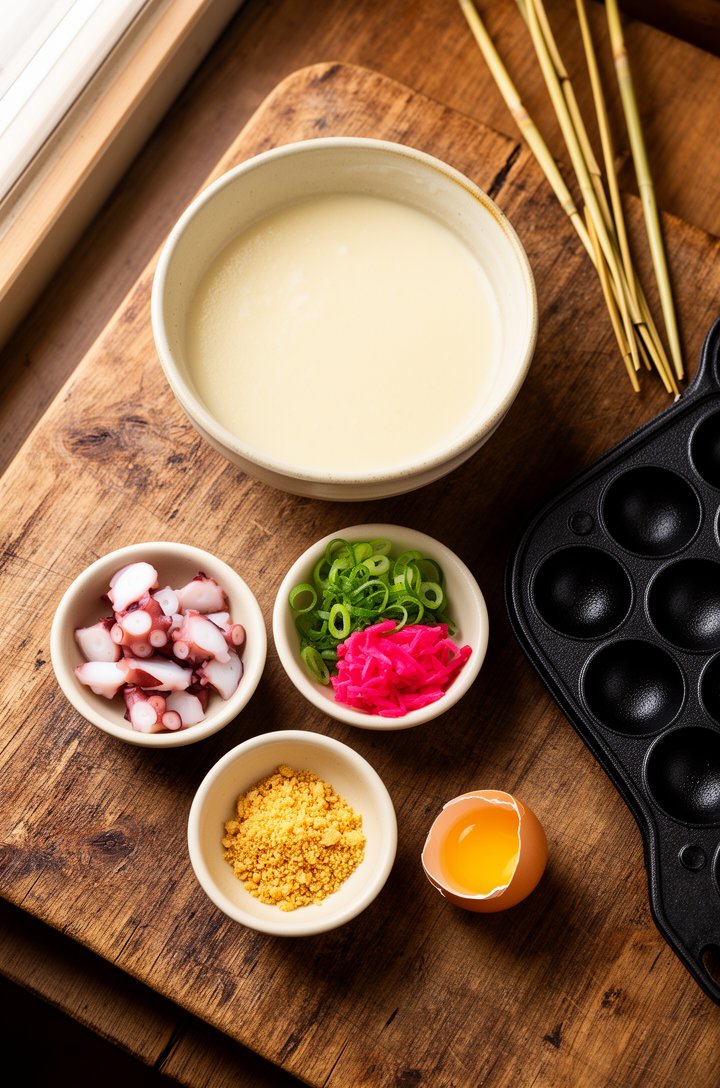
The batter is thinner than you think it should be. If it looks like pancake batter, you've gone wrong — it should pour like heavy cream. That thinness is what gives you the custardy, almost molten center that makes takoyaki takoyaki. The cornstarch helps too: less gluten, lighter ball, crispier outside.
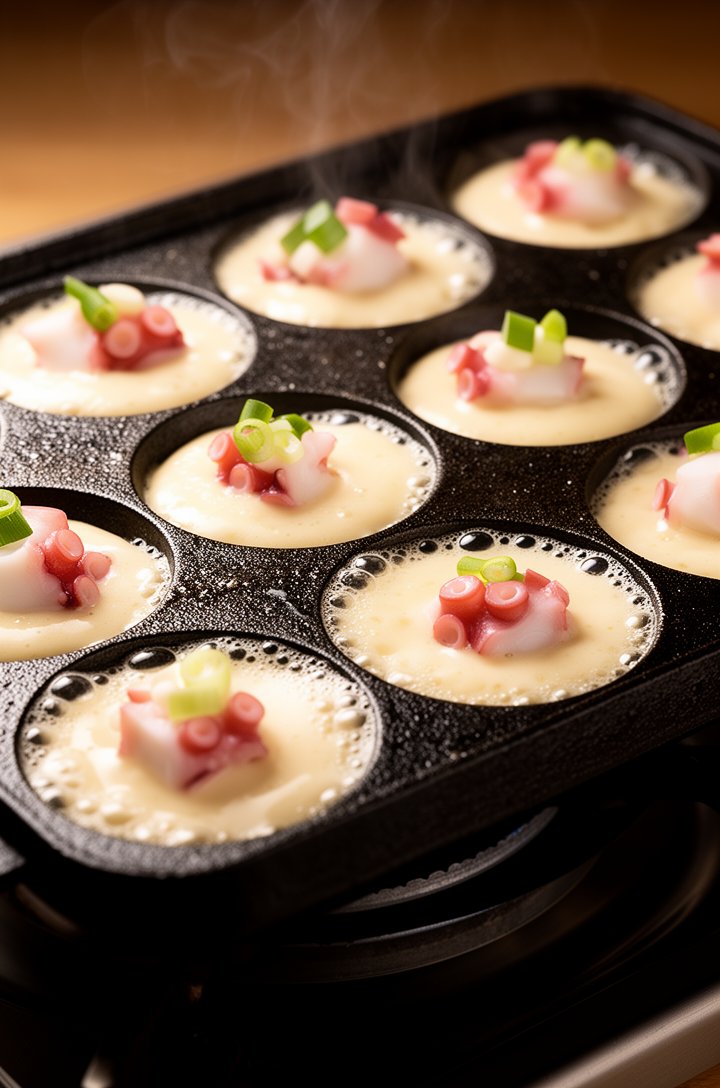
The flip is where it gets fun. You're not flipping like a pancake — you're rotating 90 degrees at a time, tucking the overflow batter into the ball as you go. It takes two or three batches to get the wrist motion right. After that, it's meditative. David stands at the pan with a beer and turns them one by one while I prep the toppings.
The toppings are non-negotiable. Takoyaki sauce — thick, sweet, tangy — goes first. Then Kewpie mayo in lazy zigzags. Then the bonito flakes, which wave and dance from the heat like they're alive. Aonori last, a confetti of green. The first one you eat will burn you. The second one you'll eat anyway.
Mise en place
Ingredients
- 140g all-purpose flour (about 1 cup)
- 10g cornstarch (about 1 tbsp)
- 1 large egglightly beaten
- 450ml dashi stock, cold
- 1 tsp Japanese Soy Sauce (Shoyu)
- 0.25 tsp Salt
- 120g boiled octopus, cut into 2cm piecescut into 2cm pieces
- 1/2 cup green onions, finely choppedfinely chopped
- 2 tbsp beni shoga (pickled red ginger), choppedchopped
- 1/2 cup tenkasu (tempura crumbs)
- vegetable oil, for brushing the pan
Toppings
- 3 tbsp Takoyaki Sauce
- 2 tbsp Japanese Mayonnaise (Kewpie)
- generous handful of bonito flakes (katsuobushi)
- 1 tsp aonori (green seaweed flakes)
The Method
Instructions
- 01
Whisk flour, cornstarch, and salt together in a large bowl. Beat the egg in a separate bowl, then add the cold dashi and soy sauce to it. Pour the wet mixture into the dry and whisk until completely smooth — no lumps.
Done when:Batter is the consistency of heavy cream — thin enough to pour easily from a ladle. It should coat the back of a spoon but run off quickly.
- 02
Heat the takoyaki pan over medium-high heat. Brush every well and the flat surface between wells generously with oil.
Done when:A drop of batter sizzles immediately on contact with the pan surface. The oil should shimmer but not smoke.
- 03
Pour batter into each well until it reaches the top. Let it overflow slightly onto the flat surface between wells — this is normal and intentional.
Done when:All wells are full and there's a thin layer of batter connecting them across the flat surface.
- 04
Drop one piece of octopus into each well. Scatter green onions, pickled ginger, and tenkasu across the entire surface.
Done when:Each well has a visible piece of octopus. Toppings are distributed evenly — don't cluster them.
- 05
Wait until the bottom edges of the batter are set and golden. Use a bamboo skewer or chopstick to cut along the edges of each well, separating the overflow batter. Fold the excess into the ball and rotate each one 90 degrees.
Done when:The bottom half holds its shape when you push a skewer under it. If it's still liquid and won't turn, give it another 30 seconds.
- 06
Continue turning the balls every minute or so, tucking in any stray batter as you go. Rotate them a full 360 degrees over several turns to form an even sphere.
Done when:All sides are uniformly golden-brown and crispy. The balls spin freely and easily in their wells with just a nudge from the skewer.
- 07
Transfer to a plate. Drizzle with takoyaki sauce and Kewpie mayo in zigzag lines. Top generously with bonito flakes and a dusting of aonori. Serve immediately.
Done when:Bonito flakes are dancing and waving from the residual heat — that's your signal that they're hot enough to eat (carefully).
Where it goes wrong
Common mistakes
- ✕Making the batter too thick — if it's pancake-batter consistency, add more dashi. It should be thinner than you're comfortable with.
- ✕Turning too early — if the ball resists the skewer, the bottom isn't set. Wait. Forcing it shreds the shell.
- ✕Not oiling between batches — the pan needs a fresh brush of oil every round or the batter sticks and tears
- ✕Eating them immediately off the pan — the inside is volcanic. Wait 60 seconds. I've learned this the hard way, twice.
Context
Compared to the usual
Traditional Osaka-style takoyaki — the birthplace version — uses a very thin batter that's almost all dashi with minimal flour, producing balls that are practically liquid inside. Tokyo-style leans slightly firmer. This recipe lands in the middle: custardy but not soup. Street vendors in Japan cook on massive cast-iron pans over gas burners, turning dozens at once with metal picks at terrifying speed. At home, an electric takoyaki maker is more forgiving, but a cast-iron pan over a burner gives better crust. The Osaka purists would tell you octopus is non-negotiable. I'd tell you cheese is also valid.
Glossary
Techniques used
- Takoyaki
- Literally 'octopus grilled' — ball-shaped Japanese street food made from wheat batter filled with octopus, cooked in a special molded pan.
- Dashi
- Japanese soup stock made from kombu seaweed and bonito flakes. Instant dashi granules dissolved in water work perfectly here.
- Tenkasu
- Crispy tempura batter bits, also called 'tempura crumbs.' They melt into the takoyaki during cooking, adding richness. Rice Krispies are a surprisingly decent substitute.
- Beni shoga
- Bright red/pink pickled ginger, sharper and more vinegary than the pale sushi ginger (gari). Adds a punchy acidic bite inside each ball.
- Katsuobushi
- Dried, smoked, and shaved skipjack tuna — bonito flakes. They wave and 'dance' on hot food from the rising steam, which is half the fun.
- Aonori
- Dried green seaweed flakes, slightly different from regular nori. Adds a subtle ocean flavor and bright green color as a finishing garnish.
- Kewpie mayonnaise
- Japanese mayo made with egg yolks only (no whites), rice vinegar, and MSG. Richer, tangier, and smoother than American mayo. Worth seeking out.
Riffs
Variations
Cheesy takoyaki
Replace the octopus with small cubes of mozzarella or cheddar. The cheese melts into the center and stretches when you pull the ball apart. Sprinkle parmesan on top instead of bonito flakes.
Spicy mayo version
Mix Kewpie mayo with sriracha (3:1 ratio) for the drizzle. Add a pinch of shichimi togarashi on top. Takes the heat from 0 to a respectable 2.
Mentaiko takoyaki
Swap octopus for mentaiko (spicy cod roe) — about a teaspoon per ball. The roe pops and melts inside. Rich, briny, and deeply savory.
Breakfast takoyaki
Dice cooked bacon and scrambled egg into the batter instead of octopus. Top with Kewpie and a drizzle of maple syrup. Sounds wrong. Works.
Q & A
Frequently asked
Do I really need a takoyaki pan?
Yes. There's no good substitute. An aebleskiver pan (Danish pancake pan) works in a pinch — the wells are bigger, so you'll get fewer, larger balls. A muffin tin in the oven doesn't work — you need direct contact heat for the crispy shell. Electric takoyaki makers are $25 and worth it if you'll make these more than once.
Where do I find boiled octopus?
Japanese or Korean grocery stores, usually in the frozen seafood section (labeled 'boiled tako'). H Mart is reliable. Some regular grocery stores carry it near the sushi-grade fish. It's already cooked — just thaw and chop.
Can I make these without octopus?
Absolutely. Cooked shrimp, cubed cheese (mozzarella stretches beautifully), diced ham, or even just extra green onion all work. The batter and toppings do most of the heavy lifting flavor-wise.
What's takoyaki sauce?
A thick, sweet-savory sauce similar to Worcestershire mixed with ketchup. Otafuku brand is the standard. If you can't find it, okonomiyaki sauce is interchangeable, or mix equal parts Worcestershire and ketchup with a pinch of sugar.
Can kids help make these?
Mia helps pour batter and drop in the fillings. The flipping requires a hot pan and some coordination, so that's an adult job. But the assembly-line setup — batter, octopus, toppings — is perfect for small hands.
Storage
Cooked takoyaki keep in an airtight container in the fridge for up to 2 days, but the texture changes — they lose the crispy shell and become uniformly soft. Still tasty, just different.
Reheating
Air fryer at 375°F for 4-5 minutes brings back some crispiness. Oven at 400°F on a wire rack for 8 minutes also works. The microwave makes them rubbery — avoid.
Freezing
Freeze cooked takoyaki on a sheet pan until solid, then transfer to a freezer bag. Good for up to 1 month. Reheat from frozen in the air fryer — add 2 minutes to the time. Don't thaw first.
Make ahead
Make the batter up to 24 hours ahead and refrigerate. Prep the fillings (chop octopus, slice green onions, measure tenkasu) into separate small bowls. When ready, whisk the batter and cook fresh — the actual cooking is fast once everything's prepped.
Serve with
Eat them standing in the kitchen, straight from the pan, burning your mouth. That's the authentic experience. For a more civilized serve, plate on a wooden board with toothpicks, cold beer, and edamame. They're a perfect game-day snack or party appetizer — set up the pan at the table and let people watch you flip.