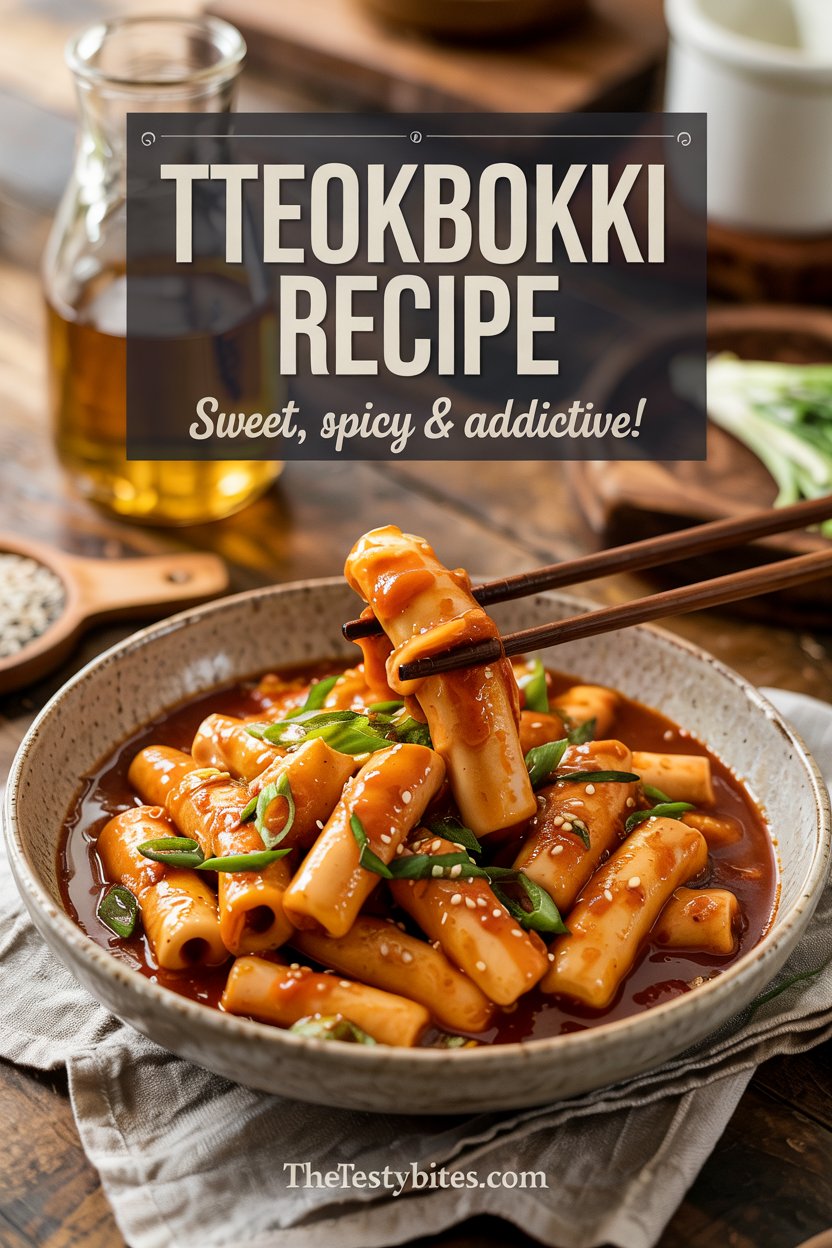
Tteokbokki (Spicy Korean Rice Cakes)
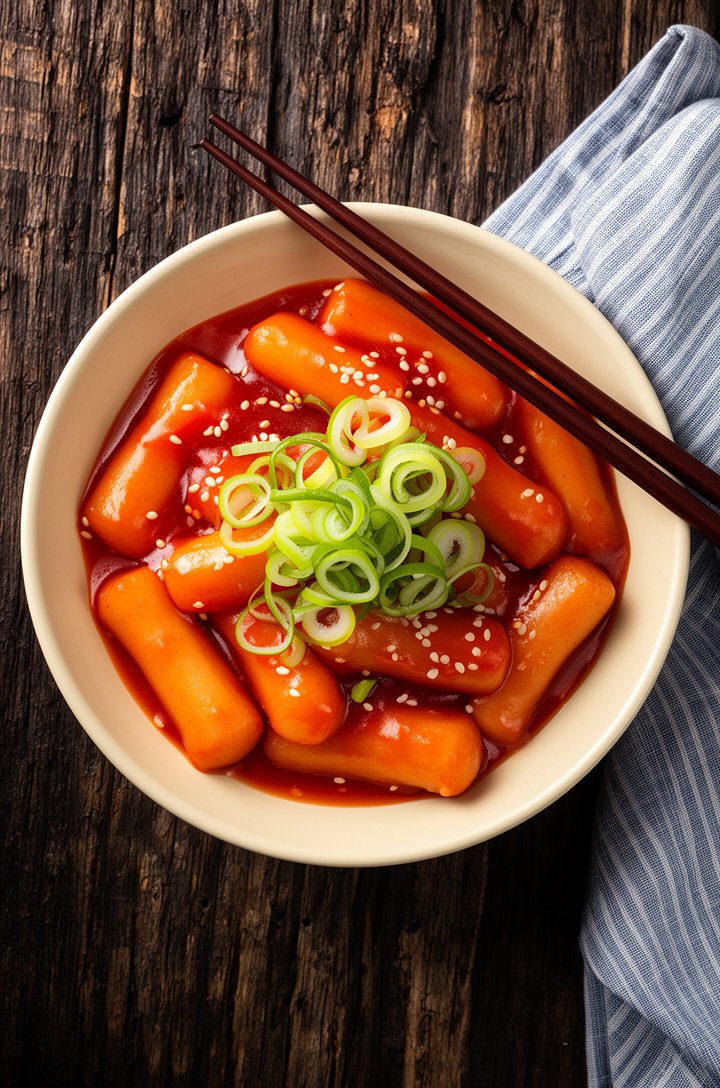
Chewy rice cakes simmered in a glossy, fiery gochujang sauce with fish cakes and scallions. Twenty minutes, one pan, and the kind of heat that makes you reach for another piece before you've finished chewing the first.
Tasted & written by Rachel
Prep
10 min
Cook
10 min
Total
20 min
Serves
2
The Key
Keep the sauce at a steady boil, not a gentle simmer. The rolling boil agitates the rice cakes enough to release their starch into the sauce, which is what creates that glossy, clingy coating. Drop to a simmer and you'll end up with watery sauce and sad, separate pieces.
David came home from a Korean grocery run with a bag of rice cakes and zero plan. I looked up three recipes, combined none of them, and just followed the one that had been tested by 79 people who gave it a perfect score. Smart move. The sauce comes together in the time it takes the rice cakes to soften, and the whole thing is done before Noah finishes his banana.
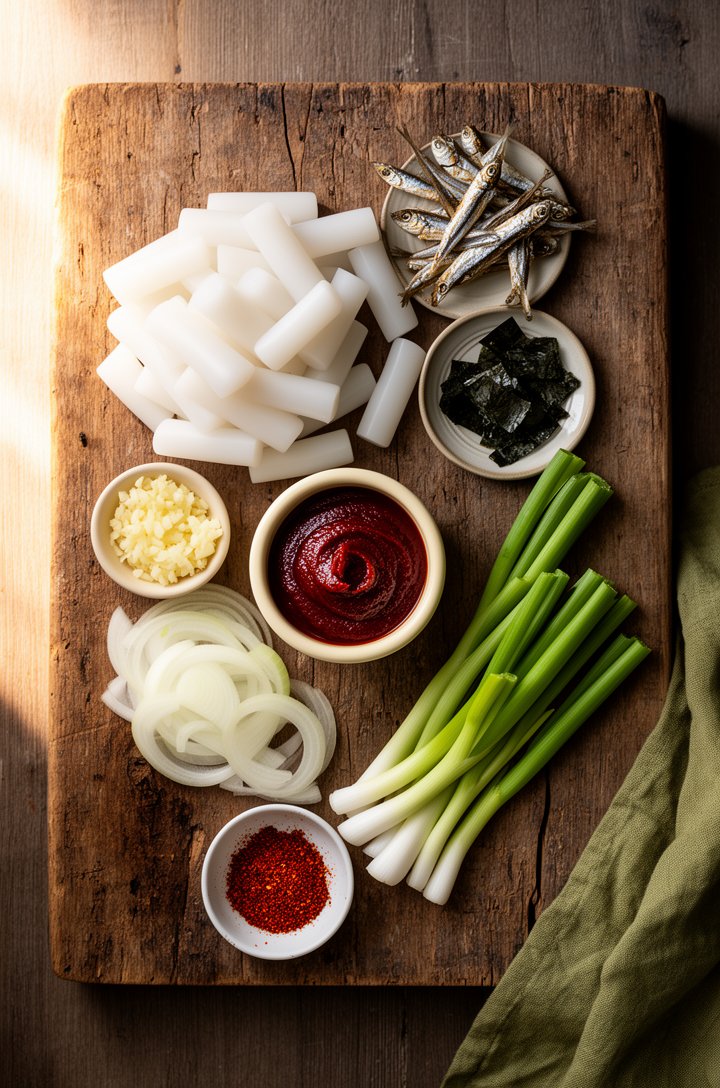
Tteokbokki is Korean street food — the kind you eat standing up from a paper cup, burning the roof of your mouth because you can't wait. This version is dead simple. Anchovy-kelp stock, gochujang, sugar, soy sauce. That's the backbone. The rice cakes do the rest.
The stock matters more than you think. Water plus gochujang gives you spicy and sweet but nothing behind it. Ten minutes of simmering anchovies and kelp adds the umami layer that makes you go back for a second serving. Priya made it with water once and texted me: 'something's missing.' Yeah. The stock.
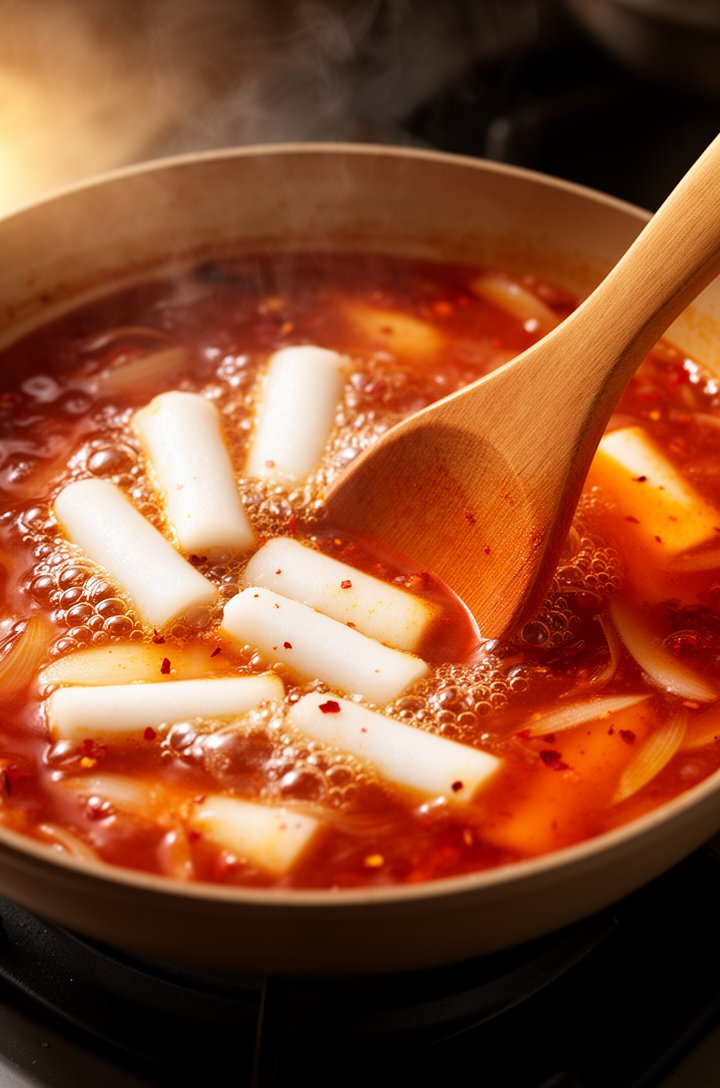
The key is keeping the heat up. You need a real boil — not a polite simmer — because that's what pulls the starch out of the rice cakes and into the sauce. That starch is what makes tteokbokki sauce glossy and clingy instead of thin and watery. Stir constantly. Walk away for 90 seconds and you'll be scraping scorched rice cake off the bottom of your pan.
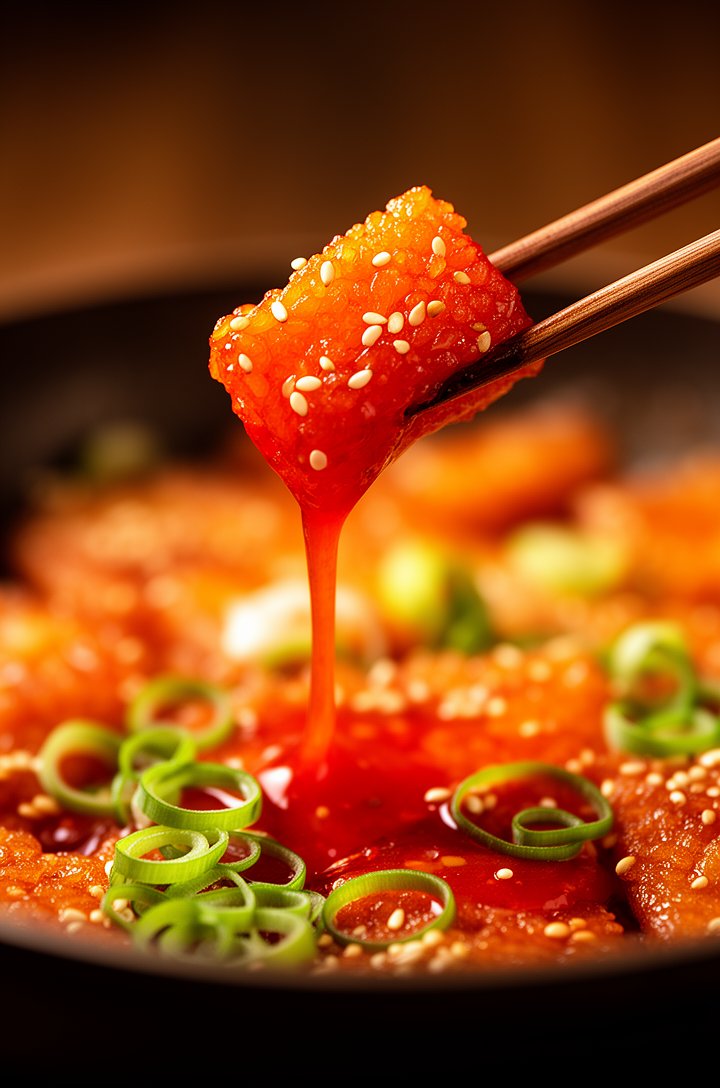
It's not subtle. It's not trying to be.
Mise en place
Ingredients
- 350g Korean cylindrical rice cakes (about 12 oz)separated if stuck together
- 150g Korean fish cakes (about 5 oz)rinsed with hot water and cut into bite-size pieces
- 1/2 small onion (about 60g)thinly sliced
- 3 tbsp Gochujang
- 1.5 tbsp Sugar
- 1 tbsp Soy Sauce
- 1 tsp Garlicminced
- 1 tsp Gochugaru (Korean Chili Flakes)
Stock
- 2 pieces dried kelp (about 4x4 inches each)
- 6 large dried anchovies, guts removed
- 2 cup Water
Finish
- 1 tsp Sesame Oil
- 1 tsp Toasted Sesame Seeds
- 1 whole Scallions (Green Onions)finely chopped
The Method
Instructions
- 01
Soak rice cakes in warm water for 10 minutes. If using fresh, soft rice cakes, skip this step.
Done when:Rice cakes feel pliable and slightly softened when you bend one — it should flex, not snap.
- 02
Make the stock: bring 2 cups of water with dried kelp and anchovies to a boil, then simmer 10 minutes. Strain and discard solids.
Done when:Stock is faintly golden and smells briny-savory. The kelp will have expanded and softened.
- 03
Mix the sauce: combine gochujang, sugar, soy sauce, minced garlic, and gochugaru in a small bowl. Stir until smooth.
Done when:A uniform dark red paste with no dry lumps of gochujang remaining.
- 04
Bring the stock to a boil in a shallow pot over medium-high heat. Add the sauce mixture and stir with a spatula until fully dissolved.
Done when:Stock turns a deep red-orange and the sauce is completely incorporated — no streaks of paste floating.
- 05
Add the drained rice cakes, fish cakes, and sliced onion. Stir to coat everything in the sauce.
Done when:Every piece of rice cake and fish cake is submerged or coated in the red sauce.
- 06
Cook at a steady boil for 8-10 minutes, stirring frequently to prevent sticking. The sauce will thicken as the rice cake starch releases.
Done when:Rice cakes are soft and chewy all the way through (bite one to check — no hard chalky center), and the sauce coats the back of your spatula in a glossy, clingy layer.
- 07
Remove from heat. Drizzle sesame oil, scatter sesame seeds and chopped green onion. Serve immediately.
Done when:Sesame oil is fragrant and the green onion is bright against the red sauce. Don't let it sit — rice cakes firm up fast.
Where it goes wrong
Common mistakes
- ✕Using water instead of anchovy-kelp stock — the sauce will taste flat and one-dimensional.
- ✕Cooking on low heat — you need a steady boil to release enough starch to thicken the sauce properly.
- ✕Walking away from the pan — rice cakes stick and scorch in under a minute if you stop stirring.
- ✕Letting it sit before serving — tteokbokki hardens within 10 minutes at room temperature. Eat it hot.
Context
Compared to the usual
This is the classic street-cart tteokbokki — gochujang, stock, sugar, rice cakes. It's the version you'd eat from a paper cup in Myeongdong, and the version that every Korean home cook has memorized. The trendy rosé tteokbokki (add heavy cream and mozzarella for a creamy, pink sauce) and the newer brown-butter tteokbokki have their moments, but the original is still the one Priya's kids ask for by name. If you want to go richer, see the variations below — but start here first.
Glossary
Techniques used
- Tteokbokki
- 떡볶이 — Korean stir-fried rice cakes. 'Tteok' means rice cake, 'bokki' means stir-fried. Pronounced roughly 'duck-BOH-kee.' The most popular Korean street food.
- Gochujang
- Fermented Korean red chili paste made from chili powder, glutinous rice, fermented soybeans, and salt. Sweet, spicy, deeply savory. Sold in red tubs at any Asian grocery.
- Gochugaru
- Korean red chili flakes — coarser than cayenne, slightly smoky, moderately hot. The backbone of kimchi and most Korean spicy dishes.
- Garae-tteok
- Cylindrical tube-shaped Korean rice cakes made from glutinous rice flour. Sold fresh, refrigerated, or frozen. Fresh are best; frozen need a 10-minute warm-water soak.
- Eomuk
- Korean fish cakes (어묵) — processed fish paste sheets, sold in Asian freezer sections. Rinsing with hot water removes the oily preservative taste.
Riffs
Variations
Rosé Tteokbokki
Stir 1/2 cup heavy cream into the sauce in the last 2 minutes of cooking. Top with a handful of shredded mozzarella and cover to melt. The sauce turns creamy pink, the heat drops to a 2, and suddenly it's a weeknight date-night dish.
Cheese Tteokbokki
Lay 2 slices of American cheese or a fistful of mozzarella on top right before serving. Don't stir it in — let it melt into a stretchy blanket. This is the Korean street-vendor upsell and it's worth every calorie.
Tteokbokki with Ramen
Add one brick of instant ramen noodles (discard the seasoning packet) in the last 3 minutes of cooking. Called rabokki. Carb on carb — no apologies.
Q & A
Frequently asked
Where do I buy Korean rice cakes?
Any Asian grocery store, usually in the refrigerated or frozen section. H Mart is the easiest bet. Look for the plain white cylindrical tubes (garae-tteok), not the sliced coin-shaped ones.
Can I make this without fish cakes?
Yes. The fish cakes add texture and protein but aren't load-bearing. Swap in boiled eggs (halved, added in the last 2 minutes) or skip them entirely.
How spicy is this?
Solidly spicy — a 4 out of 5 on our scale. Mia won't eat it; David doubles down. Reduce gochujang to 2 tablespoons and skip gochugaru for a kid-friendly version.
Can I use store-bought dashi instead of making stock?
Absolutely. Two cups of prepared dashi or even low-sodium chicken broth will work. You lose a little depth, but the gochujang does most of the heavy lifting.
Storage
Airtight container in the fridge for up to 2 days. The rice cakes will absorb the sauce and firm up significantly.
Reheating
Covered pan on medium-low heat with 2-3 tablespoons of water. Stir frequently until the sauce loosens and the rice cakes soften again, about 5 minutes. Do not microwave — they turn rubbery.
Freezing
Not recommended. Rice cakes lose their chewy texture after freezing and reheating. Make it fresh.
Make ahead
Make the anchovy-kelp stock up to 3 days ahead and refrigerate. Mix the sauce paste and store it covered. Don't cook the rice cakes until you're ready to eat — they don't reheat well.
Serve with
Eat it straight from the pan with chopsticks or short wooden skewers. If you want sides: kimbap, a fried egg, or Korean pickled radish. A cold beer or barley tea cuts the heat.