
Whipped Feta Dip
Block feta blitzed with Greek yogurt, lemon zest, and olive oil until cloud-smooth. Five minutes, one food processor, zero reason to ever buy store-bought dip again.
Tasted & written by Rachel
Prep
5 min
Cook
—
Total
5 min
Serves
6
The Key
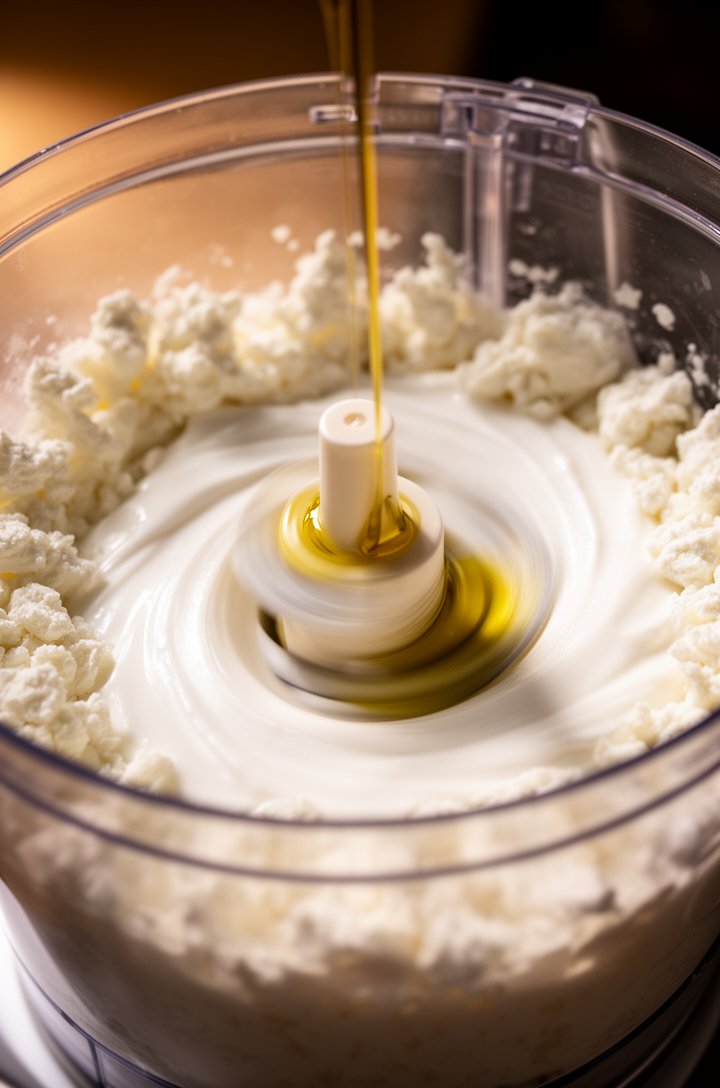
Drizzle the olive oil through the food processor's feed tube while the motor is running. This emulsifies the oil into the feta and yogurt, which is the difference between smooth-and-fluffy and greasy-and-separated. Stop and scrape down once, then blend another 15 seconds.
Priya brought this to playdate last month and I watched six adults silently demolish a bowl while pretending to supervise children. I asked for the recipe. She said 'food processor, feta, done.' She was mostly right.
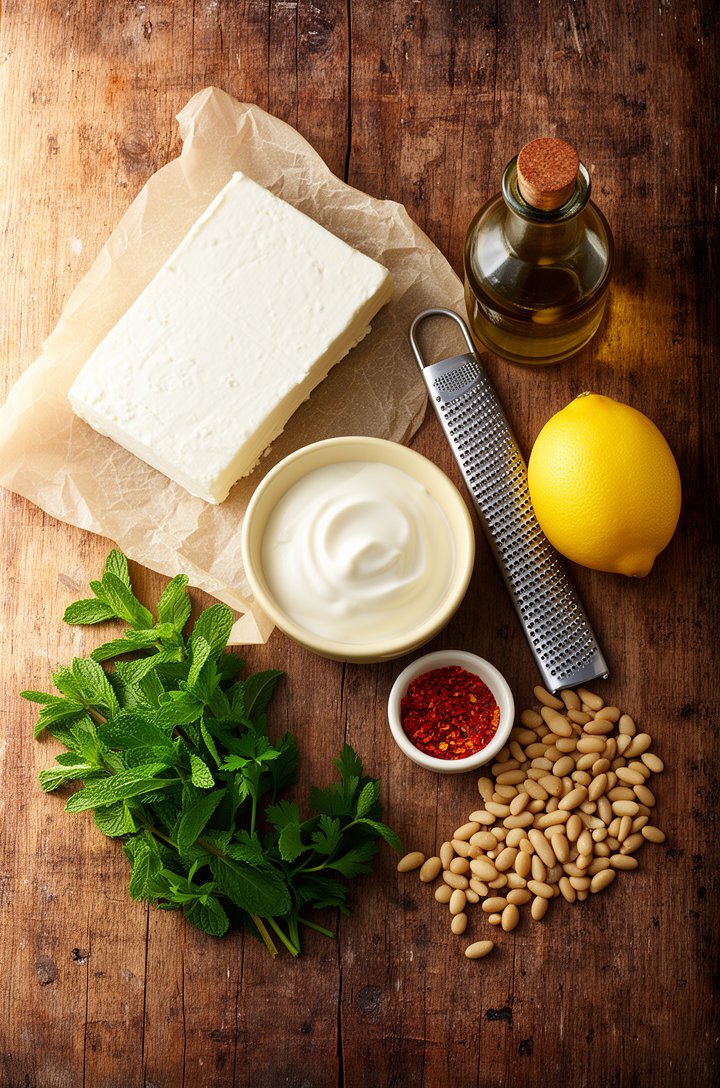
The thing that makes whipped feta work isn't the feta itself — it's the Greek yogurt. It loosens the texture from chalky crumble to something you'd swear had cream cheese in it. The Bakers Royale version actually does use cream cheese. Ours doesn't. The yogurt keeps it tangier and lighter, which is the whole point of feta in the first place.
Mia helped me make this last time. She measured the yogurt, I let her push the food processor button, and Noah ate a fistful of pine nuts off the counter. Standard Tuesday.
The key move is drizzling the olive oil while the motor runs. It emulsifies into the feta instead of sitting on top as a greasy slick. You'll know it's done when the whole thing looks like thick whipped cream — glossy, smooth, no visible crumbles. Takes about ninety seconds.
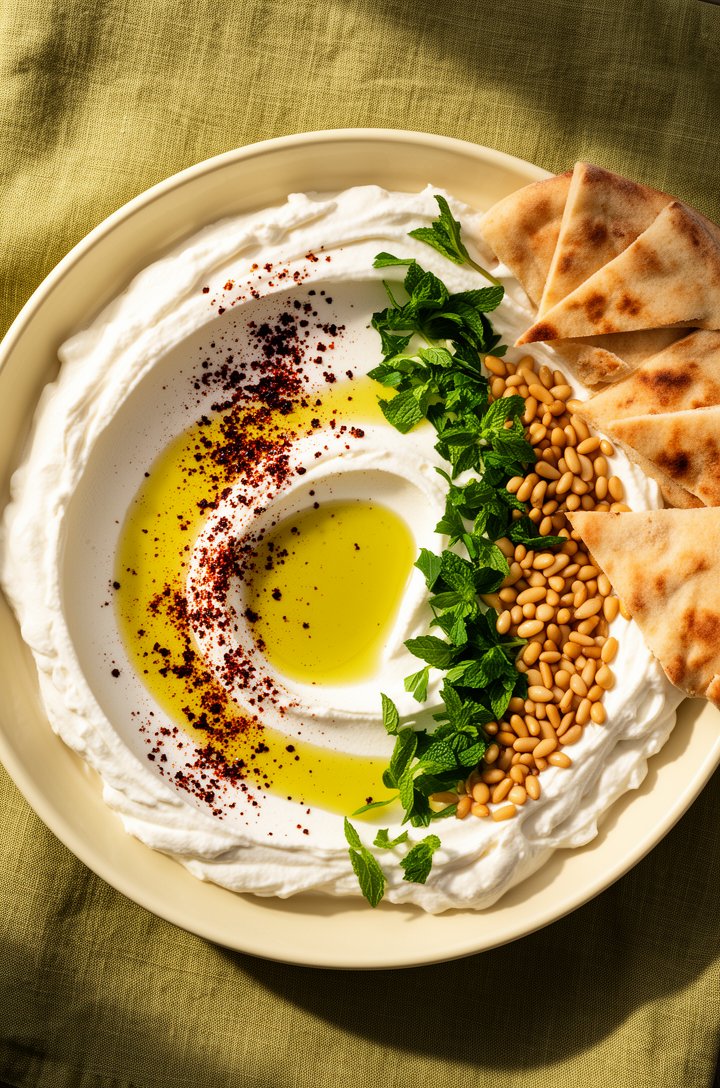
Then you swoop it onto a plate, make a well with the back of your spoon, and pour olive oil into the dip like it owes you money. Aleppo pepper, herbs, pine nuts. Hand someone a pita chip and get out of the way.

Mise en place
Ingredients
- 8 ounces block feta, draineddrained and broken into chunks
- 3/4 cup Greek yogurt (full-fat)
- zest of 1 lemonzested
- 2 tablespoons extra virgin olive oil, plus more for serving
- 1 teaspoon Aleppo pepper (or red pepper flakes to taste)
Toppings
- 2 tbsp Fresh Mintchopped
- 2 tbsp Fresh Parsleychopped
- 2-3 tablespoons toasted pine nutstoastedOptional
- 1-2 tablespoons crushed pistachioscrushedOptional
The Method
Instructions
- 01
Break the feta into rough chunks and add to the food processor with Greek yogurt and lemon zest.
Done when:Feta is in pieces small enough to fit under the blade without jamming.
- 02
Blend on high, drizzling the olive oil through the top opening while the processor runs, until completely smooth and fluffy.
Done when:No visible crumbles remain. The mixture looks like thick whipped cream — glossy, smooth, and pulls away from the sides cleanly. Scrape down once if needed.
- 03
Transfer to a serving plate. Use the back of a spoon to smooth the top and swoop a shallow well in the center.
Done when:The surface has a natural swooped shape with a slight indentation in the middle for the oil to pool.
- 04
Pour a generous glug of olive oil into the well. Scatter with Aleppo pepper, chopped mint, parsley, and toasted pine nuts or crushed pistachios.
Done when:Oil pools visibly in the well. Herbs and nuts cover roughly half the surface — generous but not buried.
- 05
Serve immediately with pita chips, warm pita wedges, or crudites.
Done when:Pita is within arm's reach. People are already dipping before you've set it down.
Where it goes wrong
Common mistakes
- ✕Using pre-crumbled feta — the anti-caking coating creates a gritty texture that won't blend out
- ✕Skipping the drain — excess brine makes the dip watery and too salty
- ✕Adding all the olive oil at once instead of drizzling — you lose the emulsion and get greasy pockets
- ✕Topping it too early — pine nuts go soft and herbs wilt if they sit more than 30 minutes
Context
Compared to the usual
Traditional htipiti — the Greek roasted pepper and feta spread — blends charred red peppers into the mix for a pink, smoky dip. The Lebanese version skips yogurt entirely and whips feta with just olive oil and garlic, producing something denser and more intensely salty. This version sits between the two: the yogurt gives it that fluffy, almost labneh-like body that's become the internet standard, while the Aleppo pepper nods toward htipiti's warmth without the extra step of roasting anything.
Glossary
Techniques used
- Aleppo pepper
- A mild, fruity Turkish/Syrian chile flake with a subtle heat and almost raisin-like sweetness. Crushed red pepper flakes work as a substitute but are sharper — use half the amount.
- Emulsify
- Blending fat (olive oil) into a water-based mixture (yogurt, feta) so they combine into one smooth, unified texture instead of separating. The food processor does the work here.
- Block feta
- Feta sold as a solid block, usually sitting in brine. Vastly better texture than pre-crumbled, which is coated in cellulose to prevent clumping.
Riffs
Variations
Honey-drizzled
Swap the olive oil drizzle for half olive oil, half honey. Add a handful of toasted walnuts instead of pine nuts. The sweet-salty contrast is absurd.
Roasted garlic
Blend in 4-5 cloves of roasted garlic with the feta. Mellower and deeper — especially good with grilled bread.
Sun-dried tomato
Pulse in 3 tablespoons of drained, oil-packed sun-dried tomatoes at the end. Don't over-blend — you want flecks, not a pink dip.
Everything bagel
Skip the Mediterranean toppings. Drizzle with olive oil and cover in everything bagel seasoning. Serve with bagel chips. David's running club's favorite version.
Q & A
Frequently asked
Can I use a blender instead of a food processor?
A high-powered blender works but you'll need to scrape down more often. Add an extra tablespoon of yogurt to help it catch. Immersion blenders leave it chunkier — fine if you like some texture.
How long does whipped feta last?
The base keeps 3-4 days in the fridge, covered. It thickens slightly — stir and add a drizzle of oil before re-serving. Add fresh toppings each time.
Is this keto-friendly?
The dip itself is very low carb — about 4g per serving. Serve with cucumber rounds or bell pepper strips instead of pita if you're watching carbs.
Can I use goat cheese instead?
Yes, but it's a different dip. Goat cheese is creamier and milder. Use a 50/50 split with feta if you want to soften the tang without losing it entirely.
Storage
Covered in the fridge for up to 4 days. The texture firms up overnight — a quick stir and a drizzle of olive oil brings it back.
Reheating
No reheating needed. Serve at room temperature for the best texture and flavor. Pull from the fridge 15-20 minutes early.
Freezing
Not recommended. Freezing breaks the emulsion and the yogurt separates into a grainy mess.
Make ahead
Blend the base up to 2 days ahead and store covered in the fridge. Bring to room temperature for 20 minutes before serving — cold feta dip is stiffer and less scoopable. Add oil, herbs, and nuts just before setting it out.
Serve with
Warm pita wedges are the classic. Pita chips work for a crowd. Cucumber rounds, bell pepper strips, and endive leaves for something lighter. Also excellent smeared on grilled flatbread, spooned over roasted beets, or dolloped alongside grilled lamb chops.